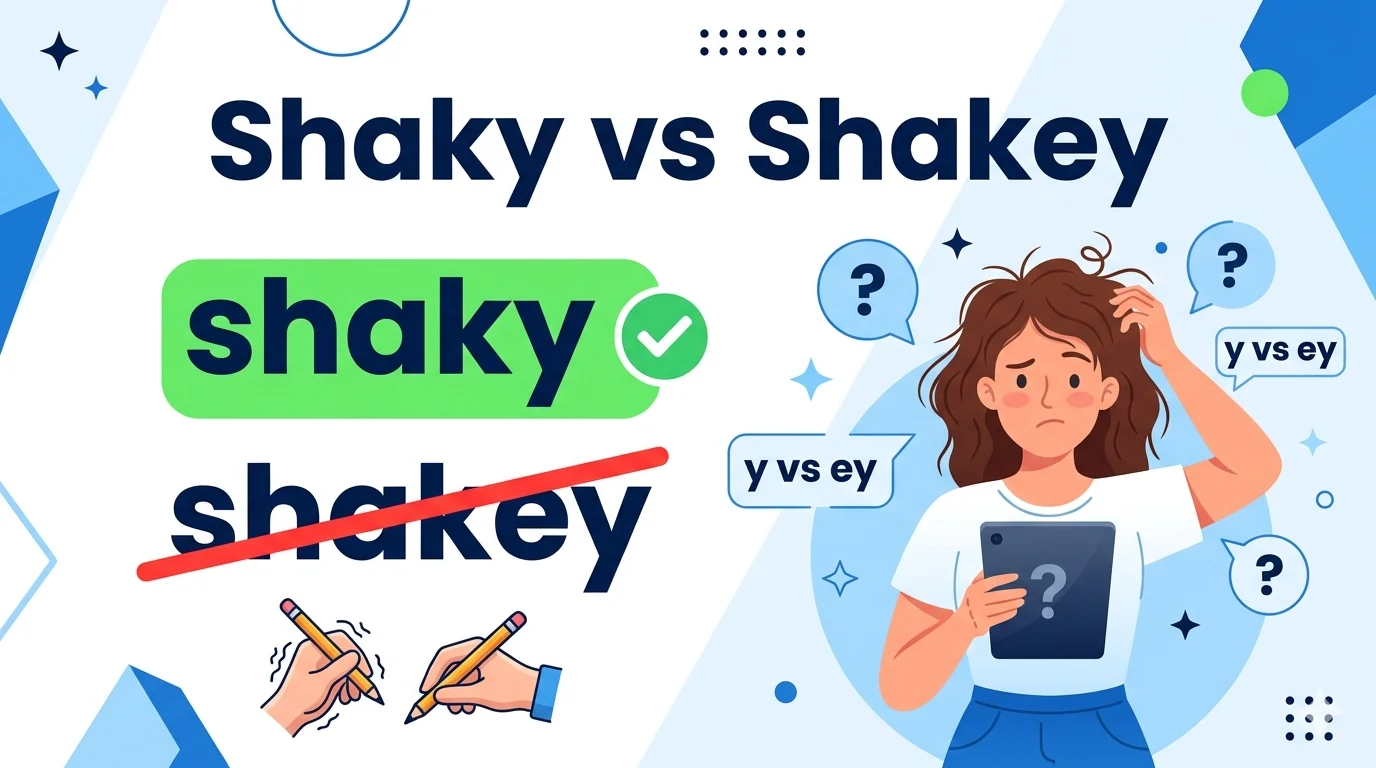
The correct spelling is “shaky.”
“Shakey” is usually incorrect, but it may appear as a name or brand.
Examples:
- My hands feel shaky after the workout.
- The bridge looks shaky and unsafe.
- ❌ Incorrect: I feel shakey today.
So if you’re asking is it shaky or Shakey, the answer is simple: use shaky in standard English.
ave you ever paused while typing and wondered, is it shaky or Shakey? You’re not alone. Many people get confused between these two spellings because they look almost identical. This confusion often shows up in emails, social media posts, and even professional writing.
The truth is, English spelling can be tricky, especially when words sound the same but are spelled differently. People search for shaky vs shakey to understand which one is correct and whether both are acceptable. This article clears up that confusion in a simple way.
By the end, you’ll know the correct spelling, when to use it, and how to avoid common mistakes. You’ll also see real-life examples, helpful tables, and easy explanations so you never get it wrong again.
The word shaky comes from the verb “shake.” It describes something that moves, trembles, or feels unstable. Over time, English added the “-y” ending to form an adjective, giving us “shaky.”
The spelling “shakey” likely appeared because many English words use “-ey” endings, such as “smokey” (a less common variant of “smoky”). This creates confusion, especially for learners.
Historically, English spelling was not always fixed. Writers often spelled words based on sound. That’s why variations like shakey appeared. However, modern dictionaries and grammar rules standardize “shaky” as the correct form.
So, what does shakey mean? In most cases, it doesn’t have a formal meaning in standard English. It’s either a misspelling or used as a proper name.
British English vs American English Spelling → Compare spelling rules with examples
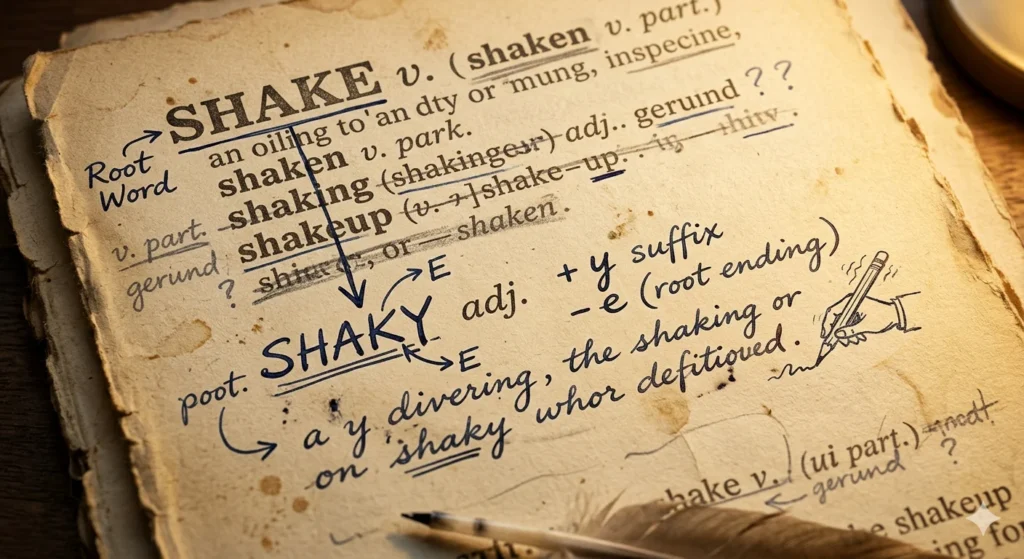
Unlike many English words, shaky vs shakey does not differ between British and American English. Both forms follow the same rule:
- ✅ Shaky = correct
- ❌ Shakey = incorrect (except names)
Comparison Table
| Feature | Shaky (Correct) | Shakey (Incorrect) |
|---|---|---|
| Standard English | ✅ Yes | ❌ No |
| British English | ✅ Yes | ❌ No |
| American English | ✅ Yes | ❌ No |
| Used in writing | ✅ Formal & informal | ❌ Avoid |
| Seen as a name | ❌ No | ✅ Sometimes |
Examples:
- UK: The economy feels shaky.
- US: He gave a shaky explanation.
So whether you’re in the UK or US, the rule stays the same.
Agree Vs Agreed 🚨 The Common Mistake Explained
Which Spelling Should You Use? → Audience-based advice
Choosing the right spelling depends on your audience, but in this case, the answer is easy. Always use shaky in writing.
- For US audience: Use shaky
- For UK/Commonwealth audience: Use shaky
- For global readers: Use shaky
Avoid “shakey” unless you are referring to a proper name, like a person or brand.
If you are writing blogs, emails, or social posts, using the wrong spelling can make your content look unprofessional. That’s why it’s important to stick with the correct form.
So next time you think about shaky or shaky meaning, remember that only one version is accepted.
Common Mistakes with shaky vs shakey → Frequent errors and corrections

Many people make simple mistakes when using these words. Here are the most common ones:
Mistake 1: Adding extra “e”
❌ shakey
✅ shaky
Mistake 2: Assuming both are correct
Only one is correct in standard English.
Mistake 3: Using shakey in formal writing
This can reduce credibility.
Mistake 4: Confusing with names
“Shakey” can be a name, but not a general word.
Quick Corrections Table
| Wrong Sentence | Correct Sentence |
|---|---|
| I feel shakey today | I feel shaky today |
| His voice was shakey | His voice was shaky |
| The table looks shakey | The table looks shaky |
Understanding these mistakes helps you write better and avoid confusion.
shaky vs shakey in Everyday Examples → Usage in real life
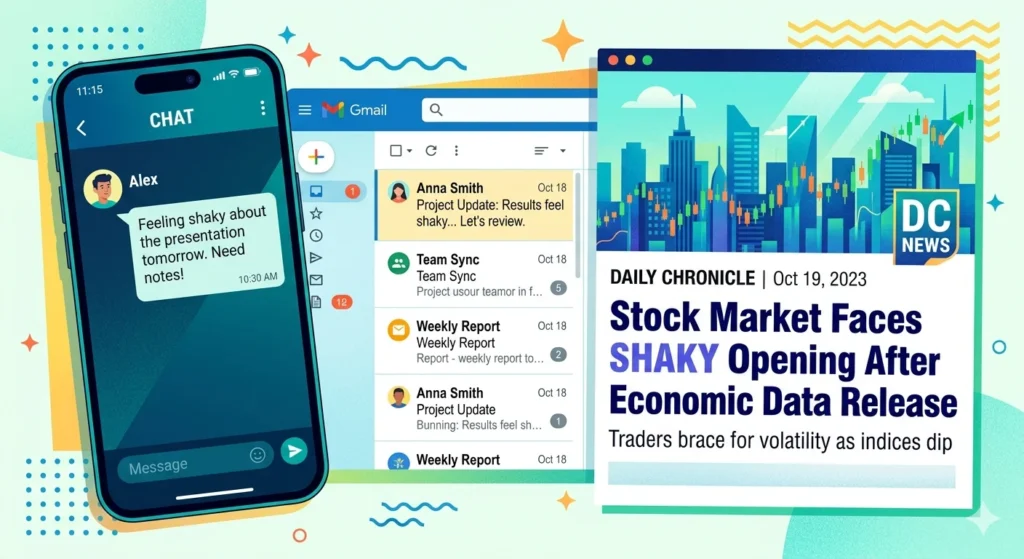
Let’s see how this word appears in daily communication.
Emails
- I had a shaky connection during the call.
- Sorry for the shaky presentation earlier.
News
- The market remains shaky after recent changes.
Social Media
- Feeling a bit shaky after that rollercoaster 😅
Formal Writing
- The argument is shaky and lacks strong evidence.
Casual Conversations
- My hands are shaky after too much coffee.
These examples show how common and useful the word is. Whether you’re writing casually or professionally, always stick with the correct spelling.
shaky vs shakey – Google Trends & Usage Data
When people search for shaky vs shakey, they usually want clarity. Data shows that “shaky” is far more popular worldwide.
- High usage countries: US, UK, Canada, Australia
- Low usage: “shakey” appears rarely and mostly as errors or names
In search trends, queries like:
- shaky or shaky hands
- shaky synonym
- shaky song
- shakey graves
show that “shaky” dominates general usage, while “Shakey” appears mostly in names like “Shakey Graves.”
This confirms that “shaky” is the correct and widely accepted form.
Patient Vs Pacient 🎯 Which One Should You Use Today?
Comparison Table: shaky vs shakey
| Aspect | Shaky | Shakey |
|---|---|---|
| Correct spelling | ✅ Yes | ❌ No |
| Dictionary word | ✅ Yes | ❌ No |
| Used globally | ✅ Yes | ❌ Rare |
| Formal writing | ✅ Recommended | ❌ Avoid |
| As a name | ❌ No | ✅ Yes |
FAQs
1. Is it shaky or Shakey?
The correct spelling is shaky. “Shakey” is usually incorrect.
2. What does shakey mean?
It has no standard meaning. It is mostly a misspelling or used as a name.
3. Is shakey a real word?
No, it is not recognized as a standard English word.
4. What is meant by shaky?
It means something unsteady, weak, or trembling.
5. Shakey or shaky UK – which is correct?
In the UK, the correct spelling is also shaky.
6. What does shaky hands mean?
It refers to trembling or unsteady hands, often due to nerves or weakness.
7. What is a shaky synonym?
Some synonyms include: unsteady, unstable, weak, and trembling.
Conclusion
Understanding shaky vs shakey is simple once you know the rule. The correct spelling is always shaky, and it works in all forms of English, including British and American. The version “shakey” is not accepted in standard writing and should be avoided unless it is part of a name.
This confusion happens because English spelling often includes variations, and people tend to guess based on sound. But relying on correct spelling helps you communicate clearly and professionally. Whether you are writing emails, blog posts, or social media updates, using the right word builds trust with your readers.
We also saw how “shaky” is widely used across countries and contexts, while “shakey” appears rarely. Real-life examples and trends confirm this difference.
So next time you hesitate and wonder is it shaky or Shakey, you’ll know the answer instantly. Stick with “shaky,” and your writing will always look correct, clear, and confident.

Ann Quin is a content writer at Pray Ocean, sharing clear English word meanings and heartfelt prayers to guide and inspire readers worldwide.