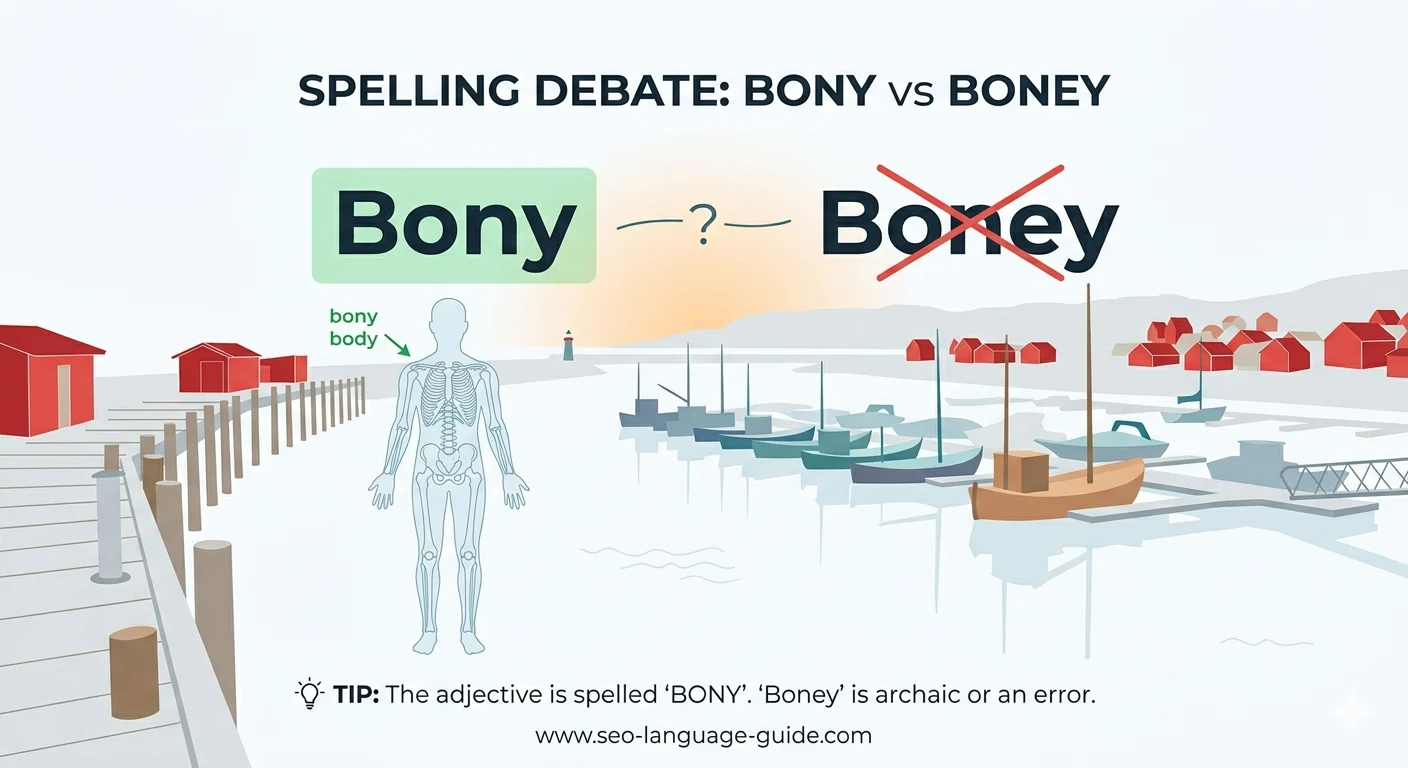
Bony is the standard and more common spelling. Boney is also used as a variant, but “bony” is the preferred choice in most modern English writing.
Bony or boney—which spelling should you actually use? If you’ve ever paused over these two nearly identical words, you’re not alone. The extra “e” can make boney look perfectly natural, but there is an important difference in standard usage. Bony is the usual spelling, while boney is a less common variant. Knowing which one to choose can save you from an unnecessary spelling mistake, especially in formal or academic writing.
The word bony generally describes something related to bones, made of bone, or having bones that are especially noticeable. For example, you might describe someone as having bony fingers or a bony face. It can also describe an animal or object with a noticeable bone structure. In everyday English, bony is by far the more familiar form.
So, is boney wrong? Not necessarily. Boney can appear as a variant spelling, but it is much less common than bony. That means you may encounter it in dictionaries, older writing, names, or particular styles, but bony is generally the better choice when you simply want the standard spelling.
This small spelling difference is easy to overlook, yet choosing the right form matters when you want your writing to look natural, polished, and correct. Whether you’re writing an essay, article, email, story, or social media post, bony will usually be the safest choice.
In this complete guide, you’ll discover the meaning of bony and boney, the exact difference between them, which spelling is preferred, pronunciation, example sentences, common mistakes, and an easy trick to remember the correct form—so you’ll never have to wonder, “Bony or boney?” again.
The Origin of Bony vs Boney → Word Origin, History, and Why Spelling Differences Exist
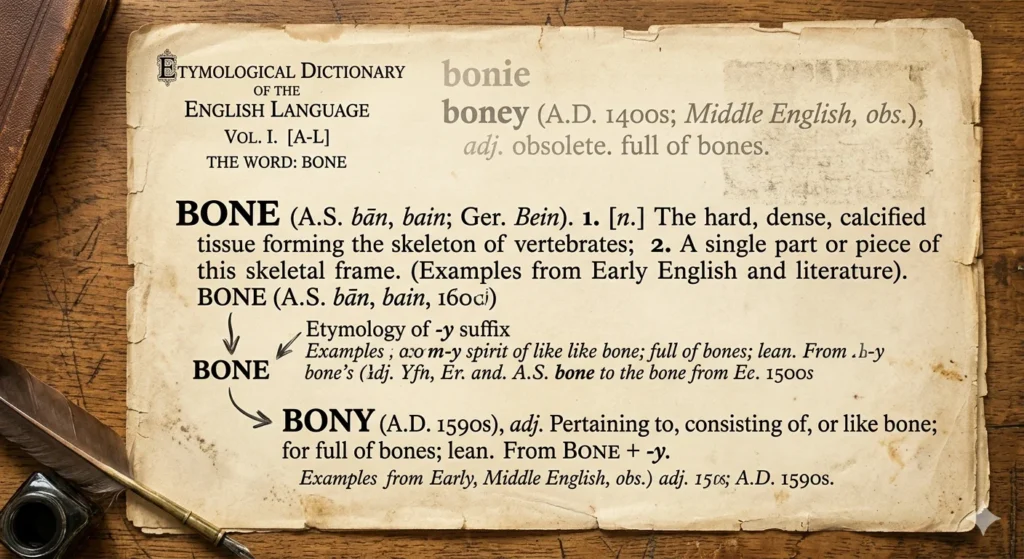
The word “bony” comes from the noun “bone.” It simply means full of bones or having prominent bones.
Historically, English sometimes added an extra “e” before “y” (like stone → stoney), which is why “boney” appeared in older texts. Over time, spelling rules became standardized.
Modern English dropped the extra “e” for simplicity:
- bone + y = bony (correct form)
So why does “boney” still exist?
- Old-fashioned spelling habits
- Informal writing
- Regional or stylistic preference
But today, dictionaries and grammar guides strongly favor “bony.”
👉 If you’re wondering about bony pronunciation, it’s simple:
/ˈboʊ-ni/ → sounds like “BOH-nee”
British English vs American English Spelling → Comparison Table
Unlike many English words, bony vs boney is NOT a UK vs US difference. Both prefer “bony.”
| Feature | British English | American English |
|---|---|---|
| Standard spelling | Bony | Bony |
| Variant spelling | Rarely “boney” | Rarely “boney” |
| Formal writing | Bony only | Bony only |
| Informal usage | Sometimes “boney” | Sometimes “boney” |
👉 Key takeaway:
No matter where you are—UK, US, or elsewhere—“bony” is the correct spelling.
Harbor Vs Harbour 💡 The Secret Behind The Spelling
Which Spelling Should You Use? → Audience-Based Advice

Choosing the right spelling depends on your audience—but in this case, the answer is simple.
✔️ Use “Bony” If:
- You’re writing professionally
- You’re creating SEO content
- You’re sending emails
- You’re writing academic or business documents
⚠️ Avoid “Boney” Unless:
- You’re writing creatively (fiction, dialogue)
- You’re mimicking informal speech
🌍 Global Recommendation:
Always use “bony” for clarity and credibility.
👉 Especially in bony meaning in business, clarity matters.
Example:
- The report revealed a bony structure of the organization (lean, minimal).
Common Mistakes with Bony vs Boney → Frequent Errors and Corrections
Here are the most common mistakes people make:
❌ Mistake 1: Using “boney” in formal writing
✔️ Fix: Replace with bony
❌ Mistake 2: Thinking both are equally correct
✔️ Fix: Only bony is standard
❌ Mistake 3: Misunderstanding the meaning
✔️ Fix: Learn the correct bony adjective usage
Correct vs Incorrect Examples
| Incorrect | Correct |
|---|---|
| He looks very boney | He looks very bony |
| A boney structure | A bony structure |
| That dog is too boney | That dog is too bony |
Bony vs Boney in Everyday Examples → Real-Life Usage

Let’s make this practical.
📧 Email Example:
“The patient appears weak and has a bony body, requiring proper nutrition.”
📰 News Example:
“The rescued animal was extremely bony after days without food.”
📱 Social Media:
“Feeling too skinny lately 😅 I look so bony!”
📄 Formal Writing:
“The sculpture features a bony structure, highlighting anatomical detail.”
👉 Bony person meaning:
A person who is very thin, with visible bones.
👉 What does it mean if you are boney?
It means the same as “bony,” but the spelling is less correct.
👉 Bony name usage:
Sometimes used metaphorically (e.g., “Bony framework” in design or strategy).
Bony vs Boney – Google Trends & Usage Data
Search data shows a clear pattern:
- “Bony” → Highly searched and widely used
- “Boney” → Low search volume, often searched as a mistake
🌍 Popularity by Region:
- USA → “bony” dominates
- UK → “bony” dominates
- Global → “bony” is standard
🔍 Common Search Queries:
- How do you spell bony or boney?
- What does “boney” mean?
- Is boney a word
- How to spell boney
👉 These searches show confusion—but also confirm that “bony” is the correct answer.
Favour Vs Favor ✨ The Difference Revealed
Bony vs Boney → Comparison Table
| Feature | Bony | Boney |
|---|---|---|
| Correct spelling | ✅ Yes | ⚠️ Rare |
| Dictionary approval | ✅ Standard | ⚠️ Limited |
| Formal writing | ✅ Recommended | ❌ Avoid |
| Usage frequency | High | Low |
| SEO value | Strong | Weak |
FAQs About Bony vs Boney
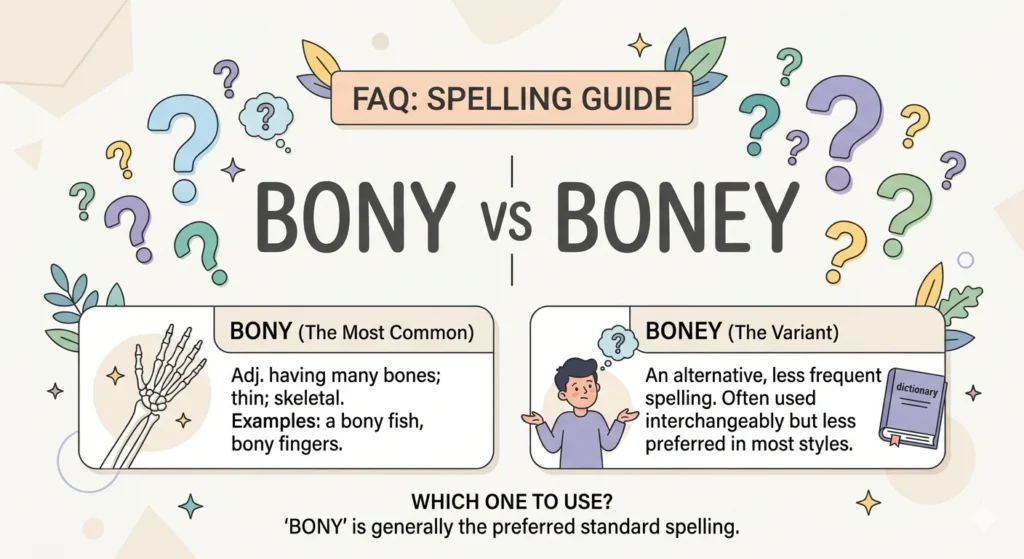
1. How do you spell bony or boney?
The correct spelling is bony.
2. Is boney a word?
Yes, but it’s rare and not recommended in formal writing.
3. What does “boney” mean?
It means the same as “bony,” but is considered non-standard.
4. What do you mean bony?
“Bony” means thin or having visible bones.
5. What does it mean if you are boney?
It means you are very thin, though “bony” is the correct spelling.
6. How to spell boney correctly?
The correct spelling is bony.
7. What is a bony body?
A bony body is a thin body where bones are noticeable.
Conclusion

The confusion between bony vs boney is common—but easy to fix once you understand the rules.
Here’s the simple truth:
👉 “Bony” is correct. “Boney” is outdated or informal.
We explored the meaning, origin, and usage of both spellings. We saw that “bony” is accepted worldwide—in both British and American English. We also looked at real-life examples, common mistakes, and how people search for this keyword online.
If you want your writing to look professional, clear, and credible, always choose “bony.” Whether you’re writing emails, articles, or business content, using the correct spelling builds trust and authority.
So next time you hesitate and think, “How do you spell bony or boney?” — you already know the answer.
Keep it simple. Keep it correct. Use bony.

Fred Hoyle writes informative content focused on clear explanations, helping readers understand deep concepts with ease and confidence.