Synced and synched are both past tense forms of sync, which means to connect or match things so they work together.
However, synced is the modern and most common spelling.
Example sentences:
- My phone synced all contacts with my laptop.
- The video and audio synced perfectly.
- Our calendars are now synced.
You may still see synched in older writing or in some technical contexts.
Example:
- The files synched after the update.
In modern writing, especially online and in technology, synced is the preferred and widely accepted spelling.
Have you ever written synched vs synced and paused for a moment, unsure which spelling is right? You are not alone. Many writers, students, and professionals search this question because both spellings appear online, in emails, and even in software messages.
The confusion usually starts with the word sync, which means to connect, match, or update things so they work together. When we talk about the past tense, we often see both synched and synced. So which one is correct?
This guide clears up the confusion in simple terms. You will learn what each spelling means, why two versions exist, and which one you should use in different situations. We will also look at common mistakes, real-life examples, and how the word appears in everyday communication. By the end, you will know exactly how to use these spellings with confidence.
The Origin of Synched vs Synced
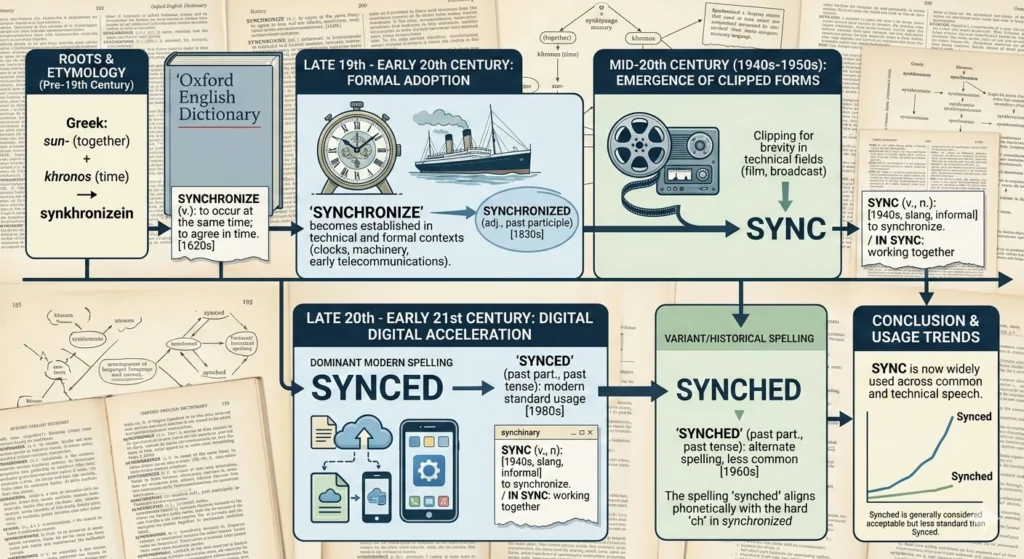
To understand synched vs synced, we need to look at the root word: sync.
The word sync is a short form of synchronize. This longer word comes from Greek roots:
- syn meaning together
- chronos meaning time
Together, the idea meant doing things at the same time.
Over time, synchronize became common in science, music, and film. Later, the shorter form sync appeared in technology and everyday language.
When people started forming the past tense of sync, two spellings appeared:
- synced
- synched
The difference comes from how people tried to represent the sound “k” at the end of the word.
Some writers added h to keep the sound clear, creating synched, similar to words like pinched or punched.
Others simply added ed, creating synced, which is simpler and shorter.
As technology writing grew, especially in apps and software, synced became the dominant spelling.
Today, most digital platforms use synced in messages like:
- “Your files have synced.”
- “Devices are synced.”
British English vs American English Spelling
Unlike many spelling differences between British and American English, synched vs synced is not mainly about geography. Instead, it is about writing style and simplicity.
Both British and American English now prefer synced because it is shorter and easier to read.
However, synched still appears sometimes in older texts or traditional writing styles.
Comparison Table
| Form | Meaning | Usage | Example |
|---|---|---|---|
| sync | base verb | modern standard | Please sync your phone |
| synced | past tense | most common spelling | My devices synced today |
| synched | past tense | less common variant | The systems synched overnight |
| syncing | present participle | modern form | The app is syncing files |
| synching | alternate spelling | less common | The software is synching data |
Example sentences:
- The team sync meeting started after the calendars synced.
- Our systems are syncing files automatically.
- The data synced together across all servers.
Because technology companies prefer shorter spellings, sync, syncing, and synced appear more often today.
Peaked Vs Piqued: The Confusing English Trap ⚠️
Which Spelling Should You Use?
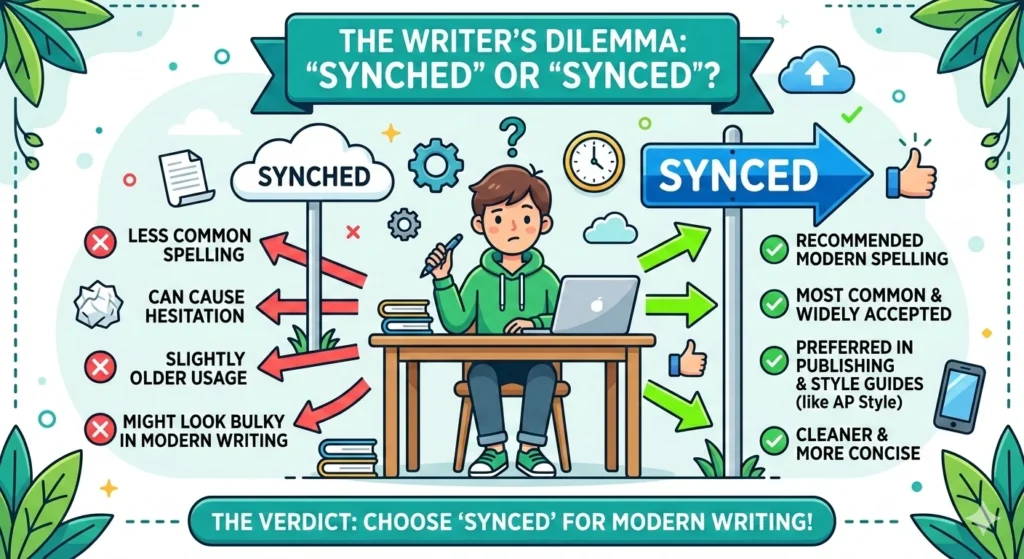
Choosing between synched vs synced depends on your audience and writing style.
For American English
Use synced.
It is the standard spelling in apps, software, emails, and business writing.
Example:
- All files synced to the cloud.
For British English or Commonwealth English
Both spellings may appear, but synced is still the most common modern form.
Example:
- Our calendars are now synced.
For Global or Online Writing
Always choose synced. It is the most familiar spelling for international readers.
Simple Rule
If you are unsure, use synced.
It is shorter, clearer, and widely accepted.
Common Mistakes with Synched vs Synced
Many people make small mistakes when using these words. Here are some common errors and how to fix them.
Mistake 1: Using the wrong past tense
Incorrect:
- My phone sync yesterday.
Correct:
- My phone synced yesterday.
Mistake 2: Confusing synced with sunk
Some learners ask is it synced or sunk.
These words have completely different meanings.
Example:
- The files synced with the server.
- The ship sunk in the storm.
Mistake 3: Mixing spellings in one text
Incorrect:
- The devices synched, and then they synced again.
Correct:
- The devices synced, and then they synced again.
Mistake 4: Using wrong forms of syncing
Some people ask is it spelled syncing or synching.
Both exist, but syncing is far more common.
Example:
- The app is syncing your photos.
Mistake 5: Forgetting meaning
The synced meaning always relates to things working together or sharing the same data.
Example:
- My laptop and phone are synced devices.
Synched vs Synced in Everyday Examples
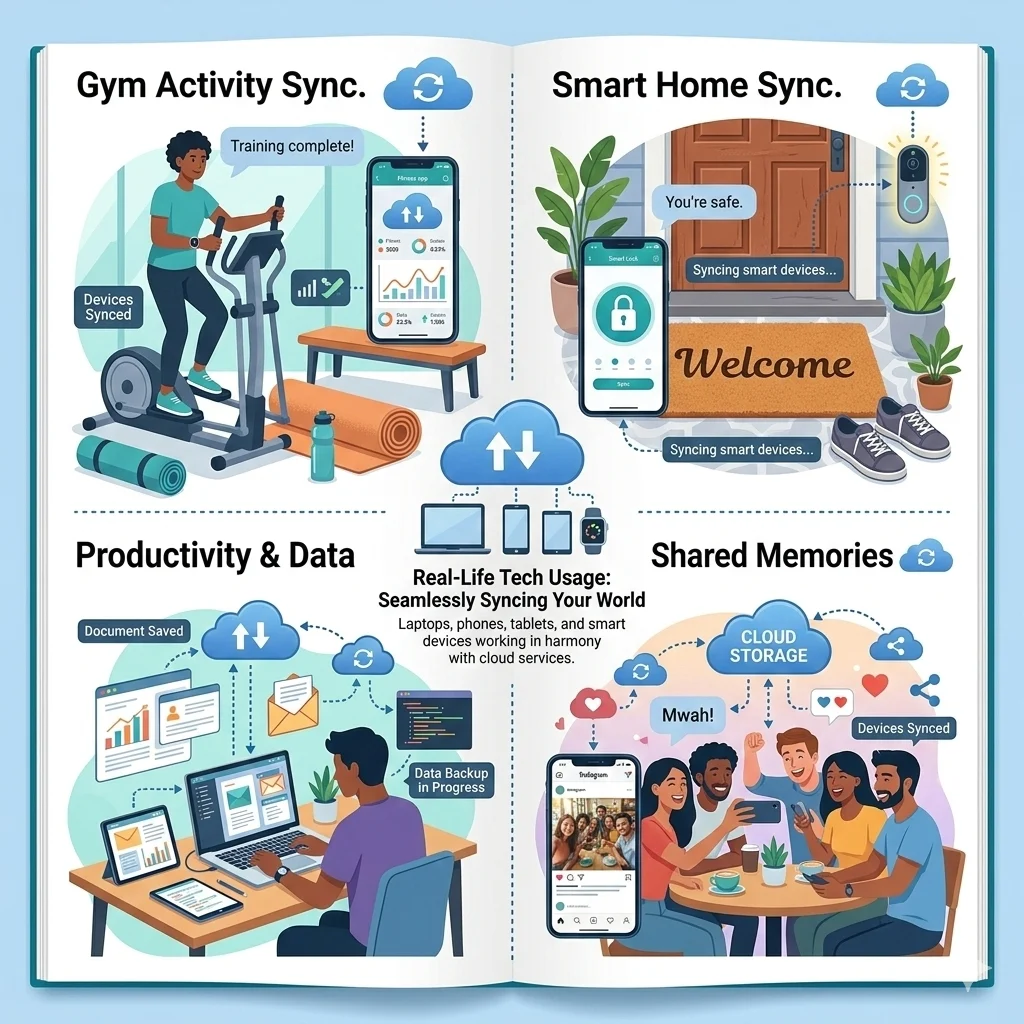
These words appear in many daily situations.
Emails
Example:
“Hi team,
The shared folder has synced with the cloud. Please check the new files.”
Social Media
Example:
“My playlists finally synced up across all devices!”
News and Technology Writing
Example:
“The company launched a system that keeps all user data synced in real time.”
Workplace Communication
Example:
“Let’s have a quick sync meeting tomorrow to review the project.”
Personal Messages
Example:
“My watch synced with my phone after the update.”
In conversation, people also say sync up or synch or sync up meeting to mean coordinating plans.
Example:
- “Let’s sync up later today.”
Synched vs Synced – Google Trends & Usage Data
Online usage clearly shows a strong preference for synced.
Technology companies, apps, and software platforms use synced in notifications and instructions.
Examples include:
- devices synced
- data synced
- account synced
Search data also shows people asking questions like:
- what is the past tense of sync
- is synced a word
- synced devices meaning
Countries where synced appears most often include:
- United States
- Canada
- United Kingdom
- Australia
- India
Because technology language spreads quickly worldwide, synced has become the global standard.
Mat Vs Matt: Why Everyone Gets This Wrong 😬
Keyword Comparison Table
| Keyword Variation | Meaning | Example |
|---|---|---|
| synced meaning | definition of synced | My phone is synced |
| synced up meaning | connected together | Our calendars synced up |
| is synced a word | grammar question | Yes, synced is correct |
| sync past tense | verb form | synced is the past tense |
| synced devices meaning | connected devices | All devices are synced |
| synch or sync up | coordinate or connect | Let’s sync up later |
| synched together | connected together | The systems synched together |
These variations show how the word appears in everyday searches and conversations.
FAQs
What does it mean to be synched?
To be synched means two or more things are connected or working together at the same time. For example, phones and computers can share the same data.
What is the past tense of sync?
The past tense of sync is synced. Some writers also use synched, but synced is more common.
Is it spelled syncing or synching?
Both spellings exist, but syncing is the modern and widely used form.
Is it synced or sunk?
These words are unrelated. Synced means connected or matched. Sunk is the past tense of sink.
Is synced a word?
Yes, synced is a real and widely accepted word, especially in technology and digital communication.
What does synced up mean?
Synced up meaning refers to things becoming coordinated or connected. For example, two calendars can synced up so events appear on both.
What are synced devices?
Synced devices meaning refers to gadgets like phones, tablets, or computers that share the same data automatically.
Conclusion
Understanding synched vs synced is easier once you know the history of the word. Both spellings come from sync, a short form of synchronize, which means to connect things so they work together at the same time.
Over the years, two past tense forms appeared: synched and synced. The spelling synched developed because some writers wanted the pronunciation to stay clear. However, as technology writing evolved, people preferred simpler spellings. This is why synced became the dominant form in apps, software messages, and everyday communication.
Today, most modern writing uses synced, syncing, and sync. These versions are shorter, cleaner, and easier to read on screens. You will see them in emails, tech instructions, workplace conversations, and social media posts.
For global audiences and digital content, the safest choice is always synced. It is widely understood and recognized around the world.
If you remember one simple rule, it is this: use synced for modern writing and communication. Doing so keeps your writing clear, consistent, and aligned with current language trends.

Ann Quin is a content writer at Pray Ocean, sharing clear English word meanings and heartfelt prayers to guide and inspire readers worldwide.