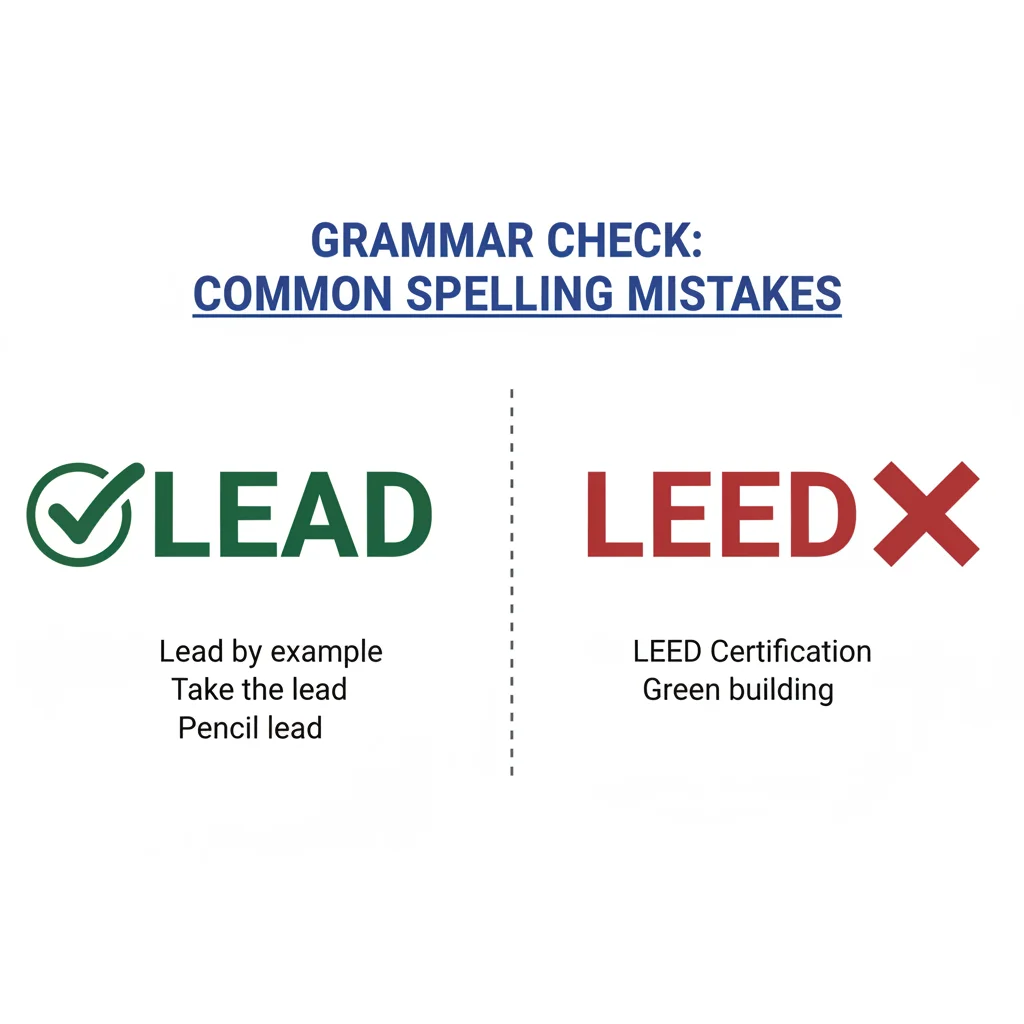
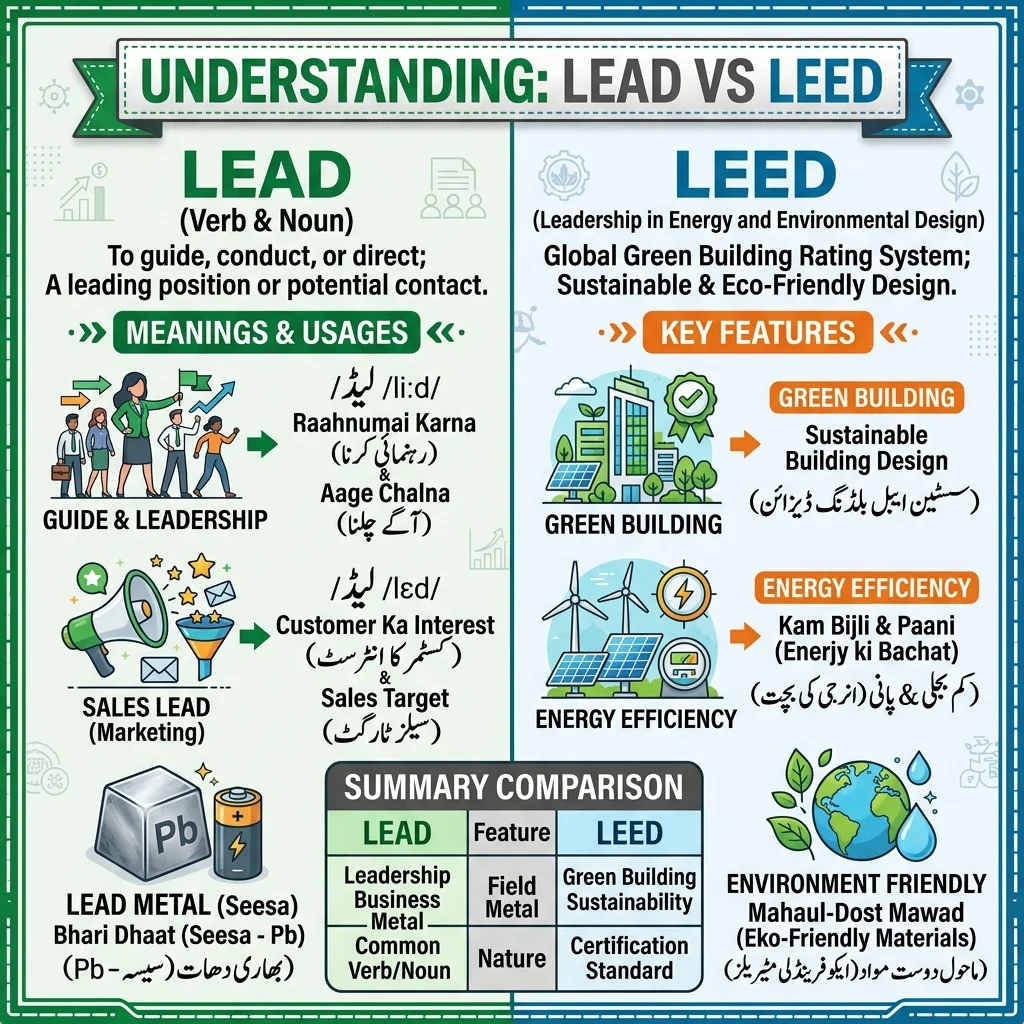
Lead is the correct standard English spelling, while leed is generally not a standard English word. Lead can mean to guide, be ahead, or refer to the metal element, and its pronunciation changes depending on the meaning.
Lead or leed—which spelling is correct? If these two words have ever made you stop while writing, you’re not alone. They look almost identical, but only one is normally correct in standard English: lead. The interesting part is that lead itself can be pronounced in two different ways, depending on what you mean.
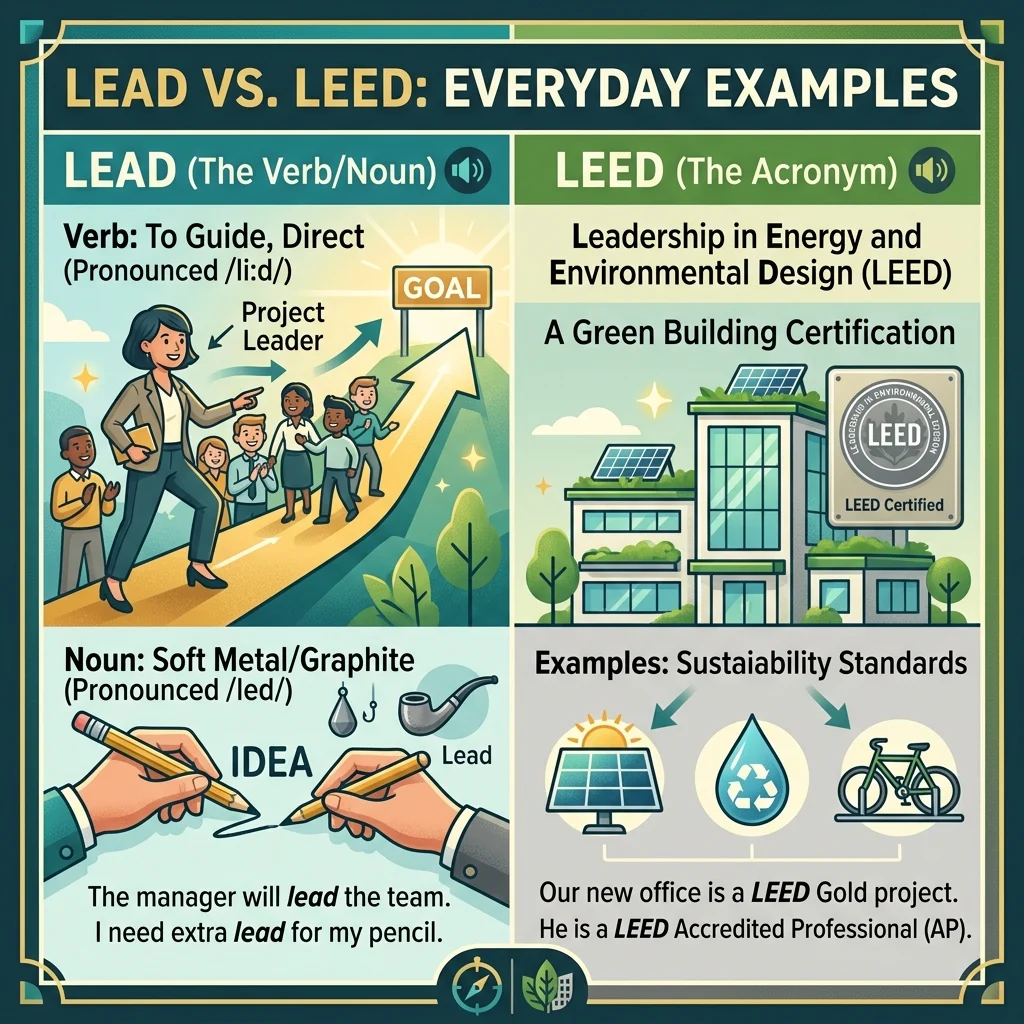
When lead means to guide, direct, or be in charge, it is pronounced like “leed.” For example, “She will lead the team.” But when lead refers to the heavy metal, it is pronounced like “led.” This unusual spelling-and-pronunciation difference is one reason the word causes so much confusion.
Leed, however, is generally not the spelling you should use in ordinary English writing. Although you may encounter Leed in a proper name or another specialized context, it does not normally replace lead.
Whether you’re writing a school assignment, email, article, report, or everyday message, knowing this small difference can save you from an easy spelling mistake. In this guide, you’ll discover lead vs. leed meanings, pronunciations, definitions, correct usage, example sentences, and common mistakes—so you’ll know exactly which spelling to choose every time.
The Origin of lead vs leed
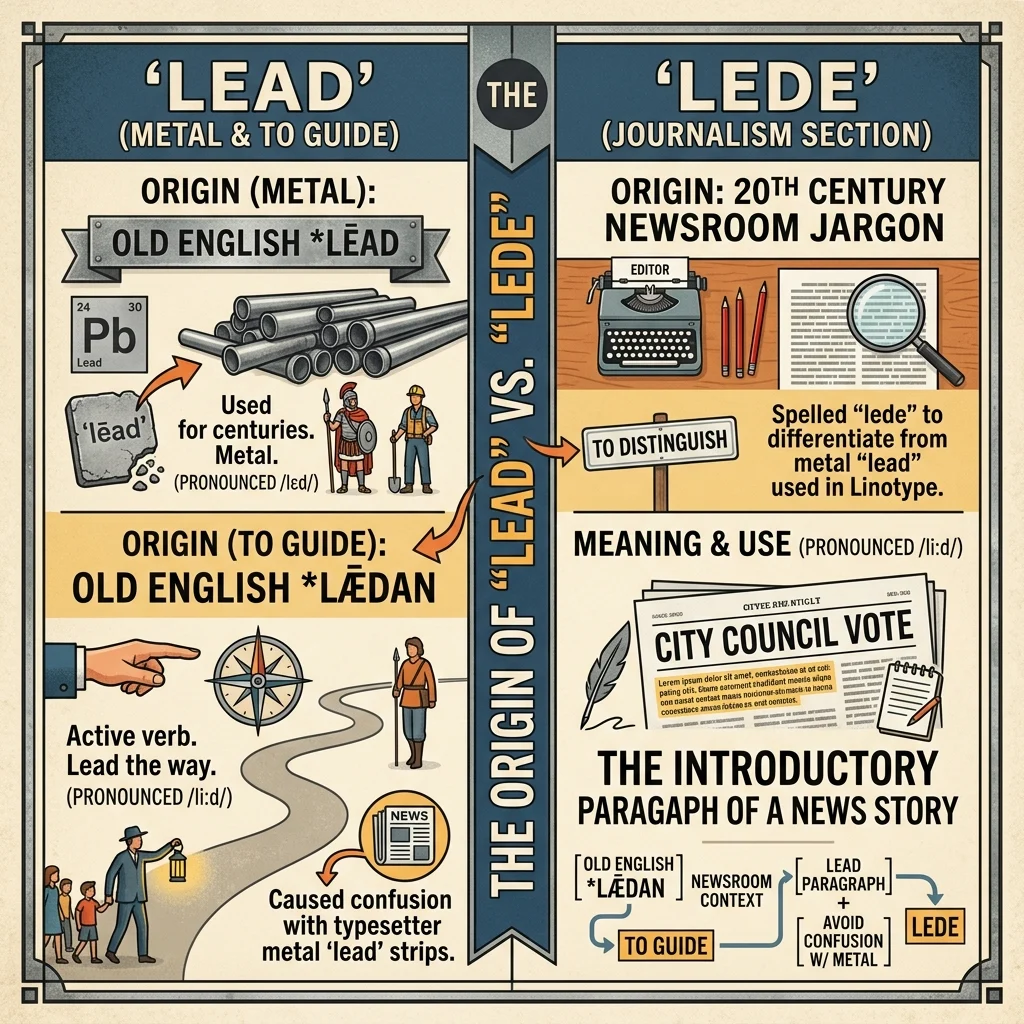
The word lead comes from Old English lædan, meaning “to guide” or “to bring forward.” Over time, spelling simplified into lead, but pronunciation changes stayed.
English also kept another word spelled lead that refers to a metal. This metal name comes from a different Old English root, lēad.
Because both words share the same spelling but different sounds, confusion developed.
Why Leed Appears
Leed appears mainly because of pronunciation confusion. When spoken in present tense, lead sounds like “leed.” Many learners try to spell words exactly as they hear them.
However, English spelling often keeps historical forms rather than phonetic spelling.
Word Development
| Period | Form | Meaning |
|---|---|---|
| Old English | lædan | to guide |
| Middle English | leden | to guide |
| Modern English | lead | correct spelling |
Leed never became an accepted standard spelling.
British English vs American English Spelling
Unlike words such as colour and color, lead does not change spelling between British and American English.
Both systems use the same spelling: lead.
The only difference appears in pronunciation depending on tense.
Present Tense
- I lead the group. (sounds like leed)
Past Tense
- I led the group. (sounds like led)
Comparison Table
| Version | Present | Past | Correct? |
|---|---|---|---|
| American English | lead | led | Yes |
| British English | lead | led | Yes |
| Incorrect form | leed | — | No |
Both regions follow identical grammar rules.
Calendar Vs Calender: The Spelling Mistake 90% Make 📅
Which Spelling Should You Use?
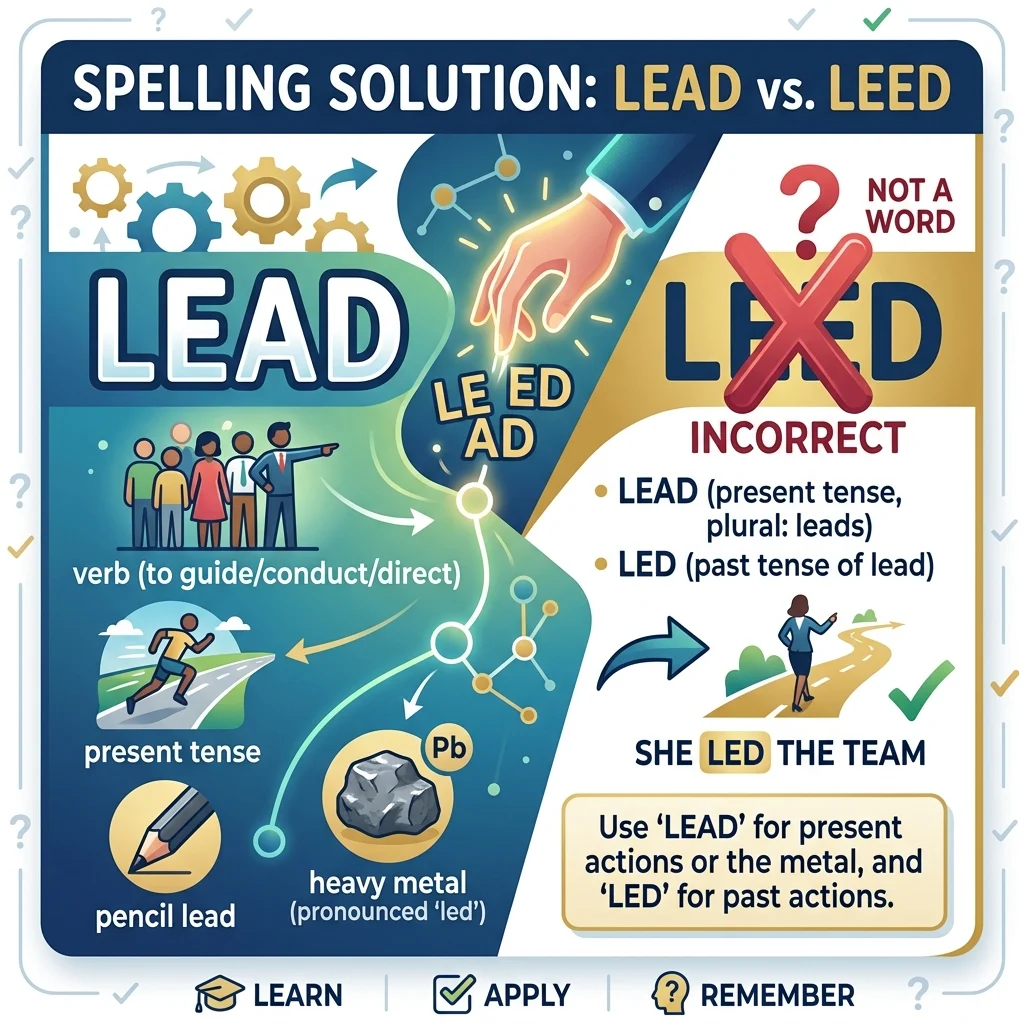
You should always use lead when writing in English.
For US Readers
Use lead for present tense actions.
Example: Managers lead meetings every week.
For UK and Commonwealth Readers
The rule remains the same.
Example: Coaches lead their teams to victory.
For Global Writing
If your audience is international, lead remains the safest and correct spelling.
Using leed can make writing look unprofessional or machine-generated.
Quick Guide
| Audience | Correct Choice |
|---|---|
| United States | lead |
| United Kingdom | lead |
| Australia | lead |
| Global audience | lead |
There is no situation where leed is preferred in modern English.
Common Mistakes with lead vs leed
Many grammar mistakes happen because lead changes pronunciation.
Mistake 1: Using Leed
Incorrect: She will leed the project.
Correct: She will lead the project.
Mistake 2: Confusing Lead and Led
Incorrect: Yesterday I lead the meeting.
Correct: Yesterday I led the meeting.
Mistake 3: Mixing Meanings
Lead can mean guiding or a metal, so context matters.
Example
- Pipes made of lead metal.
- Leaders lead people.
Helpful Memory Tip
Present = lead
Past = led
Never add extra letters to create leed.
lead vs leed in Everyday Examples
Email Example
Please lead the discussion during tomorrow’s meeting.
News Example
The captain will lead the national team in the final match.
Social Media Example
Strong habits lead to strong results.
Formal Writing Example
Effective policies lead organizations toward growth.
Conversation Example
Incorrect: He will leed us home.
Correct: He will lead us home.
These examples show how natural and common the word lead is in daily communication.
lead vs leed – Google Trends & Usage Data
Search behavior shows that lead is widely used worldwide, while leed appears mainly in spelling-error searches.
Many users search phrases like lead vs leed grammar or lead vs leed meaning because pronunciation creates doubt.
Popular Search Contexts
- English learning
- grammar correction
- past tense of lead
- pronunciation help
- writing improvement
Regional Patterns
Native English-speaking countries mostly search grammar explanations. Non-native regions search spelling confirmation more often.
Why Searches Increase
- Lead has two meanings.
- Past tense changes spelling.
- Pronunciation differs from spelling.
These factors keep lead vs leed a common learning topic.
Supposedly Vs Supposably ✨ The Simple Trick To Remember
Comparison Table of Keyword Variations
| Phrase | Meaning | Correct Usage |
|---|---|---|
| lead | guide or metal | Correct |
| led | past tense of lead | Correct |
| leed | spelling error | Incorrect |
| lead vs leed | spelling comparison | Learning query |
| lead vs leed vs led | grammar comparison | Learning query |
| lead meaning | definition search | Informational |
| lead past tense | grammar search | Educational |
FAQs
What are the two meanings of lead?
Lead can mean to guide or direct someone. It also refers to a heavy metal element used in batteries and construction.
Is it leed or lead the way?
The correct phrase is lead the way. Leed is incorrect spelling.
Is it led or lead in bed?
If you mean past tense, use led.
Example: He led the child to bed.
Is leed a word in a sentence?
Leed is generally not accepted as a correct English word. It appears mainly as a spelling mistake.
What is the past tense of lead?
The past tense of lead is led.
Example: She led the meeting yesterday.
How is lead past tense pronunciation different?
Lead (present) sounds like “leed.”
Led (past) sounds like “led.”
What is the lead past participle?
The past participle form is led.
Example: She has led many successful projects.
Conclusion

Understanding lead vs leed becomes easy once you learn one key rule: lead is correct, and leed is almost always wrong. The confusion happens because English pronunciation changes while spelling stays the same. Present tense lead sounds like “leed,” which causes many writers to add an extra letter by mistake.
Lead has two meanings. It can describe guiding someone, or it can refer to a metal element. Context helps readers understand which meaning you intend. The past tense form changes to led, not lead and never leed. This difference explains why learners often search comparisons like lead vs leed vs led or led vs lead vs leed.
Both British and American English use identical spelling rules, so there is no regional variation to worry about. Whether you write emails, academic papers, or social media posts, choosing the correct spelling improves clarity and professionalism.
Remember the simple formula: present equals lead, past equals led. Avoid adding extra letters based on sound. With this rule, your writing becomes clearer, more accurate, and easier to understand for readers worldwide.

Vera Brittain is a writer at Pray Ocean, providing clear English word meanings and inspiring prayer content for everyday readers.