The difference between supposedly vs supposably is simple.
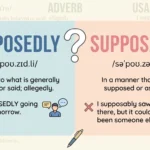
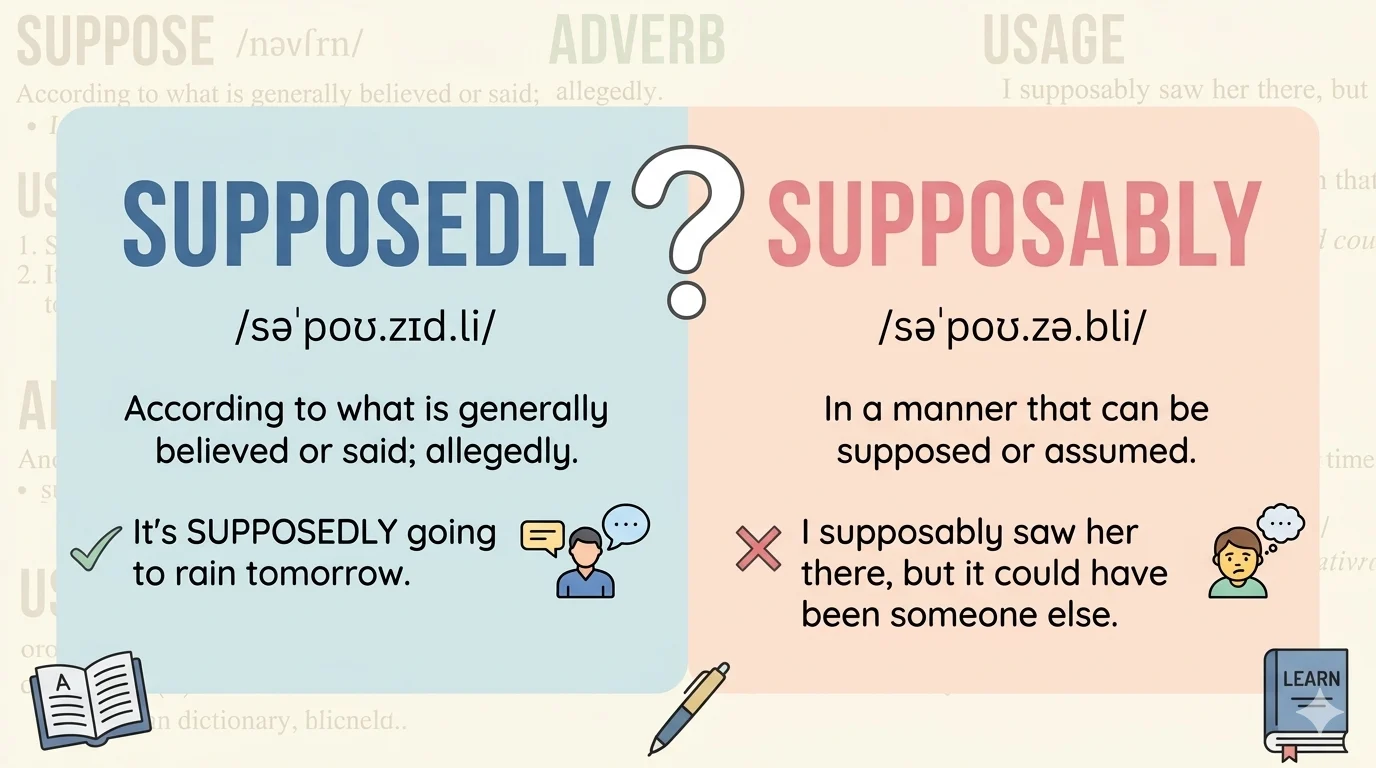
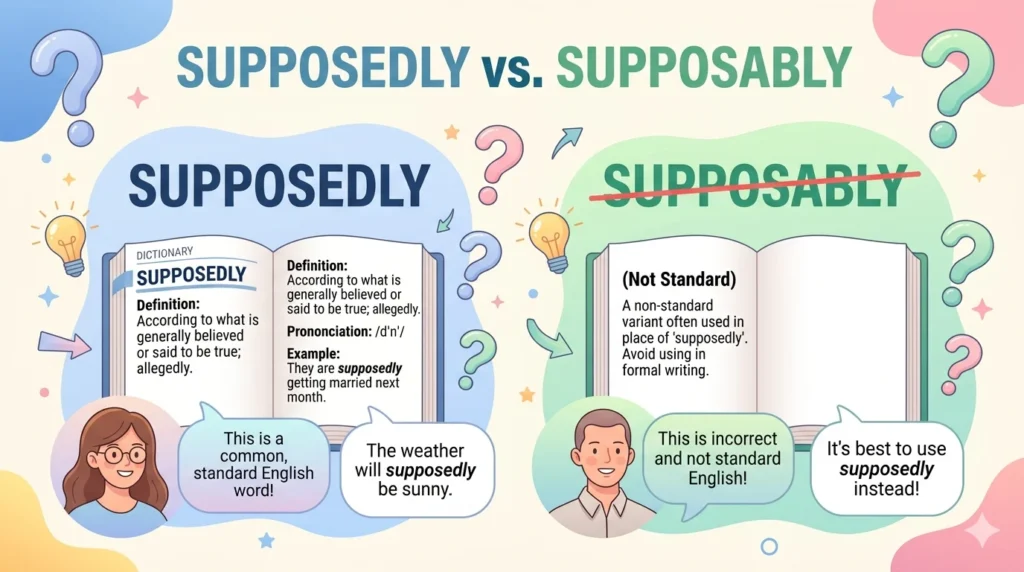
Supposedly means something is believed to be true but may not be proven.
Example
She supposedly finished the report yesterday.
Supposably means something is able to be supposed or imagined. It is rare and usually avoided in modern writing.
Example
The plan could supposably work if everything goes right.
In everyday English, supposedly is the correct and widely accepted word. Most dictionaries list supposably as rare or nonstandard usage.
Quick Comparison
| Word | Meaning | Usage | Example |
|---|---|---|---|
| Supposedly | Believed or claimed to be true | Very common | He supposedly moved to Canada |
| Supposably | Able to be supposed | Rare usage | The idea is supposably possible |
Because the words sound alike, many speakers mix them up while writing or speaking.
Have you ever typed a sentence and paused at the word supposedly? Some people write supposably instead. Both words sound almost the same, which causes a lot of confusion. Many writers search for supposedly vs supposably because they want to know which one is correct grammar and which one should be used in formal writing.
This mix-up happens in emails, social media posts, and even news comments. Some people believe supposably is simply a spelling mistake, while others say it is a real word found in dictionaries. So what is the truth?
In this guide, you will clearly understand the meaning, grammar, and correct usage of supposedly vs supposably. You will learn where each word came from, when supposably was added to the dictionary, and which spelling you should use in everyday writing.
The Origin of supposedly vs supposably
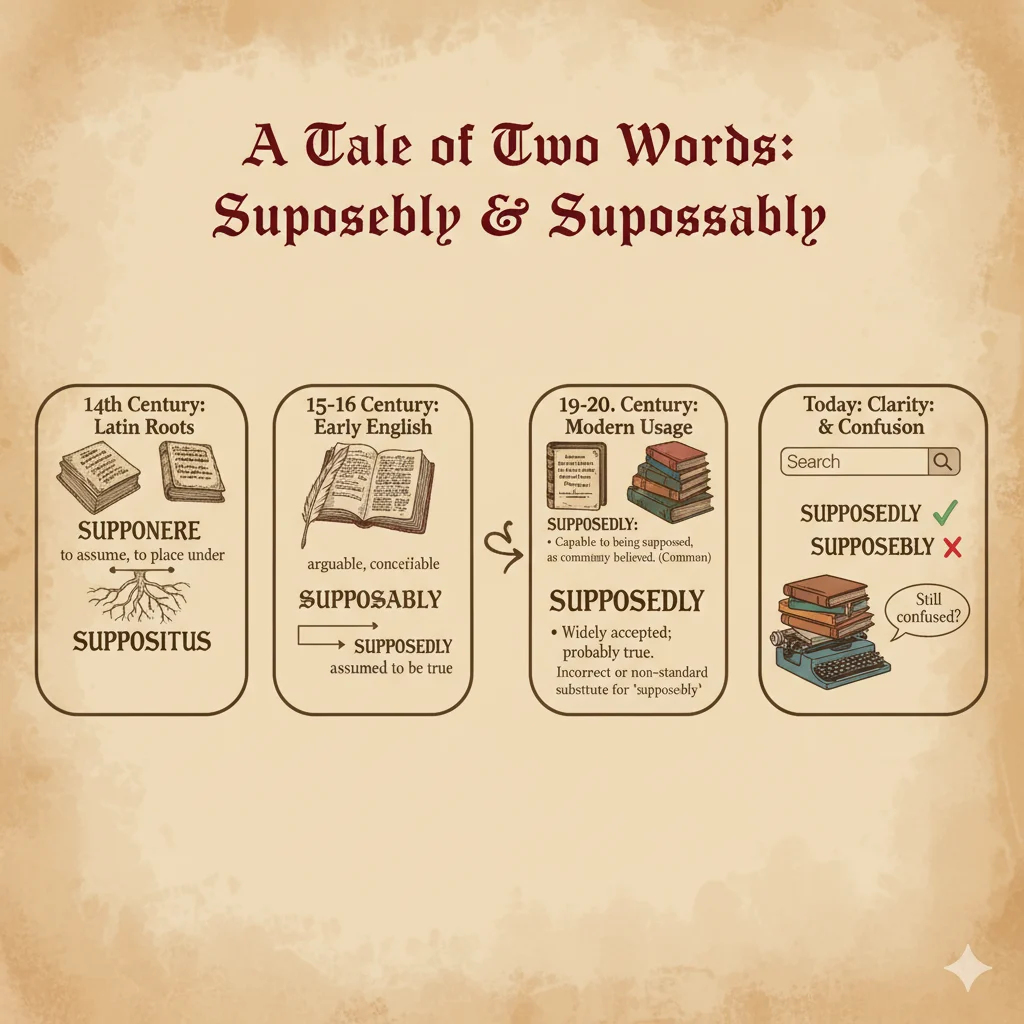
To understand the confusion between supposedly vs supposably, we must look at the history of the words.
The word supposedly comes from the verb suppose. The word suppose comes from Latin roots meaning “to assume” or “to believe something may be true.” Over time, English speakers added the ending “-edly” to form supposedly, meaning something believed or assumed.
Example from older English writing
The treasure was supposedly hidden on the island.
The word supposably appeared later in English. It was formed from the adjective supposable, which means something that can be imagined or assumed. Adding “-ly” created supposably.
However, the meaning never became popular in daily speech. Most people used supposedly instead.
Because of this, supposably often appears as a mistaken pronunciation of supposedly. Many grammar experts say people created it accidentally while speaking quickly.
This is why the confusion between supposedly vs supposably continues today.
British English vs American English Spelling
Some people think the difference between supposedly vs supposably is similar to British and American spelling differences. But this is not actually the case.
In many words, British English and American English use different spellings.
Examples include:
| British English | American English |
|---|---|
| Colour | Color |
| Favourite | Favorite |
| Centre | Center |
| Theatre | Theater |
However, the words supposedly and supposably do not follow this pattern.
Both British English and American English prefer supposedly. The spelling supposably is not considered the standard form in either variety of English.
Comparison Table
| Feature | Supposedly | Supposably |
|---|---|---|
| Accepted in US English | Yes | Rare |
| Accepted in UK English | Yes | Rare |
| Used in formal writing | Yes | No |
| Found in dictionaries | Yes | Sometimes |
| Common in speech | Yes | Sometimes mistaken |
This shows that the difference between supposedly vs supposably is not regional spelling but a matter of correct usage.
Sulfur Vs Sulphur: The Truth Most Writers Miss 🔍
Which Spelling Should You Use?

If you are deciding between supposedly vs supposably, the safe choice is simple: use supposedly.
It works in almost every writing situation.
For American audiences
Use supposedly. It is standard in US grammar and appears in academic writing, journalism, and business communication.
Example
The company supposedly launched the product last week.
For British and Commonwealth readers
Again, use supposedly. It is the accepted spelling in the UK, Canada, Australia, and many other countries.
Example
The player supposedly signed the contract yesterday.
For global audiences
If your writing is meant for readers worldwide, supposedly is still the best choice. It is widely recognized and understood.
Using supposably may confuse readers or make the writing appear incorrect.
So when thinking about supposedly vs supposably, remember this simple rule:
Use supposedly for clear and professional writing.
Common Mistakes with supposedly vs supposably
Many writers make mistakes when choosing between supposedly vs supposably. The confusion usually happens because the words sound similar.
Here are some common errors.
Mistake 1: Using supposably instead of supposedly
Incorrect
He supposably finished the work.
Correct
He supposedly finished the work.
Mistake 2: Thinking supposably means the same thing
Incorrect
The movie supposably earned millions.
Correct
The movie supposedly earned millions.
Mistake 3: Using supposably in formal writing
Incorrect
The scientist supposably discovered a new planet.
Correct
The scientist supposedly discovered a new planet.
Mistake 4: Confusing pronunciation
Many speakers pronounce supposedly as “supposably” while talking. This creates spelling errors when they write the word later.
Mistake 5: Mixing it with allegedly
Another confusion is between supposedly vs allegedly. Both suggest uncertainty, but allegedly is often used in legal or news contexts.
Example
The suspect allegedly committed the crime.
Understanding these mistakes helps writers use the correct word with confidence.
supposedly vs supposably in Everyday Examples

To understand supposedly vs supposably better, look at how the words appear in real-life communication.
Emails
The meeting was supposedly moved to Monday.
News writing
The actor supposedly signed a new movie deal.
Social media
This restaurant supposedly has the best pizza in town.
Formal writing
The results supposedly prove the new method works.
Informal conversation
He supposedly knows the answer.
In most real situations, supposedly is the word people use. Supposably rarely appears outside of grammar discussions.
supposedly vs supposably – Google Trends & Usage Data
Search behavior also shows the difference between supposedly vs supposably.
Online search data reveals that supposedly is far more popular worldwide. Millions of users search for it each year.
People often search for supposedly vs supposably because they want to confirm which word is correct.
Popularity by region
United States
Most searches focus on grammar questions and writing help.
United Kingdom
Users search to confirm the correct spelling.
Canada and Australia
Many searches come from students learning formal writing.
India and other global regions
People search the phrase to understand pronunciation differences.
Search trends also show that supposably meaning and is supposably a word are common questions.
This shows that many English learners want clarity about the word.
Calendar Vs Calender: The Spelling Mistake 90% Make 📅
Comparison Table of Keyword Variations
| Phrase | Meaning |
|---|---|
| supposedly vs supposably | Comparison of two similar sounding words |
| supposedly vs supposably meaning | Explanation of the difference |
| supposedly vs supposably examples | Sentences showing correct usage |
| supposedly vs supposably synonyms | Words similar to supposedly |
| supposably meaning | Meaning of the rare word supposably |
| is supposably a word | Question about dictionary status |
| supposably pronunciation | How the word is spoken |
These phrases show how people search for help understanding the difference.
FAQs
Is supposably correct grammar?
Supposably is technically a real word but it is rarely used. Most grammar experts recommend using supposedly instead.
When was “supposably” added to the dictionary?
The word supposably appeared in English dictionaries in the early twentieth century, but it has always been marked as rare or uncommon.
Is supposably a word now?
Yes, some dictionaries list it, but it is still considered unusual and not recommended for normal writing.
What is the meaning of supposably?
Supposably means something can be imagined or supposed to be possible.
What is the difference between supposedly vs allegedly?
Supposedly means something is believed or rumored. Allegedly is often used in legal or news contexts when something is claimed but not proven.
How is supposably pronounced?
Supposably pronunciation sounds like suh-POH-zuh-blee. Many people accidentally say this when they mean supposedly.
Are there synonyms for supposedly?
Common synonyms include reportedly, apparently, allegedly, and supposedly according to others.
Conclusion
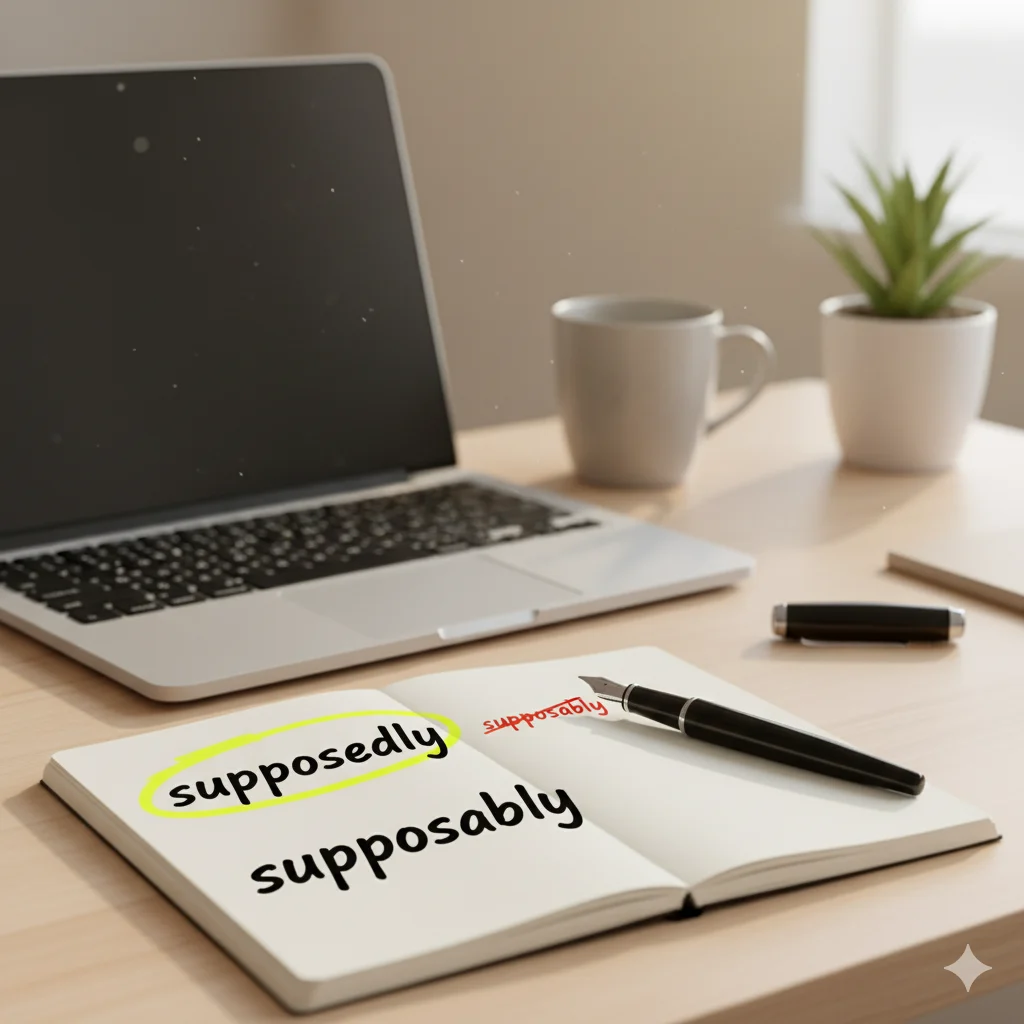
Understanding the difference between supposedly vs supposably helps you write more clearly and confidently. Although the words sound similar, their usage in English is very different.
Supposedly is the standard and widely accepted word. It means something is believed or claimed to be true but may not be proven. This word appears in everyday speech, journalism, academic writing, and professional communication. Because it is familiar to readers, it keeps your writing clear and natural.
Supposably, on the other hand, has a very limited role in English. Some dictionaries list it, but it is rarely used and often considered nonstandard. Many people only encounter the word when discussing grammar mistakes or pronunciation confusion.
For this reason, most writers, teachers, and editors recommend using supposedly in almost every situation. Whether you are writing an email, posting on social media, or preparing a formal document, supposedly will always be the safer and clearer choice.
When you remember this simple rule, the confusion between supposedly vs supposably disappears, and your writing becomes easier for readers everywhere to understand.

Stella Gibbons is a writer at Pray Ocean, sharing clear English word meanings and meaningful prayer articles for daily guidance.