Confused about peoples vs people’s? Here’s the quick answer:
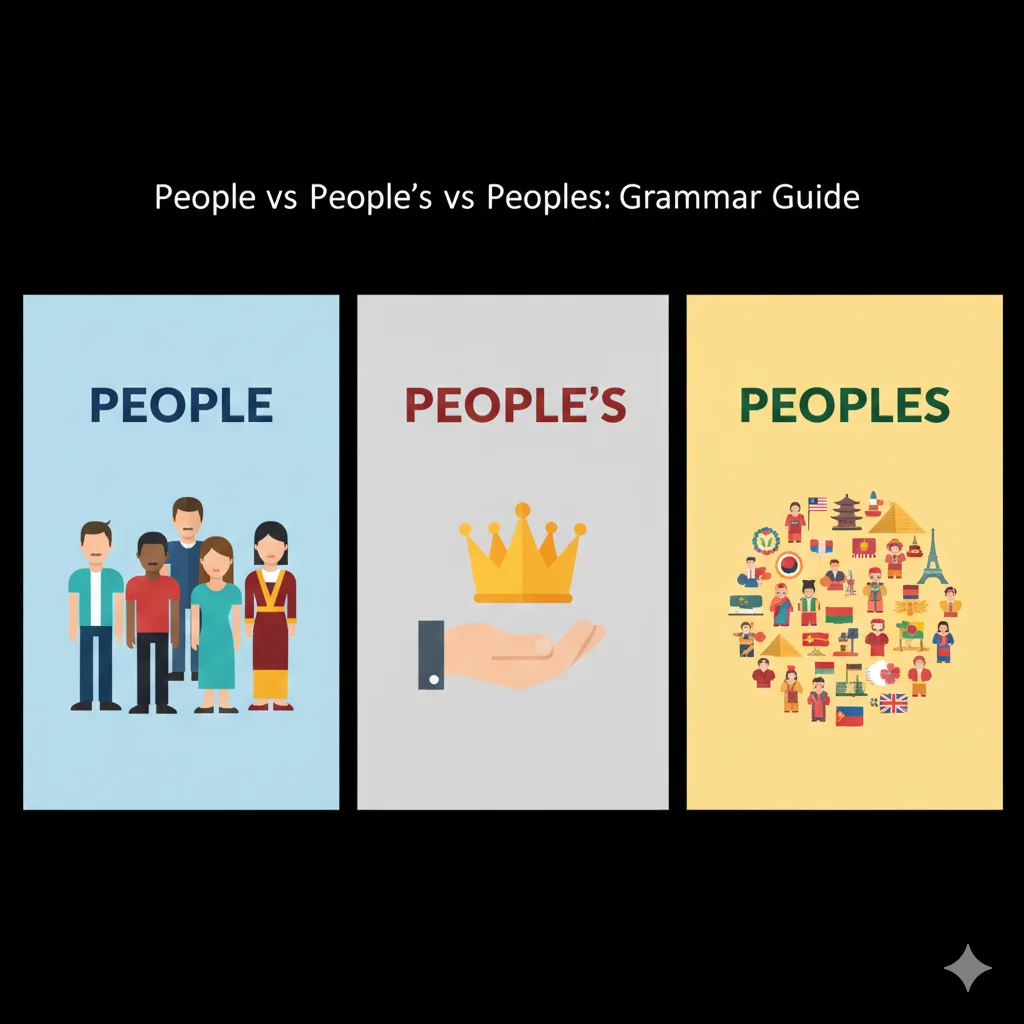
- People = plural of person (17 people, not 17 peoples).
- People’s = possessive form of people (the people’s choice).
- Peoples = plural of people when referring to distinct ethnic or cultural groups (the indigenous peoples of Canada).
Many search for peoples vs people’s grammar, should I use peoples or people’s, or peoples meaning because it’s tricky to know when to use an apostrophe or the plural form. apostrophe goes in people’s.
Confused about peoples vs people’s? You are not alone. Many people search online asking “is peoples correct?” or “should I use peoples or people’s?” because English grammar can be tricky. The words may look similar, but they have very different meanings.
People’s with an apostrophe shows ownership, like the people’s choice, while peoples refers to distinct cultural or ethnic groups, such as the indigenous peoples of Canada. Misusing them is a common mistake, especially in emails, social media, news, and formal writing.
Understanding the difference is important if you want to write clearly and professionally. This guide answers common questions people also ask, like “people’s people meaning”, “peoples or peoples lives”, and “people vs persons”.
By reading this article, you’ll learn when to use people, people’s, and peoples, avoid common grammar errors, and see practical examples that help in everyday writing. Whether you’re a student, professional, or content creator, this guide solves your confusion and makes your English writing more accurate and credible.
The Origin of Peoples vs People’s
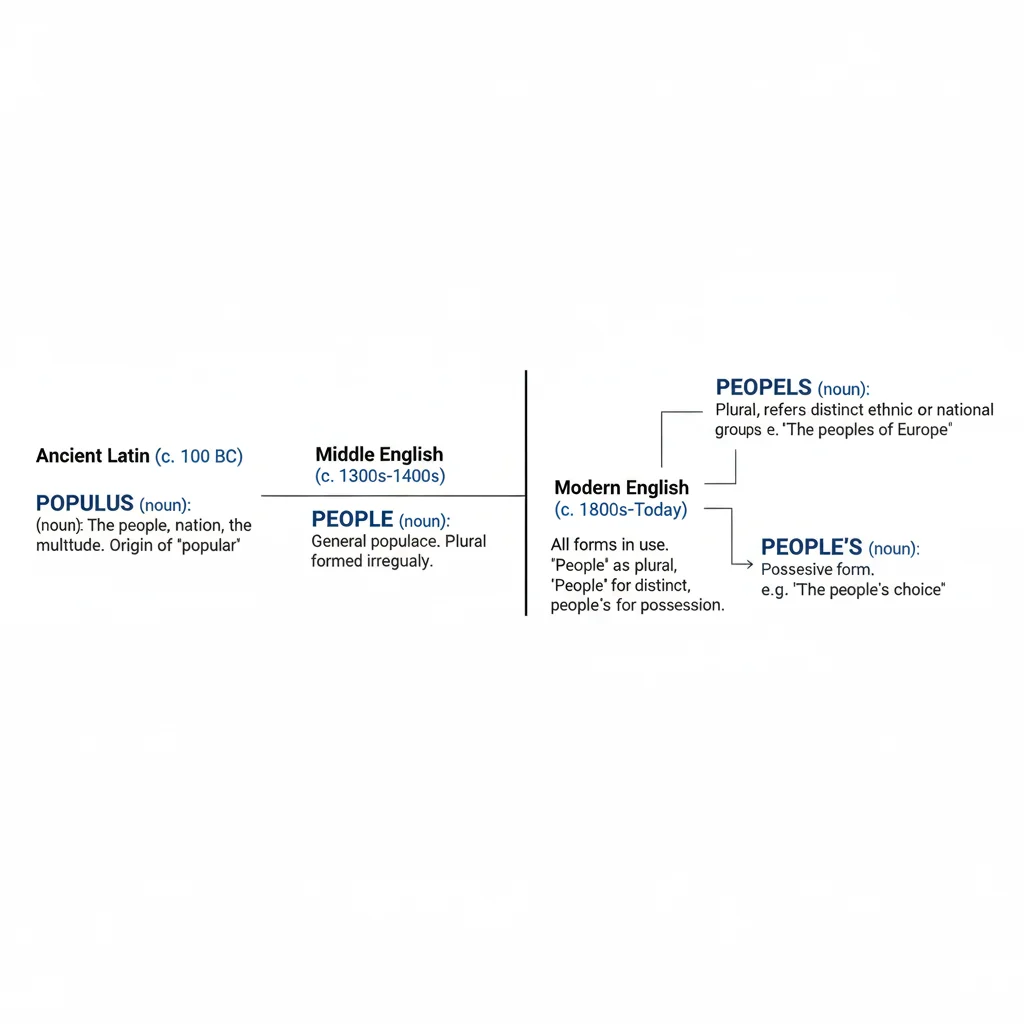
The difference originates from English grammar evolution:
- People comes from Latin populus, meaning a group of humans.
- Peoples emerged to describe separate groups—especially in history or anthropology.
- People’s developed with the possessive apostrophe to show ownership or belonging.
Historically, writers struggled with plurals and possessives. Over time, peoples was preserved in academic and historical contexts, while people’s became standard in modern grammar.
- People also ask: What is the plural possessive of peoples? → It is peoples’, e.g., the peoples’ rights.
British English vs American English Spelling
The usage is mostly consistent in UK and US English, but subtle differences exist:
| Term | British English | American English | Example |
|---|---|---|---|
| People | ✓ | ✓ | 17 people attended the event. |
| People’s | ✓ | ✓ | The people’s vote mattered. |
| Peoples | ✓ | ✓ | The indigenous peoples of Canada. |
- Rule: No apostrophe is added for peoples.
- Common mistakes: Writing peoples’ when you mean people’s.
- People also search for: Peoples vs people’s grammar, peoples or peoples possessive.
Which Spelling Should You Use?
- Use people → general groups of humans: The people are waiting.
- Use people’s → showing ownership: The people’s decision is final.
- Use peoples → distinct ethnic or cultural groups: The native peoples of Africa.
Audience-based advice:
- US readers → stick to people/people’s unless writing academically.
- UK & Commonwealth → same rules, but peoples is more accepted in formal historical writing.
- Global content → consider most users search people vs peoples and people’s meaning.
Dissatisfied vs Unsatisfied: Simple Meaning, Big Confusion 😵
Common Mistakes with Peoples vs People’s
- Using peoples when you mean people’s
❌ The peoples choice is final.
✅ The people’s choice is final. - Using people’s when referring to multiple ethnic groups
❌ The people’s of Canada are diverse.
✅ The peoples of Canada are diverse. - Confusing people and persons
❌ Seventeen persons came to the party. (acceptable formally, but rare in US English)
✅ Seventeen people came to the party. - Apostrophe placement errors
- Correct: the people’s vote, the peoples’ traditions
- People also search for: Is it 17 people or 17 peoples?, where should the apostrophe go in people’s?, people vs persons.
Peoples vs People’s in Everyday Examples
Emails:
- Please review the people’s feedback before submitting.
News Headlines:
- The indigenous peoples demand recognition.
Social Media:
- The people’s champion has won!
Formal Writing:
- International law protects the rights of all peoples.
- People also search for: Peoples or peoples examples, peoples or peoples lives.
Peoples vs People’s – Google Trends & Usage Data
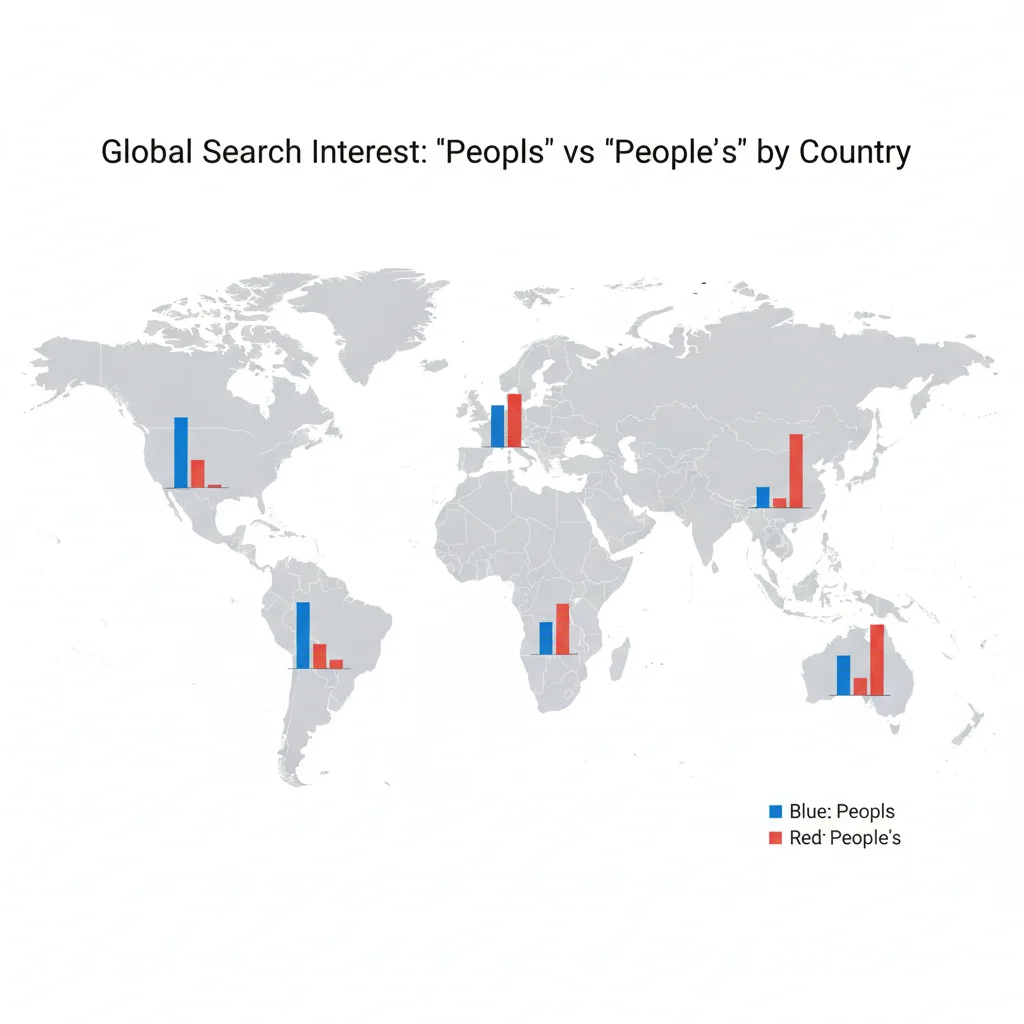
- Trend insights: Searches for peoples vs people’s spike in English learning forums and writing communities.
- Popular queries by country:
- USA → people vs persons, people’s meaning
- UK → peoples or peoples possessive, peoples meaning
- Canada/Australia → indigenous peoples examples
- tip: Using people’s and peoples correctly improves content credibility and helps rank for related FAQs.
Comparison Table: Peoples vs People’s
| Word | Type | Use Case | Example |
|---|---|---|---|
| People | Plural | General group of humans | 17 people attended the event. |
| People’s | Possessive | Shows ownership or belonging | The people’s choice mattered. |
| Peoples | Plural | Distinct ethnic/cultural groups | The indigenous peoples of Canada. |
| Peoples’ | Possessive | Ownership for multiple groups | The peoples’ rights were recognized. |
FAQs About Peoples vs People’s
- Is peoples correct?
✅ Yes, when referring to multiple ethnic or cultural groups. - Should I use peoples or people’s?
- Use people’s for possession, peoples for groups.
- What is the plural possessive of peoples?
- Peoples’, e.g., the peoples’ cultures are rich.
- Is it 17 people or 17 peoples?
- Correct: 17 people. Use peoples only for distinct groups.
- Where should the apostrophe go in people’s?
- After e: people’s, indicating ownership.
- People vs persons – are they the same?
- People is standard; persons is formal/legal.
- People’s people meaning – what does it mean?
- Refers to individuals representing or supported by the people.
Conclusion
Understanding peoples vs people’s clears a common grammar confusion. Remember:
- People = general group of humans.
- People’s = ownership or possession.
- Peoples = multiple ethnic or cultural groups.
- Peoples’ = possessive for multiple groups.
Correct usage improves writing in emails, news, social media, and formal contexts. For global content, adapt based on US vs UK vs Commonwealth rules. Check your context carefully—ownership, plurality, or cultural reference—and you’ll always pick the right form. Using these rules avoids common mistakes, improves credibility, and satisfies user searches like peoples vs people’s grammar and people’s meaning.

Ann Quin is a content writer at Pray Ocean, sharing clear English word meanings and heartfelt prayers to guide and inspire readers worldwide.