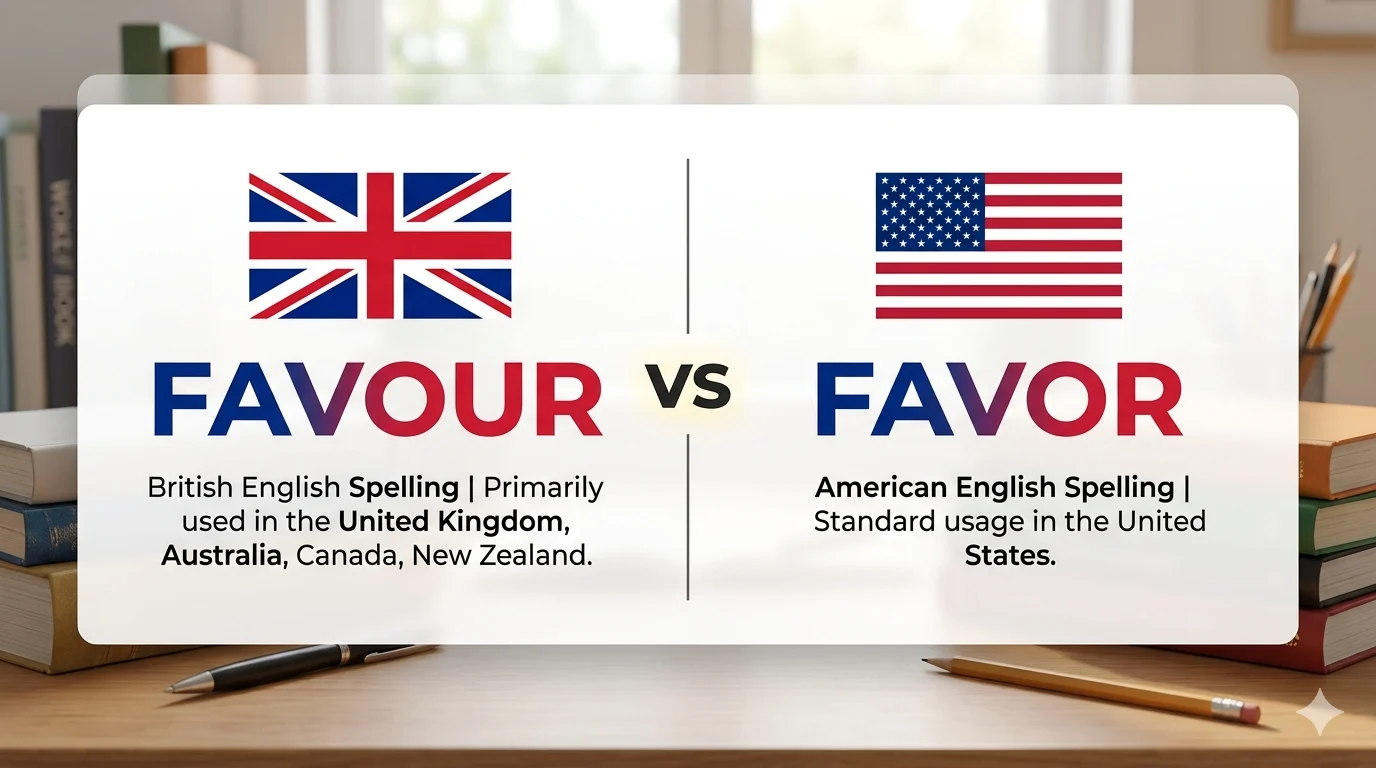
“Favour” and “favor” have the same meaning. The difference is only in spelling.
- Favour → British English
- Favor → American English
Examples:
- UK: Can you do me a favour?
- US: Can you do me a favor?
Both mean: a kind act, help, or support given to someone.
So, if you’re asking “What does favor mean?” or “Favour vs favor meaning”—they are exactly the same. Only the spelling changes based on location.
Have you ever paused mid-sentence and wondered: Should I write “favour” or “favor”? You’re not alone. This tiny spelling difference confuses millions of people every day. Whether you’re writing an email, a blog, or even a social media post, choosing the wrong version can make your writing look inconsistent or even incorrect.
The confusion exists because both spellings are actually correct—but they belong to different forms of English. Many people search “What is the difference between favour and favor?” or “Is it favor or favour in the UK?” because they want clarity and confidence in their writing.
This guide solves that confusion once and for all. You’ll learn the favour vs favor meaning, when to use each, and how to avoid common mistakes. By the end, you’ll know exactly which spelling fits your audience—whether you’re writing for the US, UK, or a global audience.
The Origin of Favour vs Favor
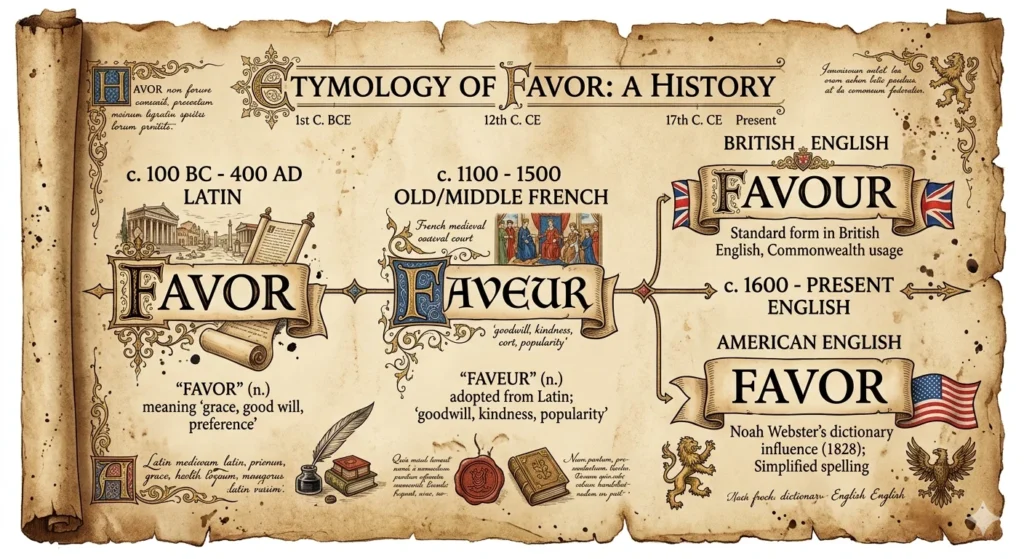
The story of favour vs favor goes back hundreds of years. The word comes from the Latin word “favor”, meaning kindness or goodwill.
Later, it moved into Old French as “faveur”, which influenced British English spelling. That’s why the UK version includes the extra “u”—favour.
In the 1800s, American English began simplifying spellings. Writers like Noah Webster removed silent letters to make words easier. This led to:
- favour → favor
- colour → color
- honour → honor
This explains the favour vs favor spelling difference. It’s not about meaning—it’s about language evolution.
British English vs American English Spelling
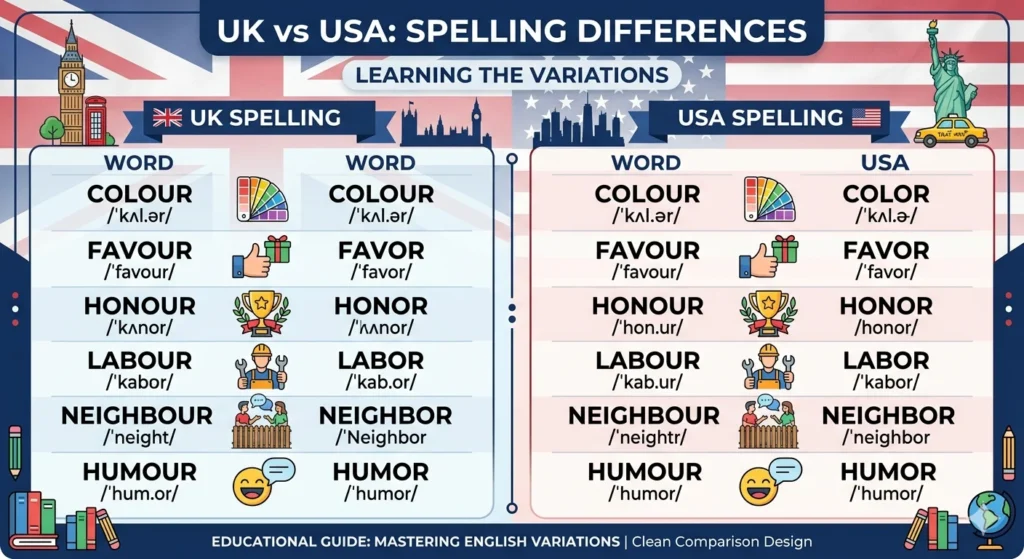
The main difference lies in regional spelling rules.
| Feature | British English | American English |
|---|---|---|
| Spelling | favour | favor |
| Style | Traditional | Simplified |
| Used in | UK, Canada, Australia | USA |
| Example | She did me a favour | She did me a favor |
Key Insight:
- If you’re asking “Is it favor or favour in the UK?” → Use favour
- If you’re asking “Is it favor or favour in India?” → Usually favour (British influence)
- If you’re asking about favour vs favor Canada → Both are used, but favour is more common
Scared Vs Scarred 🎯 Which One Should You Use?
Which Spelling Should You Use?

Choosing between favour vs favor depends on your audience.
Use “favor” if:
- Your audience is in the United States
- You write for American websites or businesses
Use “favour” if:
- Your audience is in the UK, Pakistan, India, or Australia
- You follow British English rules
For Global Writing:
Pick one style and stay consistent.
Example:
- Email (UK client): I need your favour on this task.
- Email (US client): I need your favor on this task.
This answers questions like:
- Need your favour or favor? → Depends on audience
- My favour meaning → A request for help or kindness
Common Mistakes with Favour vs Favor
Even though the meaning is simple, mistakes are common.
❌ Mixing both spellings
Wrong: Can you do me a favor? I need a small favour.
✔ Correct: Stick to one style.
❌ Using the wrong regional spelling
Wrong (UK audience): Please do me a favor
✔ Correct: Please do me a favour
❌ Thinking they have different meanings
They don’t. The favour vs favor difference is only spelling.
❌ Confusing with other meanings
“Favor” can also mean approval:
- The decision was in his favor.
Favour vs Favor in Everyday Examples
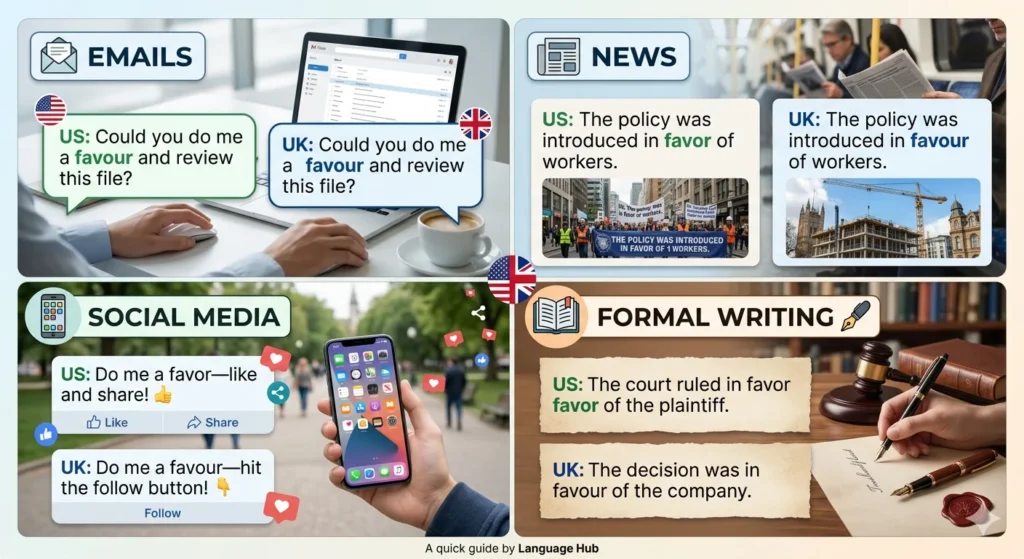
Let’s see how this word works in real life.
📧 Emails:
- UK: Could you do me a favour and review this file?
- US: Could you do me a favor and review this file?
📰 News:
- UK: The policy was introduced in favour of workers.
- US: The policy was introduced in favor of workers.
📱 Social Media:
- Do me a favour—like and share!
- Do me a favor—hit the follow button!
📖 Formal Writing:
- The court ruled in favor of the plaintiff.
- The decision was in favour of the company.
These are clear favour vs favor examples used daily.
Favour vs Favor – Google Trends & Usage Data
Search trends show a clear pattern:
- “Favor” dominates in the United States
- “Favour” is popular in the UK, India, Pakistan, and Australia
Interesting Insight:
- People often search:
- favour vs favor meaning
- favour vs favor difference
- favor or favour in the Bible
Religious Context:
In most modern English Bibles (like NIV), “favor” is used.
In older or British versions, “favour” appears.
So, if you’re asking:
- Meaning of favour in the Bible → It means God’s blessing or kindness
Favour vs Favor Synonym
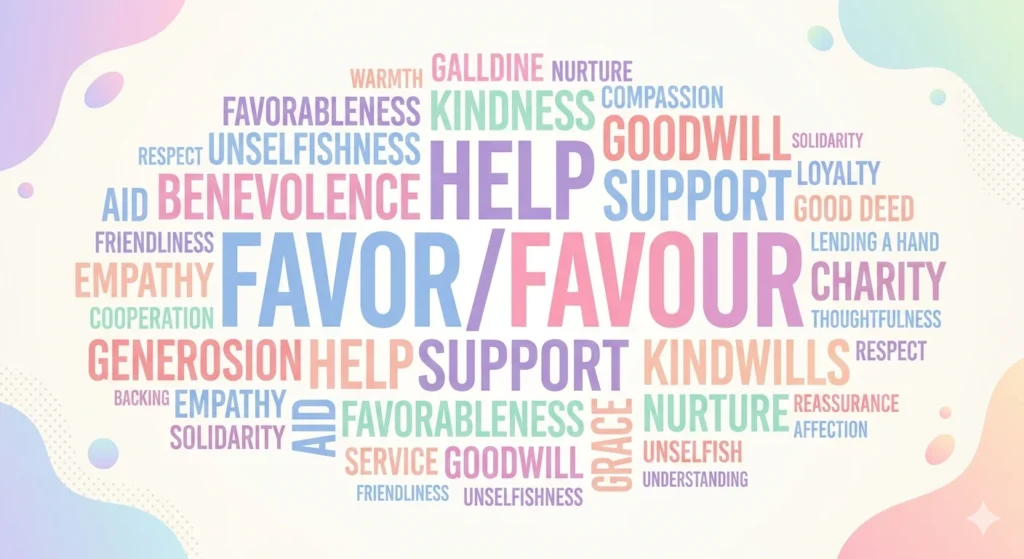
Both words share the same synonyms:
- Help
- Kindness
- Support
- Approval
- Goodwill
Example:
- She asked for a favour = She asked for help
Comparison Table: Favour vs Favor
| Aspect | Favour | Favor |
|---|---|---|
| Meaning | Kind act, help | Same |
| Region | UK/Commonwealth | USA |
| Usage | Formal & informal | Formal & informal |
| Example | Do me a favour | Do me a favor |
Harbor Vs Harbour 💡 The Secret Behind The Spelling
FAQs About Favour vs Favor
1. What is the difference between favour and favor?
There is no difference in meaning. Only spelling differs by region.
2. Is it favor or favour in India?
India follows British English, so favour is preferred.
3. Is it favor or favour in the UK?
In the UK, the correct spelling is favour.
4. What does favor mean?
It means a kind act, help, or approval.
5. Favor or favour in the Bible?
Modern versions use favor, older or British ones use favour.
6. Need your favour or favor—which is correct?
Both are correct. Choose based on your audience.
7. Is “my favour meaning” correct usage?
Yes. It means a request or act of kindness you are asking for.
Conclusion

The debate around favour vs favor is simpler than it seems. Both words mean the same thing—kindness, help, or approval. The only difference lies in geography and spelling style. British English keeps the “u” in favour, while American English drops it to form favor.
Understanding this small difference can make a big impact on your writing. It shows attention to detail, professionalism, and awareness of your audience. Whether you’re writing emails, articles, or social media posts, choosing the correct version builds trust with your readers.
If your audience is in the US, go with favor. If they are in the UK, Pakistan, India, or other Commonwealth countries, use favour. For global audiences, consistency is key—pick one style and stick with it.
Now that you understand the favour vs favor difference, you can write with confidence and never second-guess yourself again.

Ann Quin is a content writer at Pray Ocean, sharing clear English word meanings and heartfelt prayers to guide and inspire readers worldwide.