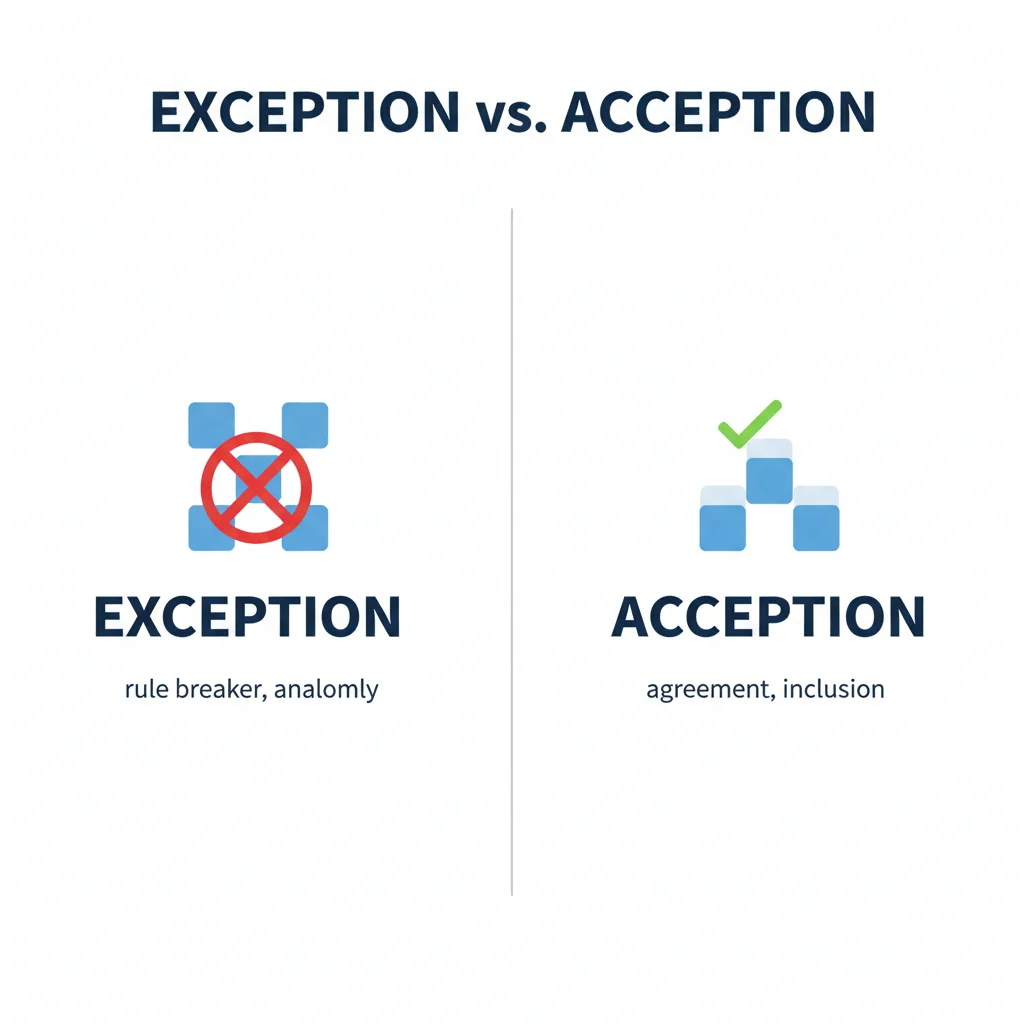
Exception is the correct and commonly used word. It means something that does not follow a rule.
Acception is a real word, but it is rare and means acceptance or approval, mainly in old or formal texts.
Examples:
- Everyone must attend the meeting, with no exception.
- “Acception” appears mostly in historical or religious writing.
If you are unsure, always use exception. That single choice avoids almost all mistakes.
Many people search for exception vs acception because these words look similar but behave very differently. Spellcheckers rarely flag “acception,” which makes the confusion worse. Writers often wonder: Is acception a word? Is it no acception or no exception? Should I write I’ll make an acception or exception?
This confusion appears in emails, exams, legal writing, and social media posts. One wrong word can change meaning or make your writing look unprofessional. The problem is simple: one word is modern and common, while the other is rare and outdated.
This article solves that confusion clearly. You will get a quick answer, full explanation, examples, and professional advice. By the end, you will know the exact exception vs acception meaning, how to use each word in a sentence, and which spelling you should always choose.
The Origin of Exception vs Acception
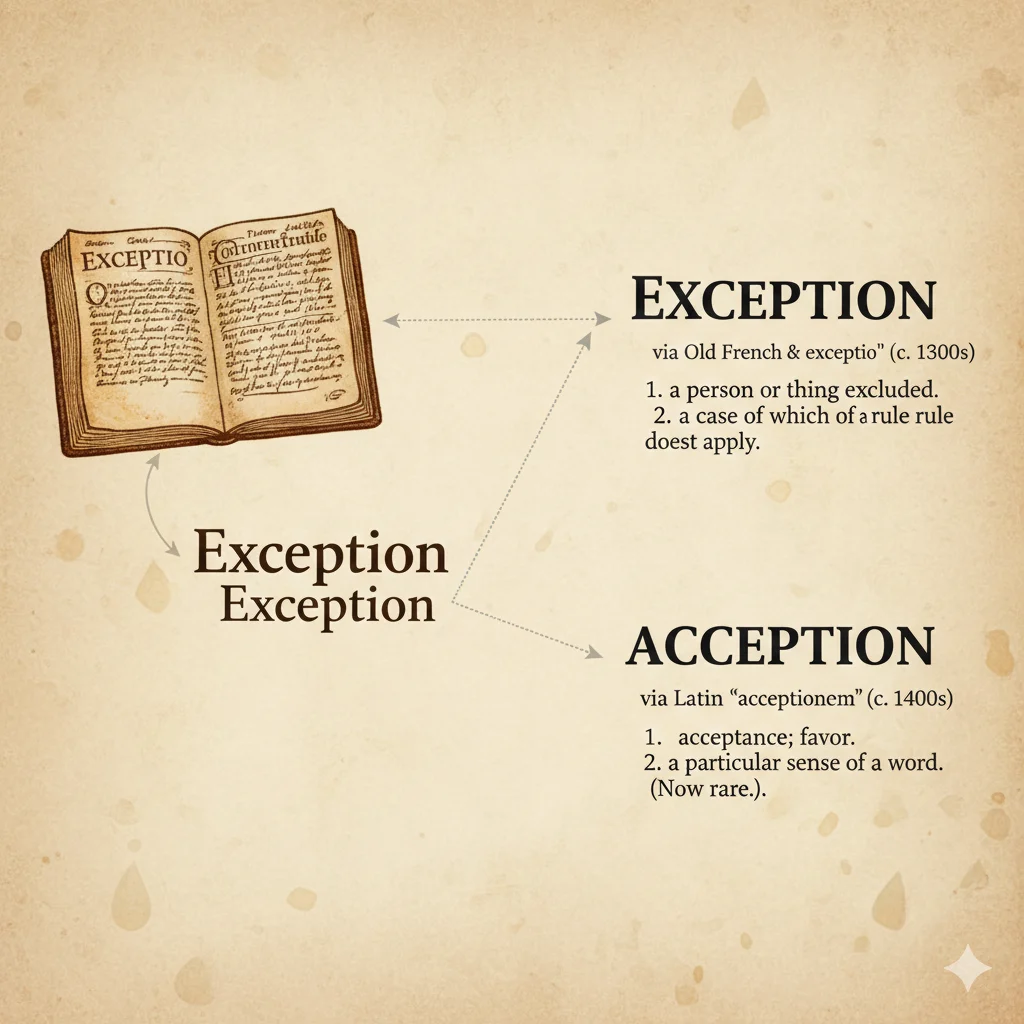
The word exception comes from the Latin exceptio, meaning “to take out.” Over time, it kept this meaning in English. That is why an exception is something removed from a general rule.
Acception comes from Latin acceptio, meaning “acceptance” or “approval.” In Middle English, it was more common, especially in religious and legal texts. Over centuries, acceptance replaced it in everyday use.
Today, exception survived and thrived. Acception faded but never fully disappeared. That history explains why spelling differences exist and why modern readers find acception confusing.
British English vs American English Spelling
This is not a British vs American spelling issue. Both forms exist in both dialects, but usage is very different.
| Word | British English | American English |
|---|---|---|
| Exception | Very common | Very common |
| Acception | Very rare | Very rare |
Example:
- UK: There is no exception to this law.
- US: No exception will be allowed.
Neither region uses acception in daily writing.
Transferring vs Transfering: One Letter Mistake 🚨
Which Spelling Should You Use?
- US audience: Always use exception
- UK/Commonwealth: Always use exception
- Global or writing: Use exception only
Use acception only if you are quoting old texts or discussing linguistics. For modern writing, exception is the professional choice.
Common Mistakes with Exception vs Acception
Many errors repeat again and again:
- ❌ I’ll make an acception
✅ I’ll make an exception - ❌ No acception allowed
✅ No exception allowed - ❌ Confusing acceptance with exception
✅ Remember: acceptance = approval, exception = exclusion
The biggest mistake is assuming acception is a spelling variant. It is not.
Exception vs Acception in Everyday Examples
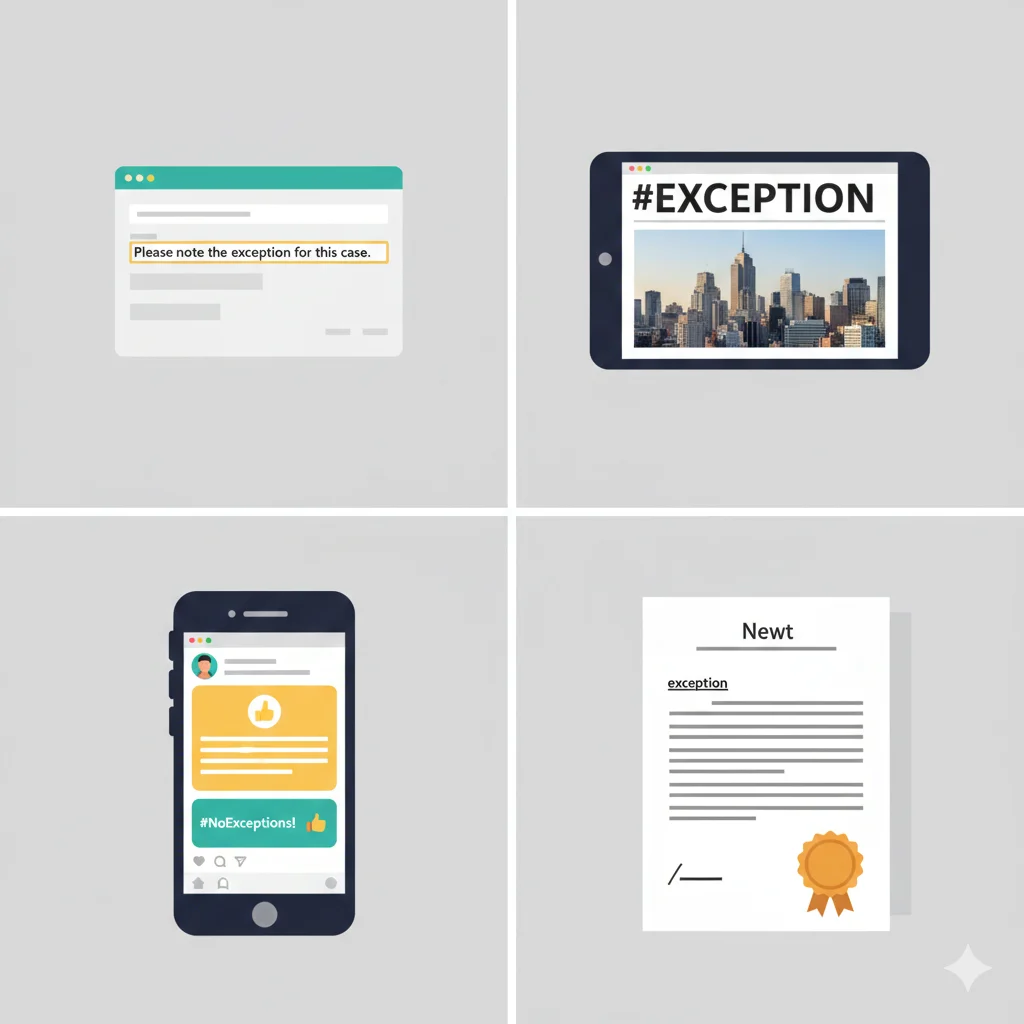
Emails:
- There are no exceptions to this deadline.
News:
- The policy applies to all citizens without exception.
Social Media:
- This rule has zero exceptions.
Formal Writing:
- The clause allows one exception under special conditions.
Acception in a sentence (rare):
- The term was used with a positive acception in ancient texts.
Exception vs Acception – Google Trends & Usage Data
Search data shows exception is used millions of times more than acception. Interest in acception comes mainly from students, writers, and ESL learners.
- Exception: High usage worldwide
- Acception: Low usage, mostly academic
Countries searching most for this topic include the US, UK, India, and Pakistan. Context is almost always grammar correction, not meaning choice.
Missus vs Misses: One Word Can Embarrass You 😬
Exception vs Acception Comparison Table
| Feature | Exception | Acception |
|---|---|---|
| Meaning | Exclusion from a rule | Acceptance or approval |
| Common Use | Yes | No |
| Modern Writing | Standard | Rare |
| Safe | Yes | No |
| Example | No exception allowed | Historical usage only |
FAQs
What is the difference between exception and acception?
Exception means exclusion. Acception means acceptance, but it is rarely used today.
Is it no acception or no exception?
Correct phrase: no exception.
What does it mean to make exceptions?
It means allowing someone to break a general rule.
What is the difference between acceptance and exception?
Acceptance means approval. Exception means exclusion.
Is acception a word?
Yes, but it is outdated and rarely used.
Exception vs acception in a sentence?
- There is no exception to this rule.
- The word had a special acception in old literature.
Conclusion
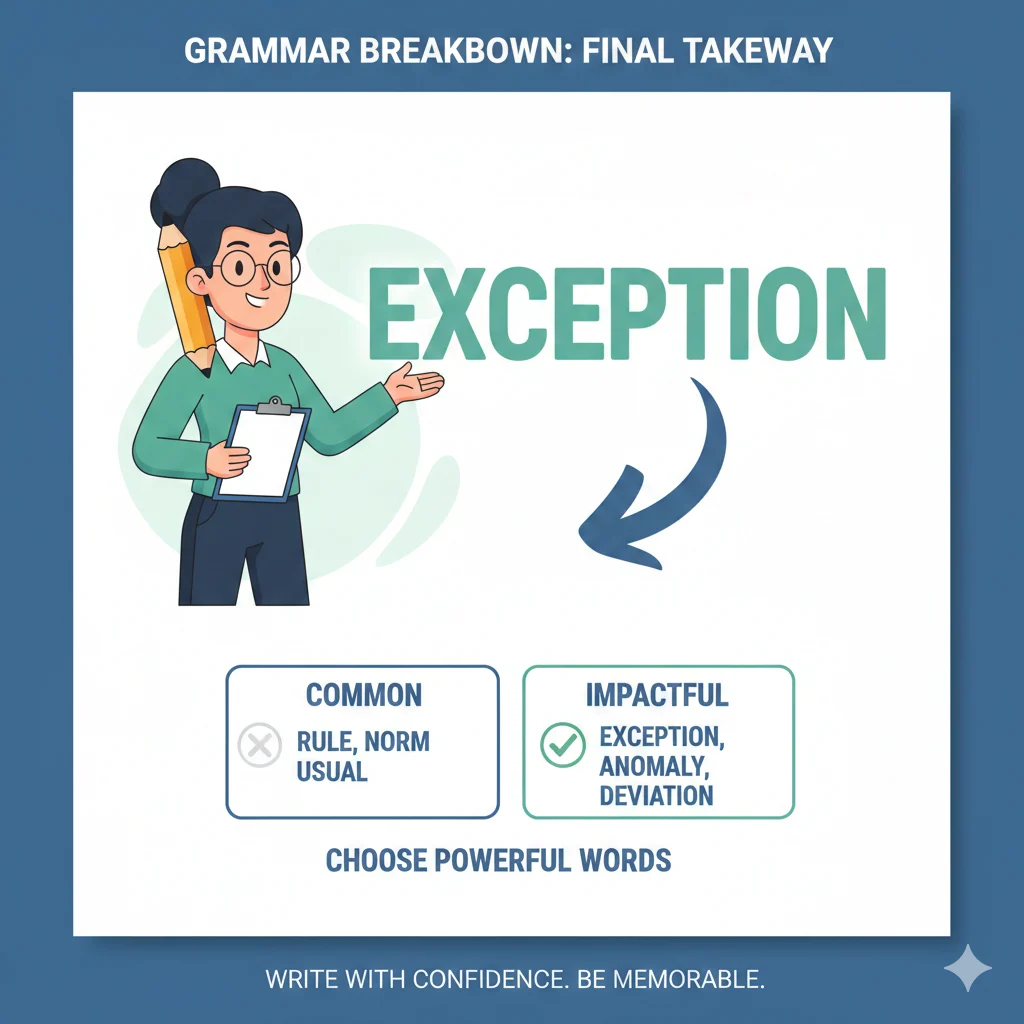
Understanding exception vs acception saves you from common writing errors. While both words exist, they serve very different purposes. Exception is a core modern English word used in rules, laws, emails, and daily speech. Acception, on the other hand, belongs to historical or academic contexts and should almost never appear in modern writing.
If you remember one rule, remember this: when you mean an exclusion from a rule, always choose exception. That choice is correct in American English, British English, and global communication. Using exception improves clarity, professionalism, and performance.
Acception may look tempting because it resembles acceptance, but that similarity causes confusion. Clear writing means choosing the word your reader expects. In nearly every case, that word is exception. Use it confidently, and your message will always be understood.

Vera Brittain is a writer at Pray Ocean, providing clear English word meanings and inspiring prayer content for everyday readers.