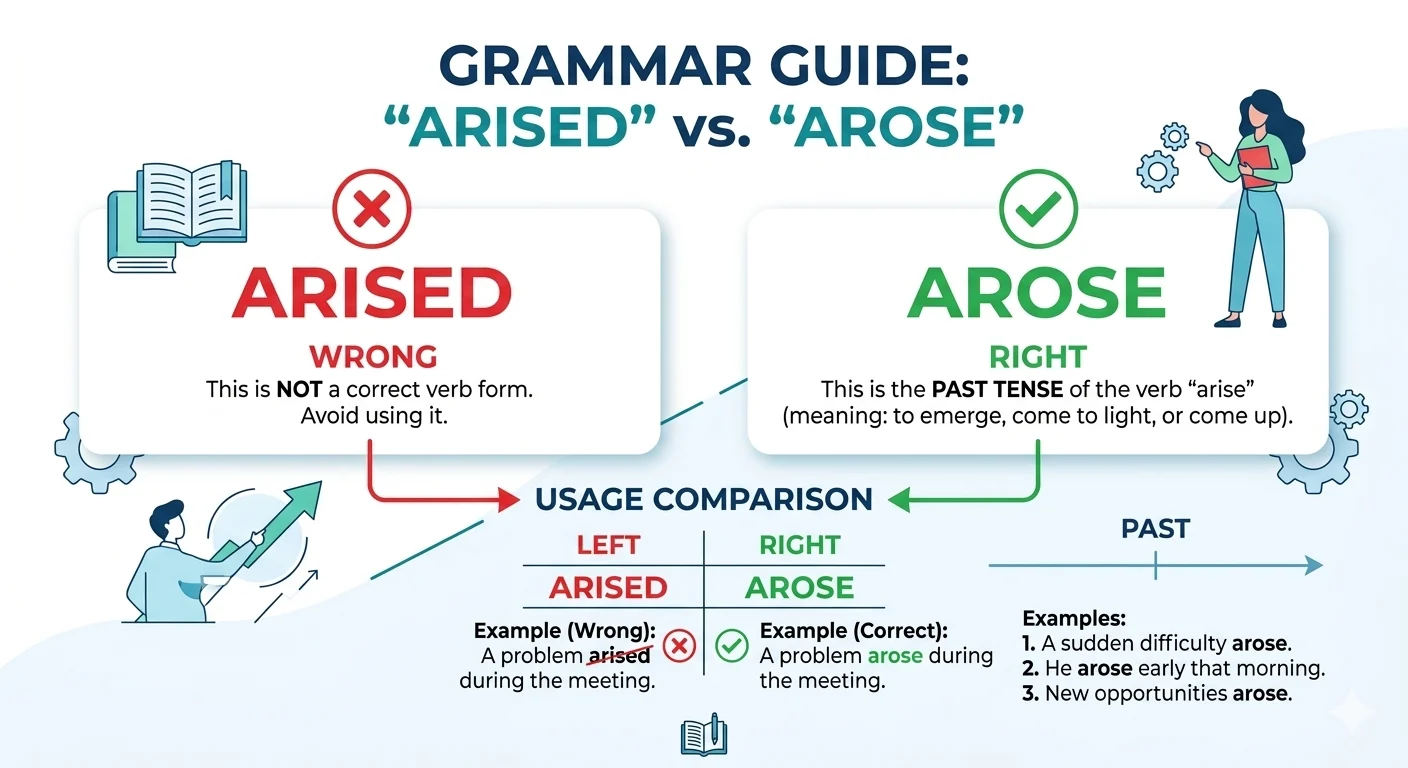
“Arose” is correct. “Arised” is incorrect in modern English.
- Correct: A problem arose during the meeting.
- Incorrect: A problem arised during the meeting.
The past tense of “arise” is arose, and the past participle is arisen.
Have you ever paused while writing and wondered, is it arose or arised? You’re not alone. This small grammar confusion trips up many learners and even fluent English speakers. The verbs “arised” and “arose” look similar, but only one is correct in standard English. That’s why people often search for arised vs arose, trying to avoid mistakes in writing, exams, emails, and professional communication.
This article clears all confusion in a simple way. You’ll learn the correct past tense of “arise,” why “arised” sounds wrong, and how to use the right form confidently. We’ll also cover meanings, tense forms (V1, V2, V3), everyday examples, and common errors. By the end, you’ll never hesitate again when choosing between these two words.
The Origin of Arised vs Arose
The verb “arise” comes from Old English ārīsan, which means “to get up” or “to happen.” Over time, English kept its irregular verb pattern.
Here’s how it evolved:
- Old English: ārīsan
- Past tense: ārās (modern “arose”)
- Past participle: ārīsen (modern “arisen”)
English has many irregular verbs like this. For example:
- Rise → rose → risen
- Drive → drove → driven
So, “arose” follows this natural pattern.
But where did “arised” come from?
It is a common mistake. People try to apply regular verb rules (like walk → walked), so they say “arised.” However, this form is not accepted in standard grammar.
That’s why many ask: is arised a word?
Answer: It may appear in rare or incorrect usage, but it is not considered correct English today.
British English vs American English Spelling
Unlike some words, “arised vs arose” is not a British vs American spelling issue. Both British and American English use the same correct form: arose.
There is no regional difference here.
Comparison Table
| Form | British English | American English | Correct? |
|---|---|---|---|
| Arised | Not used | Not used | ❌ Incorrect |
| Arose | Used | Used | ✅ Correct |
| Arisen | Used | Used | ✅ Correct |
So no matter where you are writing—UK, US, or elsewhere—always use arose.
Lead Vs Leed 🚫 Stop Making This Common Mistake
Which Spelling Should You Use?
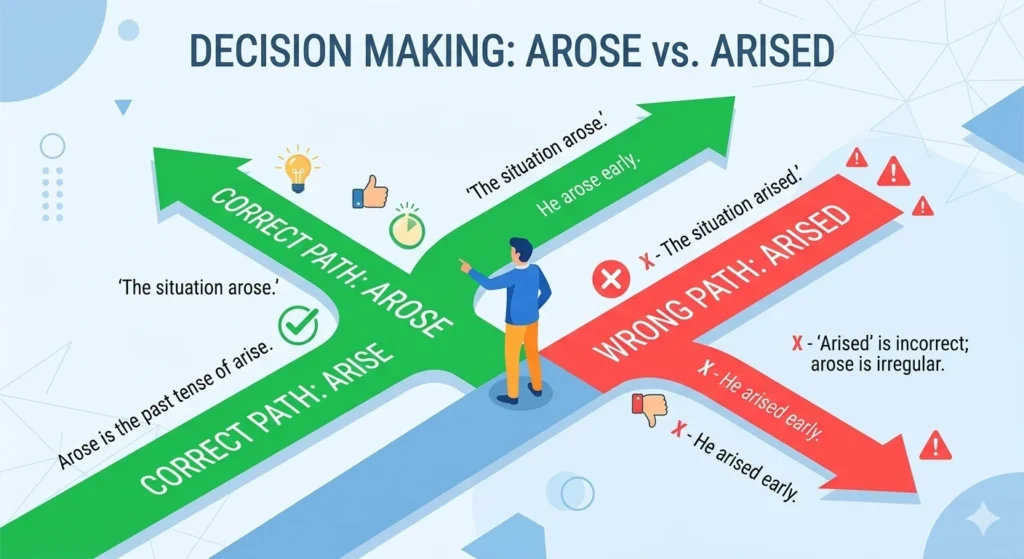
The answer is simple: always use arose.
Here’s how it works based on audience:
- US audience: Use “arose”
- UK audience: Use “arose”
- Global audience: Use “arose”
There is no situation where “arised” is preferred.
If you want to sound professional and correct, follow this rule:
- Past tense → arose
- Past participle → arisen
Example:
- A misunderstanding arose yesterday.
- Several issues have arisen recently.
Common Mistakes with Arised vs Arose
Here are frequent errors people make:
1. Using “arised” as past tense
❌ The issue arised suddenly.
✅ The issue arose suddenly.
2. Confusing V2 and V3 forms
❌ The problem has arose.
✅ The problem has arisen.
3. Mixing regular and irregular patterns
❌ He arised quickly.
✅ He arose quickly.
4. Using wrong verb structure
❌ Many problems have arose.
✅ Many problems have arisen.
5. Not understanding tense forms
People often ask: what is V1, V2, V3 tense form?
Here’s the correct table:
| Form | Verb |
|---|---|
| V1 (Base) | Arise |
| V2 (Past) | Arose |
| V3 (Past Participle) | Arisen |
Arised vs Arose in Everyday Examples

Emails
- A concern arose during our discussion.
- Several questions have arisen about the project.
News
- Tensions arose after the announcement.
- New challenges have arisen in the market.
Social Media
- Drama arose in the comments section.
- Issues have arisen again.
Formal Writing
- A legal dispute arose between the companies.
- Complications have arisen over time.
Arised vs Arose – Google Trends & Usage Data
Search data shows that many users type “arised vs arose” or “is arised a word.” This proves the confusion is common worldwide.
Usage patterns:
- “Arose” is widely used in books, news, and academic writing.
- “Arised” appears mostly in mistakes or informal writing.
Countries with high searches:
- India
- Pakistan
- Philippines
- Nigeria
In these regions, learners often apply regular verb rules, which leads to “arised.”
In contrast, native English-speaking countries almost always use “arose.”
Quizzes Vs Quizzes 🔍 Why One Spelling Is Wrong
Comparison Table (Keyword Variations)
| Phrase | Meaning | Correct Usage |
|---|---|---|
| Arised or arose | Past tense confusion | Arose ✅ |
| Arised meaning | Incorrect form | Avoid ❌ |
| Arose meaning | Past of arise | Correct ✅ |
| Arise past tense | Arose | Correct ✅ |
| Arise past participle | Arisen | Correct ✅ |
| Have arisen or have arose | Present perfect | Have arisen ✅ |
Arised or Arose Meaning

Arose Meaning
“Arose” means something happened, appeared, or started.
Examples:
- A problem arose unexpectedly.
- A new idea arose during the meeting.
Arised Meaning
“Arised” has no accepted meaning in modern English. It is considered incorrect.
Arised or Arose Synonyms
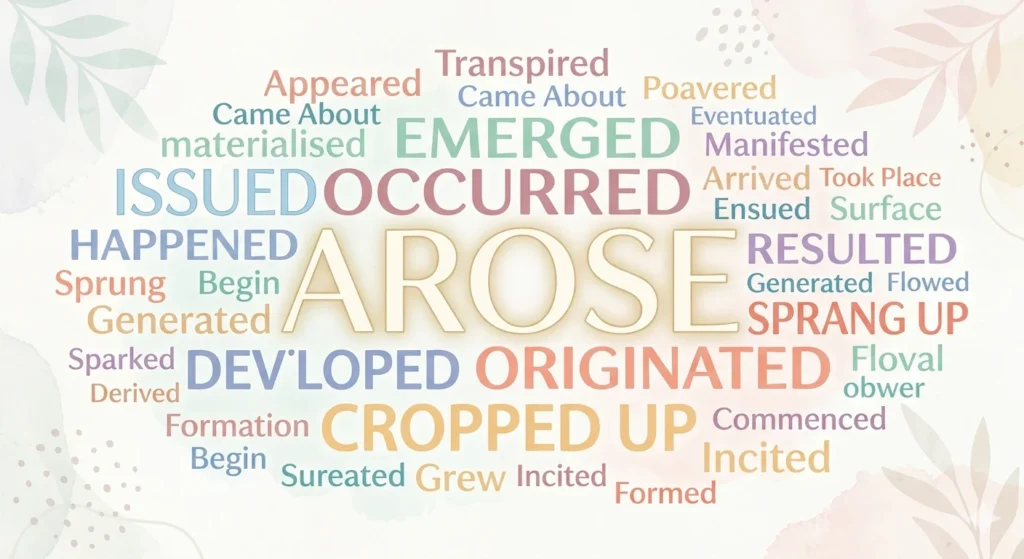
Here are simple synonyms for “arose”:
- Happened
- Appeared
- Began
- Emerged
- Occurred
Example:
- A conflict arose → A conflict occurred
Is It Arose or Arised?

Correct answer: Arose
“Arised” is incorrect and should not be used.
Is Arose Grammatically Correct?
Yes, “arose” is grammatically correct.
It is the past tense of “arise.”
Example:
- A problem arose yesterday.
What Is Meant by Arose?
“Arose” means something started or came into existence.
Simple meaning:
Something happened.
Example:
- Trouble arose suddenly.
What Is V1, V2, V3 Tense Form?

These are verb forms:
- V1: Base form → arise
- V2: Past tense → arose
- V3: Past participle → arisen
Example:
- Present: Problems arise daily.
- Past: Problems arose yesterday.
- Perfect: Problems have arisen recently.
Have Arisen or Have Arose
Correct: Have arisen
Incorrect: Have arose
Example:
- Many issues have arisen.
Arise Past Tense and Past Participle
- Past tense: arose
- Past participle: arisen
Example:
- A conflict arose.
- A conflict has arisen.
FAQs
1. Is arised a real word?
No, it is not correct in standard English.
2. What is the correct past tense of arise?
The correct past tense is arose.
3. What is the past participle of arise?
The past participle is arisen.
4. Can I use arised in writing?
No, avoid using it. Use “arose” instead.
5. Why do people say arised?
Because they apply regular verb rules by mistake.
6. Is arose used in formal writing?
Yes, it is widely used in formal and academic writing.
7. What is a simple synonym for arose?
“Happened” is the easiest synonym.
Conclusion
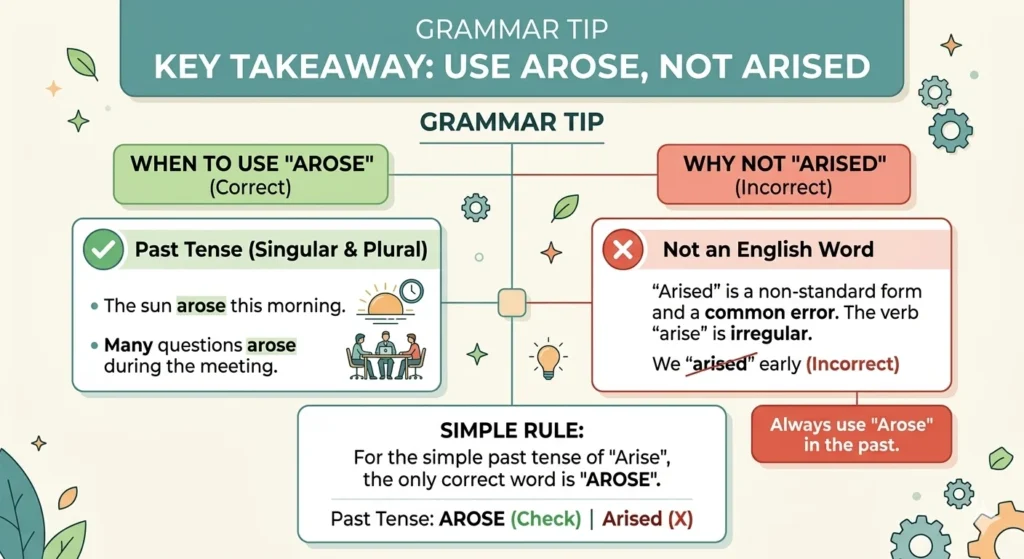
The confusion between arised vs arose is very common, but the rule is simple once you understand it. “Arose” is the correct past tense of “arise,” while “arised” is incorrect and should be avoided. This mistake often happens because many English verbs follow regular patterns, but “arise” is an irregular verb.
Remember the correct forms: arise, arose, arisen. These three forms will help you use the verb properly in all situations. Whether you are writing emails, academic papers, or social media posts, using the correct form shows clarity and professionalism.
Also, keep in mind that this is not a British vs American difference. Both use the same correct form. So no matter where your audience is, “arose” is always the right choice.
If you practice using real examples and remember the simple tense table, you will never make this mistake again. Clear grammar builds strong communication, and small corrections like this make a big difference.

Ann Quin is a content writer at Pray Ocean, sharing clear English word meanings and heartfelt prayers to guide and inspire readers worldwide.