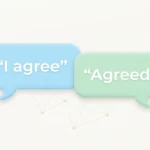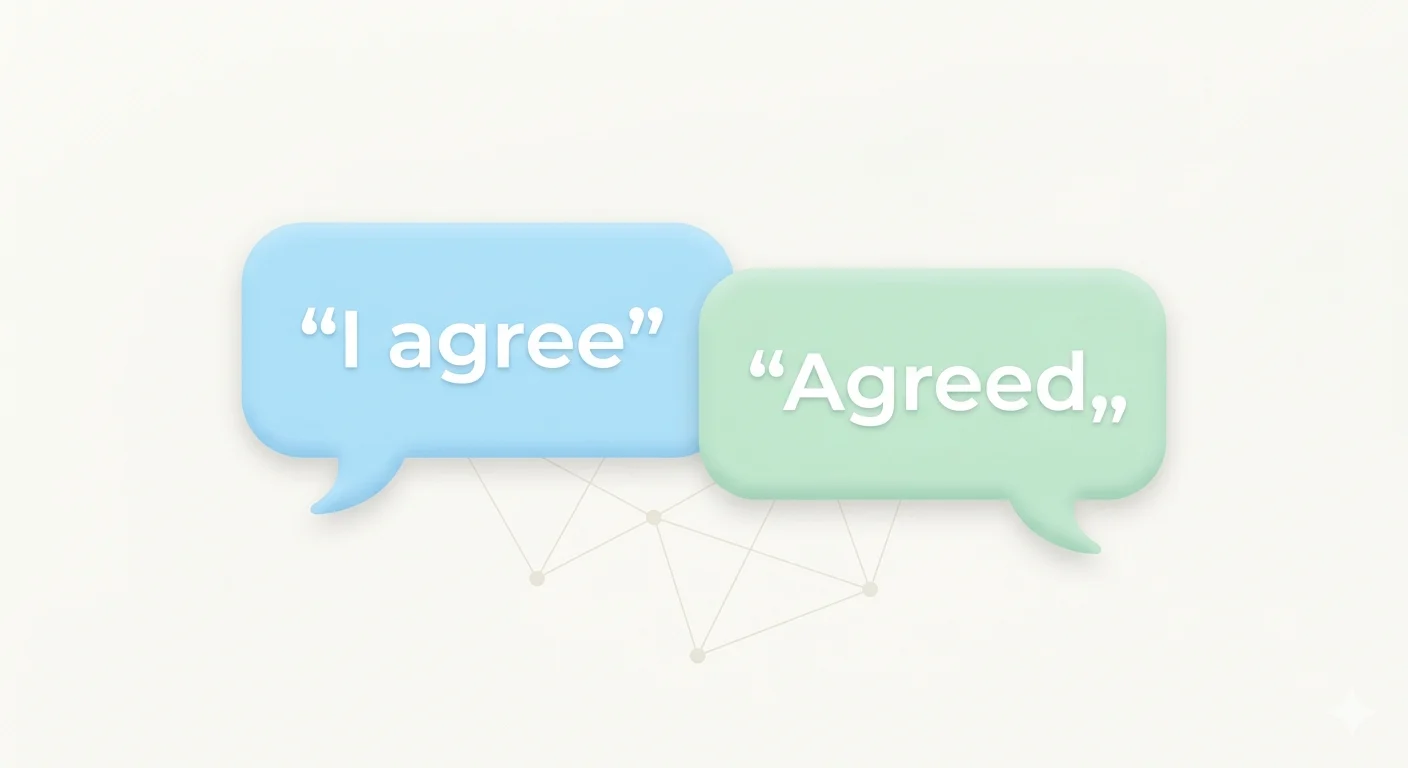
“Agree” is a present tense verb. “Agreed” is the past tense or a response word.
Examples:
- I agree with you. (present)
- She agreed to the plan. (past)
- “Let’s start now.” — Agreed! (response)
In short: use “agree” for now, and “agreed” for past or confirmation.
Have you ever paused before replying “agree” or “agreed” in a message? You’re not alone. Many people search for agree vs agreed because both words look similar but are used in different ways. This confusion often appears in emails, chats, and even formal writing. One small mistake can make your sentence sound incomplete or awkward.
The truth is simple: “agree” and “agreed” come from the same verb, but they work differently in grammar. Knowing when to use agree vs agreed helps you sound more natural and confident. Whether you’re writing a message, speaking in a meeting, or posting online, using the correct form matters. In this guide, you’ll learn the difference, see real examples, avoid common mistakes, and finally understand which one to use in any situation.
The Origin of Agree vs Agreed
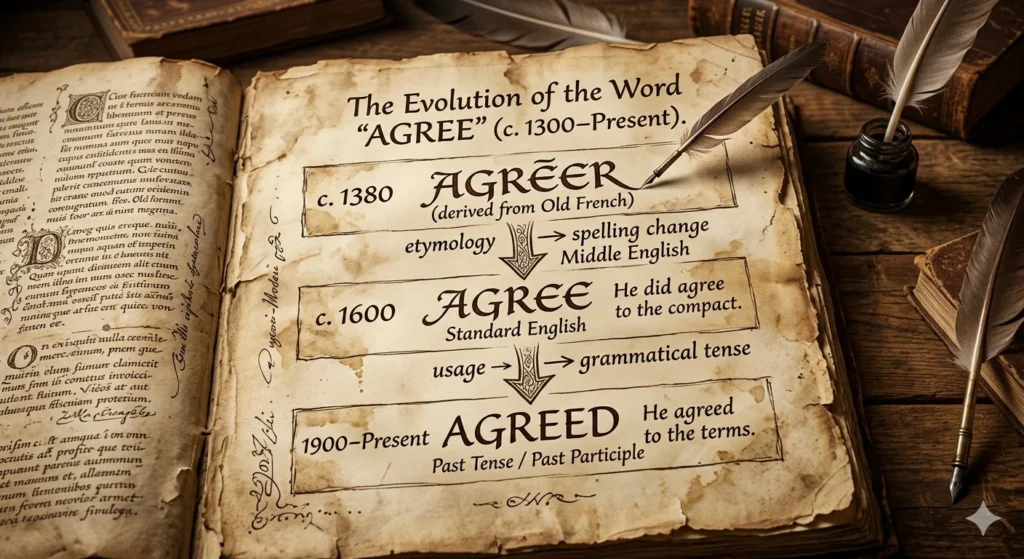
The words “agree” and “agreed” come from Old French agreer, meaning “to please” or “to accept.” Over time, the word entered English and became a common verb used in daily speech.
“Agree” stayed as the base form of the verb. It shows an action happening now or regularly. “Agreed” formed as the past tense, following standard English verb rules by adding “-ed.”
Why do people confuse them? Because both words are used in conversations. Also, “agreed” is sometimes used alone as a reply, which makes it feel similar to “I agree.”
Understanding their history helps you see that they are not different spellings—they are different forms of the same verb.
British English vs American English Spelling
Unlike many English words, there is no spelling difference between British and American English for agree vs agreed. Both forms are spelled the same in all regions.
However, usage style can differ slightly. For example, short replies like “Agreed” are more common in quick professional communication, especially in business emails worldwide.
Comparison Table
| Feature | Agree | Agreed |
|---|---|---|
| Form | Base verb | Past tense / response |
| Time | Present | Past |
| Example | I agree with you | They agreed yesterday |
| Usage | Statement | Action completed / reply |
| US vs UK | Same spelling | Same spelling |
So, there is no regional confusion—only grammatical confusion.
Bony Vs Boney 🧠 The Difference Explained
Which Spelling Should You Use?
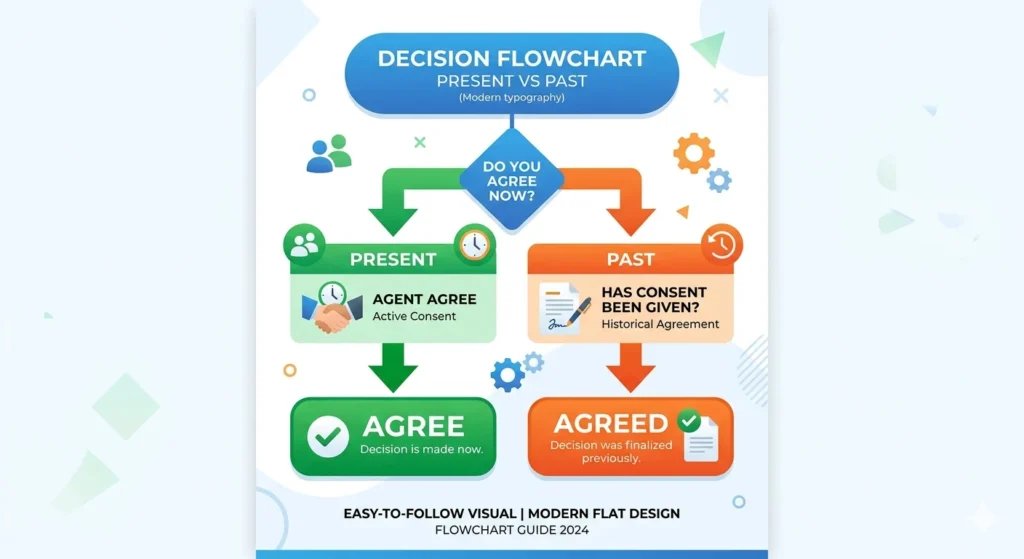
Choosing between agree vs agreed depends on your sentence, not your location.
- Use “agree” when talking about present thoughts
- Use “agreed” for past actions
- Use “agreed” as a short reply in informal or semi-formal situations
Audience-Based Advice
- US audience: Simple and direct language works best. Use “I agree” in most cases.
- UK/Commonwealth audience: Same rules apply. “Agreed” is often used in meetings or notes.
- Global audience: Use full sentences like “I agree” for clarity, especially in formal writing.
If you are unsure, always choose “I agree.” It is clearer and safer in most contexts.
Common Mistakes with Agree vs Agreed
Many learners mix up these words. Here are the most common errors and how to fix them.
Mistake 1
❌ I agreed with you (when talking about now)
✅ I agree with you
Mistake 2
❌ Agree! (as a reply)
✅ Agreed!
Mistake 3
❌ I agree yesterday
✅ I agreed yesterday
Mistake 4
❌ Totally agree (in formal email)
✅ I totally agree
Mistake 5
❌ Can I say agreed instead of I agree?
👉 Yes, but only in informal replies.
Key Tip
“I agree” is always safe. “Agreed” depends on context.
Agree vs Agreed in Everyday Examples

Let’s look at how these words appear in real life.
Emails
- I agree with your proposal.
- Agreed. Let’s move forward.
News
- The leaders agreed on a new policy.
- Experts agree that change is needed.
Social Media
- Totally agree!
- Agreed 👍
Formal Writing
- We agree with the findings.
- Both parties agreed to the terms.
Conversations
- I agree with you.
- Yes, agreed.
These examples show how context changes usage. In formal writing, full sentences are better. In casual talk, short replies work.
Agree vs Agreed – Google Trends & Usage Data
Search trends show that people often look up “agree vs agreed meaning” and “when to use agree vs agreed.” This means many learners struggle with verb tense and usage.
Popular Usage by Context
- “I agree” is more common in formal writing
- “Agreed” is popular in chats and quick replies
- “I agreed” appears in storytelling or past events
Popular Regions
- USA: More use of “I agree”
- UK: Balanced use of both
- Global: “Agreed” growing in workplace communication
The rise of messaging apps has made “Agreed” more popular as a short confirmation.
Orthopaedic Vs Orthopedic 😲 The Truth
Comparison Table: Agree vs Agreed
| Aspect | Agree | Agreed |
|---|---|---|
| Grammar Type | Verb (present) | Verb (past) / adjective |
| Meaning | To share the same opinion | Shared opinion in past or confirmed |
| Example Sentence | I agree with you | I agreed with him |
| Reply Usage | Rare | Very common |
| Formality | More formal | Can be informal |
| Email Use | Preferred | Acceptable in short replies |
FAQs
1. What is the difference between agree vs agreed?
“Agree” is present tense. “Agreed” is past tense or a reply.
2. Is agree or agreed correct?
Both are correct. It depends on the sentence.
3. When to use agree vs agreed?
Use “agree” for now. Use “agreed” for past or confirmation.
4. Is agreed the same as I agree?
Not exactly. “Agreed” is shorter and less formal.
5. Can I say agreed instead of I agree?
Yes, but only in casual or quick responses.
6. Is it okay to say agreed?
Yes. It is common in emails, chats, and meetings.
7. I agree or I agreed with you—which is correct?
“I agree” for present. “I agreed” for past.
Conclusion

Understanding agree vs agreed is easier than it seems. The key is to remember time and context. “Agree” is used for present situations, while “agreed” refers to the past or works as a short confirmation. This simple rule can help you avoid common grammar mistakes and improve your communication.
In daily life, “I agree” is the safest choice. It is clear, polite, and works in almost every situation. On the other hand, “agreed” is useful when you want a quick and confident reply, especially in emails or chats. However, in formal writing, full sentences are always better.
If you often wonder “Can I say agreed instead of I agree?” the answer is yes—but use it wisely. Context matters. By practicing with real examples and paying attention to how others use these words, you will quickly master them.
Clear grammar builds strong communication. Once you understand this small difference, your writing will feel more natural and professional every day.

Stella Gibbons is a writer at Pray Ocean, sharing clear English word meanings and meaningful prayer articles for daily guidance.