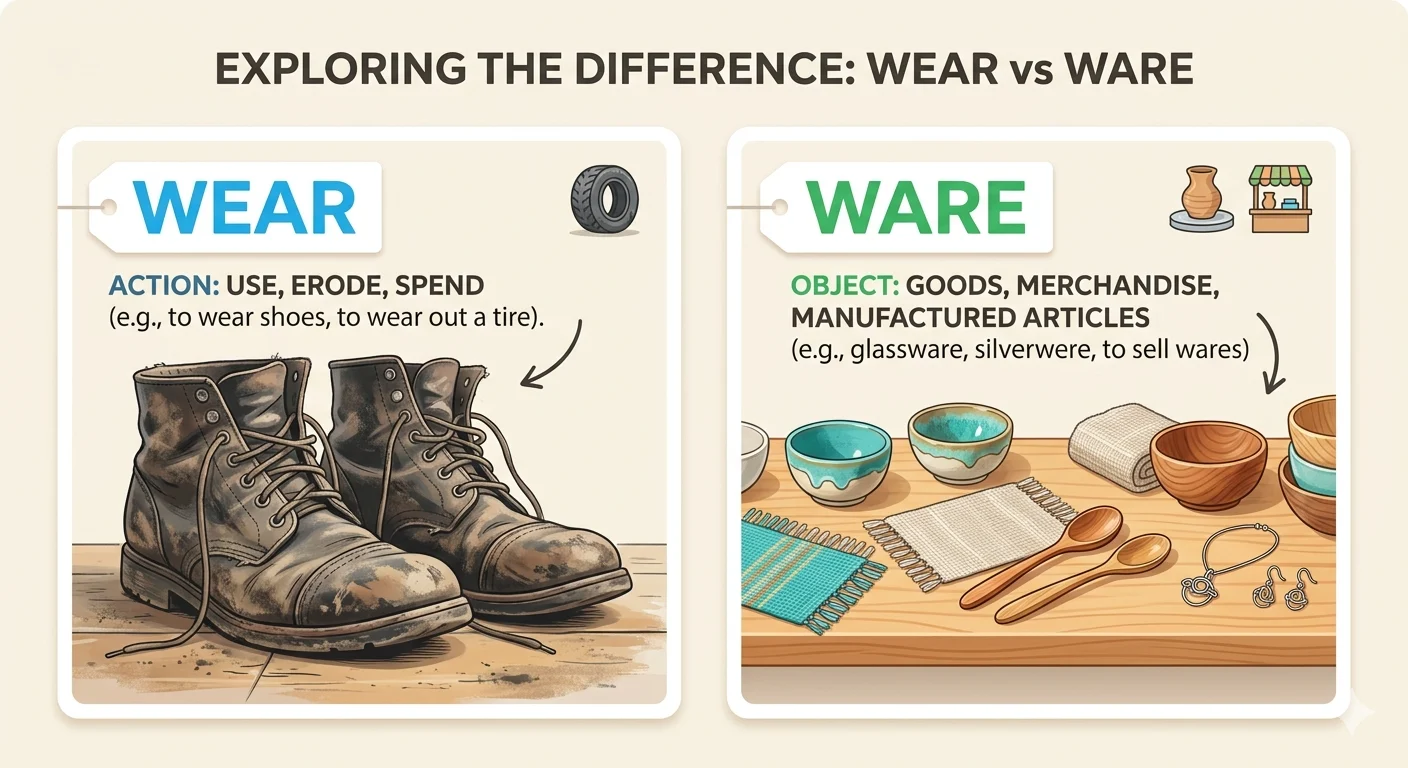
Wear means to use, damage, or have on your body.
Example: Shoes wear out over time.
Ware refers to goods or products for sale.
Example: The shop sells handmade wares.
👉 Simple trick:
- Wear = use or damage
- Ware = items or products
Many people search for wear vs ware because these two words sound exactly the same but mean completely different things. This confusion often leads to spelling mistakes in writing, emails, and even professional content. A single wrong word can change the meaning of a sentence completely, which is why understanding the difference matters.
For example, if you write “daily ware and tear” instead of “wear and tear,” the sentence becomes incorrect. These small mistakes can hurt clarity and credibility. That’s why learners, writers, and students frequently look up wear vs ware meaning, pronunciation, grammar, and usage.
This article will clear all confusion in simple terms. You’ll learn when to use wear and ware, common mistakes, real-life examples, and easy tricks to remember the difference forever.
The Origin of wear vs ware

The confusion between wear vs ware comes from their identical pronunciation but different origins.
Wear comes from Old English “werian,” which means to clothe or to use over time. Over the years, it also came to mean damage caused by use, like wear and tear.
Ware comes from Old English “waru,” meaning goods, merchandise, or items for sale. This is why we still use words like “software,” “hardware,” and “kitchenware.”
The spelling difference exists because both words evolved separately but kept the same sound. That’s why they confuse even fluent speakers today.
British English vs American English Spelling
Unlike many confusing words, wear vs ware does NOT change between British and American English. The spelling and meaning stay the same in both regions.
However, confusion still happens due to pronunciation similarities.
Comparison Table
| Word | Meaning | British English | American English | Example |
|---|---|---|---|---|
| Wear | Use, damage, or clothing | Same | Same | Wear your jacket |
| Ware | Goods or products | Same | Same | Handmade wares |
👉 Key point: This is NOT a US vs UK issue. It’s a meaning issue.
Broth Vs Stock 🚫 Stop Confusing These Two Today
Which Spelling Should You Use?
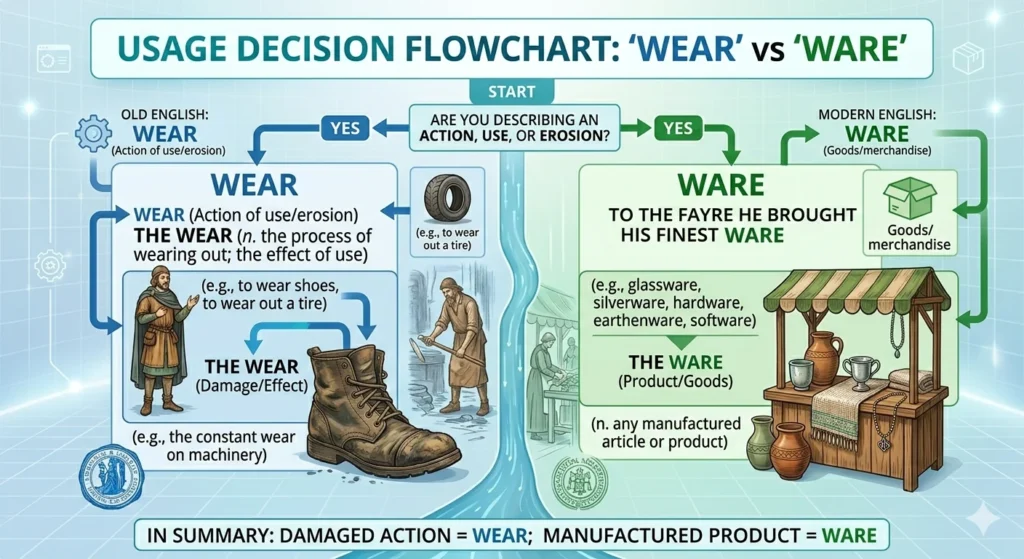
Choosing between wear and ware depends on your sentence, not your location.
- Use wear when talking about clothing, damage, or usage
- Use ware when talking about products or goods
Audience-based advice:
- US audience → Follow meaning (no spelling change)
- UK/Commonwealth → Same rule applies
- Global writing → Always focus on context
👉 If your sentence talks about damage, always use wear (example: wear down, wear off).
👉 If it talks about items, use ware (example: kitchenware).
Common Mistakes with wear vs ware
Many people mix these words in everyday writing. Here are the most common errors and how to fix them:
❌ daily ware and tear
✔ daily wear and tear
❌ shoes are starting to ware out
✔ shoes are starting to wear out
❌ the effect will ware off
✔ the effect will wear off
❌ he sells wooden wear
✔ he sells wooden wares
Quick rule:
- Damage or use → wear
- Products → ware
Wear vs Ware in Everyday Examples
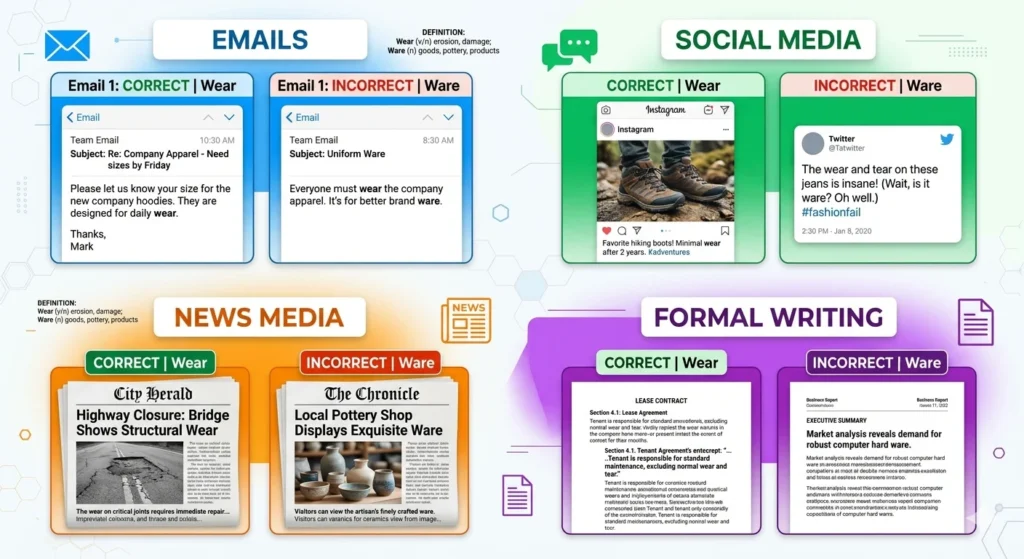
Understanding real-life usage makes learning easier.
Emails
- Correct: The machine shows signs of wear
- Incorrect: The machine shows signs of ware
Social Media
- Correct: These shoes wear out quickly
- Correct: Check out my handmade wares
News
- Correct: Roads suffer wear over time
- Correct: Local markets sell traditional wares
Formal Writing
- Wear is used in technical or mechanical context
- Ware is used in business or trade context
Wear vs Ware – Google Trends & Usage Data
Globally, wear is used far more often than ware because it applies to daily life like clothing and damage.
Usage by context:
- Wear → common in daily language (clothes, damage, expressions like wear down)
- Ware → used mostly in business, retail, and product-related content
By country:
- US, UK, Canada, Australia → Same usage pattern
- Educational searches often include:
- wear vs ware meaning
- where vs wear vs ware
- wear vs ware grammar
👉 People mostly search this keyword to fix spelling confusion, not regional differences.
Buoy Vs Bouy 🚨 The Truth Most People Get Wrong
Comparison Table: wear vs ware vs where
| Word | Meaning | Example |
|---|---|---|
| Wear | Use, damage, or clothing | Shoes wear out |
| Ware | Goods or products | Clay wares |
| Where | Place or location | Where are you? |
Wear vs Ware Meaning, Grammar, and Pronunciation
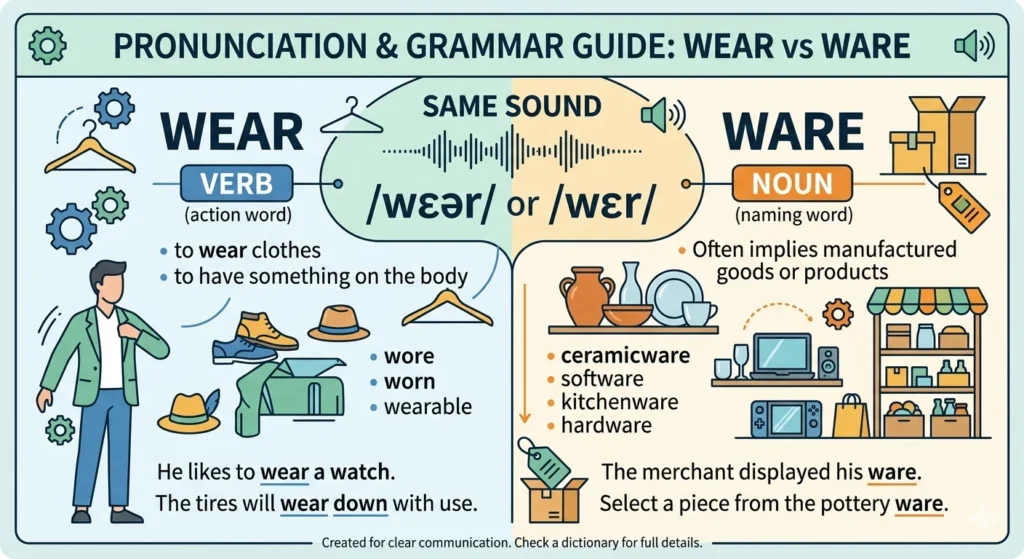
Both words sound the same, which causes confusion.
Pronunciation
- Wear → /wɛər/
- Ware → /wɛər/
Exactly the same sound.
Grammar
- Wear → verb and noun
- Ware → noun only
Synonyms
- Wear → use, damage, carry
- Ware → goods, items, merchandise
Wear vs Ware Examples
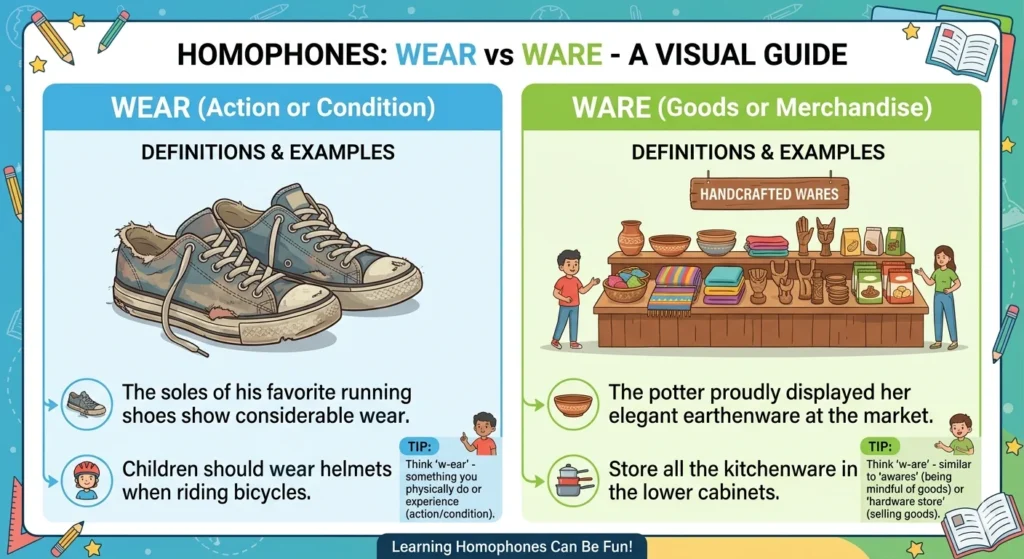
- My shoes wear out quickly
- The effect will wear off soon
- The shop sells handmade wares
- He displayed his wares online
FAQs
1. Is it wear or ware for damage?
Always use wear for damage. Example: wear and tear.
2. Is it wear down or ware down?
Correct phrase is wear down.
3. When to use wear and ware?
Use wear for usage or clothing, and ware for goods or products.
4. What is the difference between wear and wares?
Wear = use or damage
Wares = products or items for sale
5. Wear or ware out?
Correct form is wear out.
6. Wear or ware off?
Correct phrase is wear off.
7. How to remember wear vs ware?
Wear = use
Ware = store goods
Conclusion

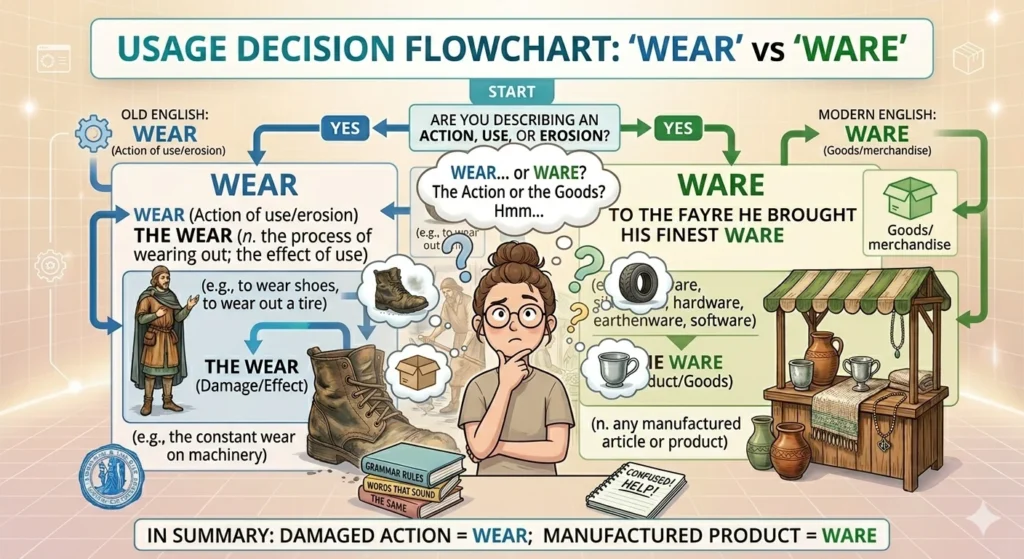
Understanding wear vs ware is simple once you focus on meaning instead of spelling. Even though both words sound the same, their uses are completely different. Wear relates to use, damage, or clothing, while ware refers to goods or products.
Most mistakes happen when people rely only on sound instead of context. That’s why phrases like wear and tear, wear off, and wear down are often misspelled. On the other hand, ware appears mainly in words like kitchenware or when talking about items for sale.
The best way to avoid confusion is to remember one simple rule: if the sentence involves use or damage, choose wear. If it involves products or items, choose ware. This rule works in all types of writing, whether casual or professional.
With practice and awareness, you can easily master wear vs ware and avoid common grammar mistakes. Keep reading, writing, and applying these examples in real life. Over time, the difference will become natural, and you won’t need to think twice before choosing the correct word.

Rose Macaulay is a writer at Pray Ocean, creating clear English word explanations and thoughtful prayer content for everyday readers.