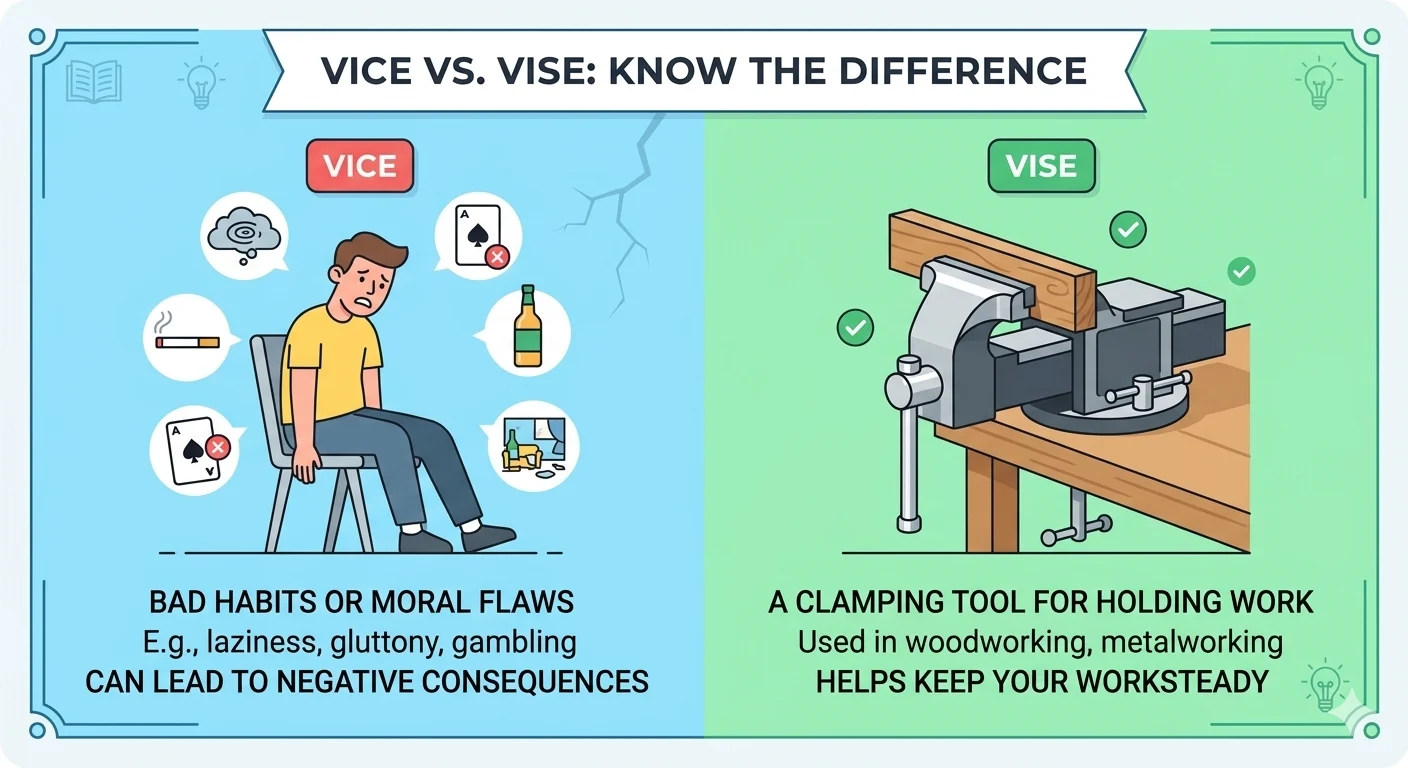
Vice describes a negative habit or wrongdoing, and it can also mean a second-in-command role. “Vise” (US English) is a tool used to grip objects tightly. In British and Australian English, “vice” is used for both meanings.
Have you ever paused while writing and wondered: is it vice vs vise? You’re not alone. This tiny spelling difference confuses millions of people every day. The words look similar, sound the same, and often appear in similar contexts. That’s why people search for this keyword—to finally understand what is correct and when to use each form.
The confusion gets even worse because different countries use different spellings. What is right in the United States may look wrong in the United Kingdom or Australia. This article clears that confusion in a simple way. You will learn the real meaning, correct usage, and key differences. By the end, you will never mix them up again.
Vice Vs Vise – Quick Answer
Vice vs vise refers to two spellings of words with different meanings:
- Vice = bad habit or immoral behavior
Example: Smoking is a harmful vice. - Vise = a tool used to hold objects tightly
Example: He fixed the wood in a vise.
👉 In American English, both words are used separately.
👉 In British English, vice is used for both meanings.
The Origin Of Vice Vs Vise

The confusion between vice vs vise meaning comes from history.
The word vice comes from Latin vitium, meaning fault or defect. Over time, it came to mean bad habits like gambling or smoking.
The word vise comes from Old French vis, meaning screw. This relates to the tool used to grip objects tightly.
In early English, both meanings were often spelled the same way. Later, American English changed the spelling of the tool to vise. This helped separate the meanings clearly.
That’s why today:
- Vice = behavior
- Vise = tool (mainly in the US)
This spelling split made writing easier but created confusion for learners.
British English Vs American English Spelling
One major reason people search for vice vs vise uk is spelling differences across regions.
Here is a simple comparison:
| Meaning | American English | British English |
|---|---|---|
| Bad habit | Vice | Vice |
| Holding tool | Vise | Vice |
Key Points:
- In the US, both spellings exist with different meanings.
- In the UK, only vice is used.
- In Australia, British rules are followed, so vice is used for both.
This explains questions like:
- Is it vise or vice UK? → It is vice
- Is it vice or vise in Australia? → It is vice
Presenter Vs Presentor 🔍 The Hidden Grammar Truth
Which Spelling Should You Use?
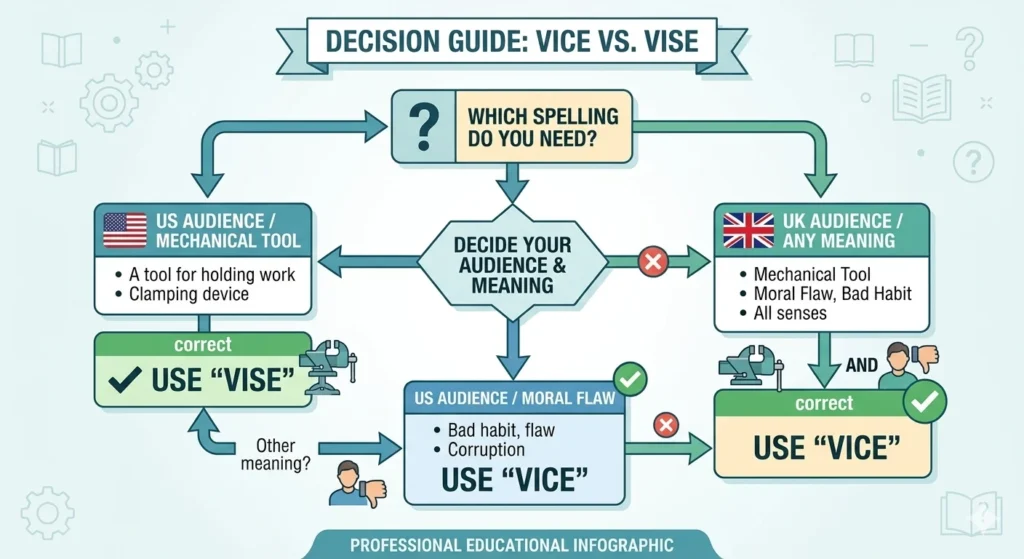
Choosing between vice vs vise depends on your audience.
Use vise if:
- You are writing for an American audience
- You mean a mechanical tool
- Example: Clamp it in a vise
Use vice if:
- You are writing about bad habits
- You are writing for UK or Australian readers
- Example: He struggled with his vice
Global Tip:
If your audience is mixed or international, using vice is safer. It is more widely accepted.
Common Mistakes With Vice Vs Vise
Many people make simple but common errors.
❌ Wrong:
- He held the pipe in a vice (US context)
✅ Correct:
- He held the pipe in a vise
❌ Wrong:
- Smoking is a vise
✅ Correct:
- Smoking is a vice
❌ Wrong:
- Number vise, this is higher
✅ Correct:
- Number wise, this is higher
👉 This mistake happens because people confuse vise vs wise.
Remember:
- Wise = smart or in relation to
- Vise = tool
❌ Wrong:
- Vice vs versus confusion
✅ Correct:
- Use vs or versus, not vice.
Vice Vs Vise In Everyday Examples
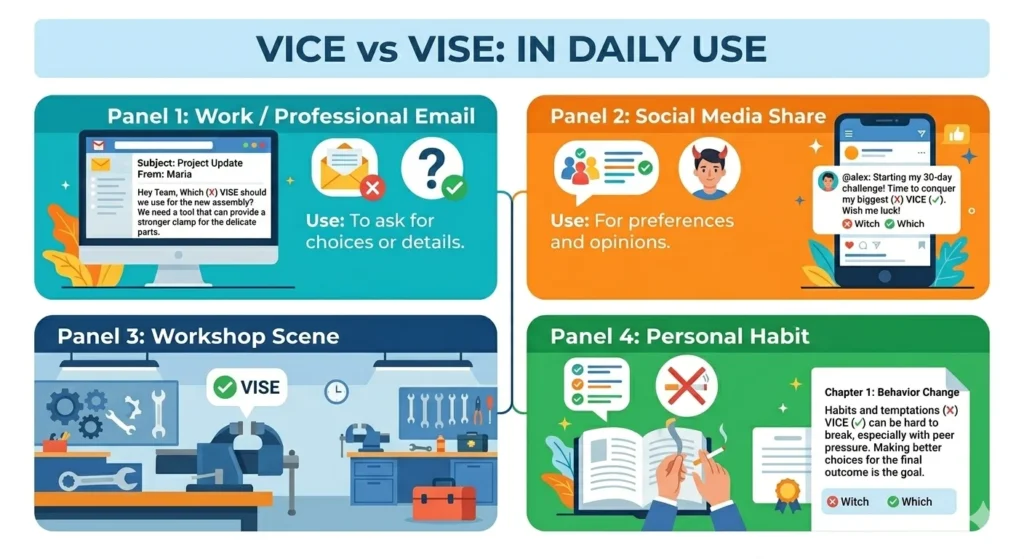
Understanding real-life usage makes things easier.
📧 Email Example:
- Please secure the part in a vise before drilling.
- We must avoid this bad vice in the workplace.
📰 News Example:
- The report highlights gambling as a growing vice.
- Workers used a vise to repair the equipment.
📱 Social Media Example:
- Trying to quit my worst vice this year!
- This vise grip tool is super strong!
🏢 Formal Writing:
- The company aims to reduce harmful habits or vice.
- The technician adjusted the vise carefully.
Vice Vs Vise – Google Trends & Usage Data
Search data shows interesting patterns for vice vs vise meaning.
- In the United States, “vise” is searched often for tools.
- In the UK and Australia, “vice” dominates all searches.
- Globally, “vice vs vise” is a popular keyword due to confusion.
Usage Trends:
- “Vice” is more common overall because it has broader meaning.
- “Vise” is niche and mostly used in mechanical or DIY contexts.
This explains why people also search:
- Vice vs vise examples
- Vise meaning
- Vice vs vise grip
Fiend Vs Fien 🤯 The Tiny Detail Everyone Misses
Comparison Table: Vice Vs Vise
| Feature | Vice | Vise |
|---|---|---|
| Meaning | Bad habit | Holding tool |
| Usage Region | Global | Mainly USA |
| Context | Behavior, morality | Mechanical work |
| Example | Drinking is a vice | Tighten it in a vise |
| Alternate Use | Vice president | Vise grip tool |
FAQs About Vice Vs Vise
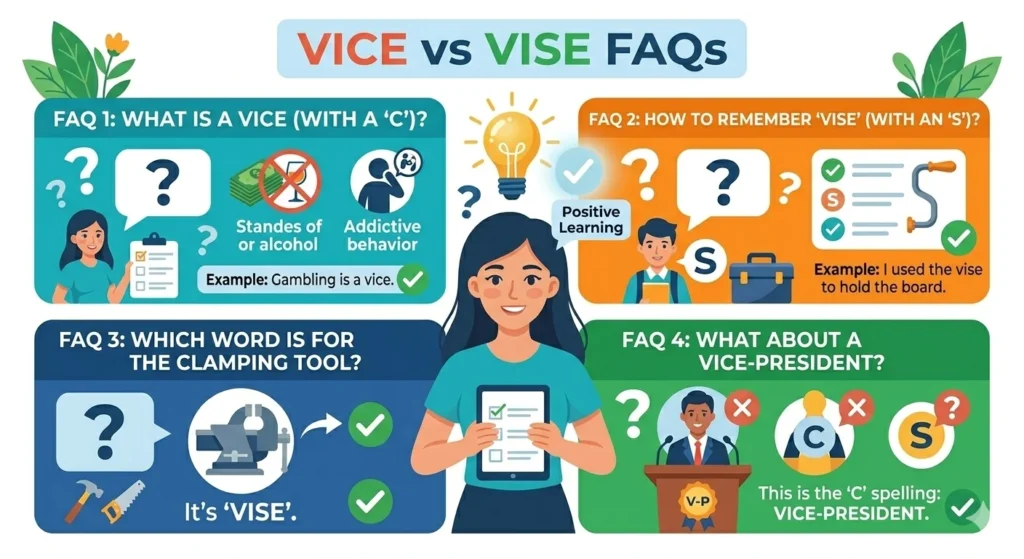
1. What is the difference between vice and vise?
Vice is a bad habit. Vise is a tool used to hold objects tightly.
2. Is it vise or vice UK?
In the UK, vice is used for both meanings.
3. Is it vice or vise in Australia?
Australia follows British English, so vice is correct.
4. Is it like a vice or like a vise?
In American English, say like a vise when talking about strong grip.
5. What does vise mean?
Vise meaning: a tool that holds objects firmly in place.
6. Is “vise or vice versa” correct?
The correct phrase is vice versa, meaning “the other way around.”
7. What is vice vs vise grip?
A vise grip is a tool used to clamp objects tightly. It uses the American spelling.
Conclusion

Understanding vice vs vise is simple once you break it down. The key difference lies in meaning and region. Vice refers to a bad habit or immoral behavior, while vise is a tool used to hold things tightly. This small spelling change can make a big difference in meaning.
The confusion mainly comes from regional spelling rules. In American English, both forms are used separately. In British and Australian English, only vice is used. That is why context matters. Always think about your audience before choosing the spelling.
Another common issue is mixing these words with others like “wise” or “versus.” These mistakes happen because the words sound alike. But with practice, you can avoid them easily.
In daily writing, using the correct form shows clarity and professionalism. Whether you are writing emails, posts, or formal documents, getting it right builds trust. Now that you understand the difference, you can use both words with confidence and never feel confused again.

Rose Macaulay is a writer at Pray Ocean, creating clear English word explanations and thoughtful prayer content for everyday readers.