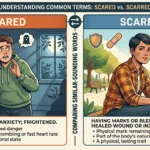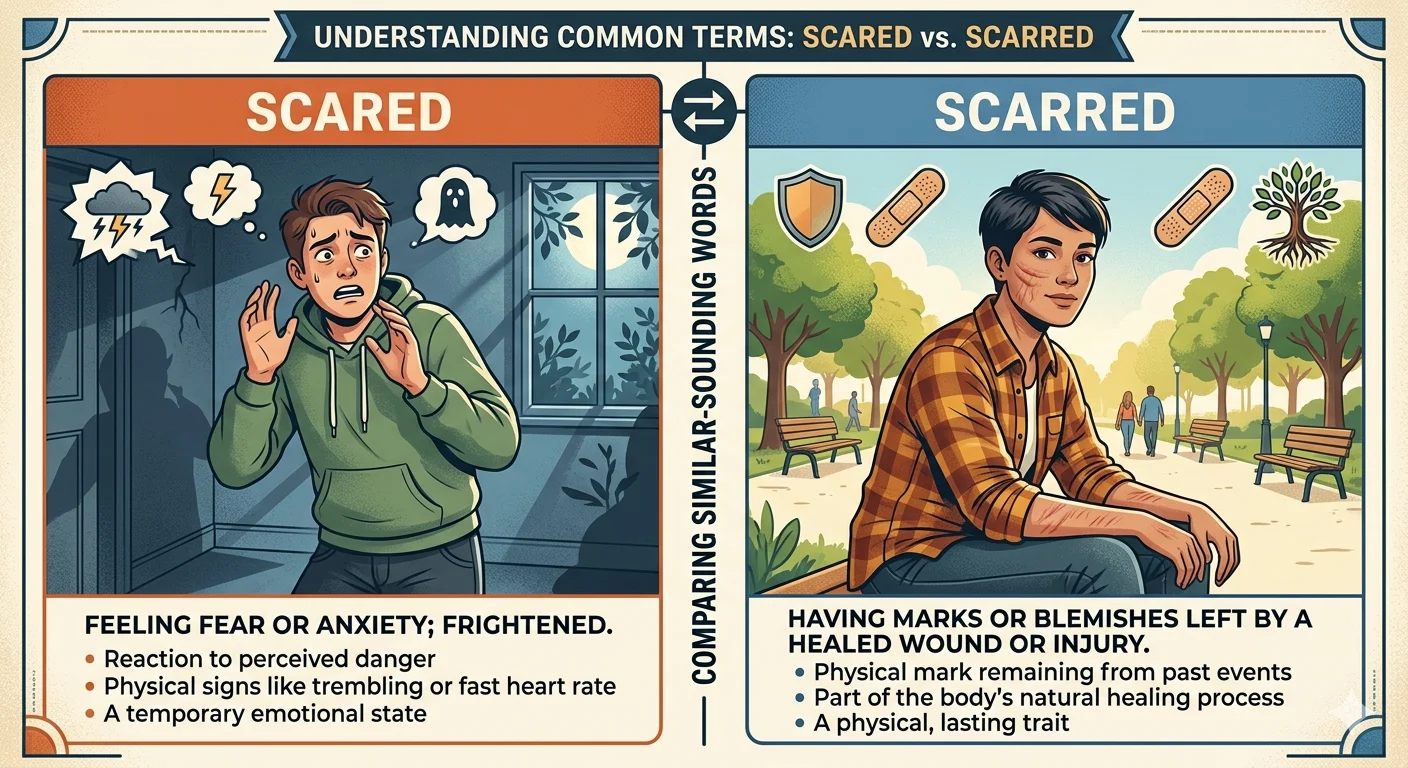
Scared” means feeling fear or being afraid, while “scarred” means having a lasting mark—physical or emotional—from an injury or experience. The key difference is simple: scared (one “r”) is an emotion, and scarred (two “r”s) is a result or mark left behind.
- Scared = feeling fear
- Scarred = having a mark (physical or emotional)
Examples:
- I was scared during the storm.
- His arm is scarred after the accident.
👉 Scared vs scarred meaning:
“Scared” is about emotion (fear).
“Scarred” is about damage or lasting impact.
👉 Scaring vs scarring:
- Scaring = causing fear
- Scarring = leaving marks
One tiny letter can completely change your meaning—and sometimes even your credibility. The confusion between scared vs scarred is a perfect example. Many people mix these two words in emails, essays, and social media posts without even realizing it. Imagine writing “I was scarred of the dark” instead of “scared.” It instantly changes your message!
So why do people search for “What is the difference between scarred and scared?” The answer is simple: both words look similar, sound alike, and relate to emotions or experiences. But their meanings are very different. One is about fear, while the other is about physical or emotional marks left behind.
This article clears up the confusion once and for all. You’ll learn the meanings, origins, common mistakes, and real-life examples. By the end, you’ll never confuse scared vs scarred meaning again—and your writing will feel more confident and professional.
The Origin of Scared vs Scarred
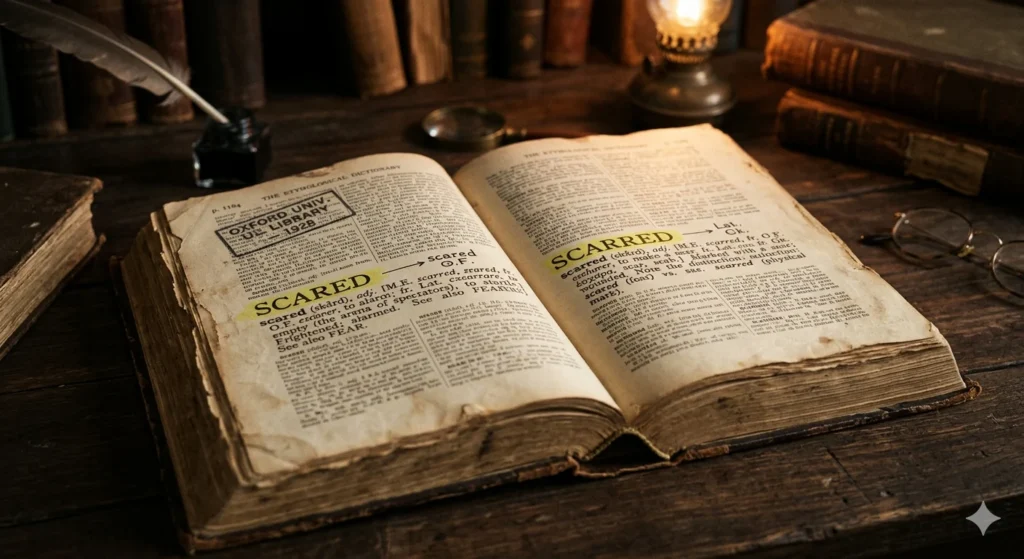
Understanding the roots helps you remember forever.
Scared
- Comes from the word “scare”
- Origin: Old Norse “skirra” (to frighten)
- Focus: Fear and emotion
Scarred
- Comes from “scar”
- Origin: Old French “escare” (mark on skin)
- Focus: Physical or emotional marks
👉 What does it mean to get scarred?
It means to receive a lasting mark—on the body or mind.
👉 Scar past tense:
- Base: scar
- Past: scarred
- Example: The injury scarred his leg.
This difference explains why scared vs scarred vs sacred often confuses learners—they sound similar but have totally different meanings.
British English vs American English Spelling
Good news: there is no spelling difference between British and American English for these words.
| Word | American English | British English | Meaning |
|---|---|---|---|
| Scared | Scared | Scared | Feeling fear |
| Scarred | Scarred | Scarred | Marked by injury |
👉 Unlike words like “color vs colour,” this pair stays the same globally.
Key Insight:
The confusion is not about region—it’s about spelling accuracy and meaning.
Bearly Vs Barely 😱 The Shocking Grammar Truth
Which Spelling Should You Use?
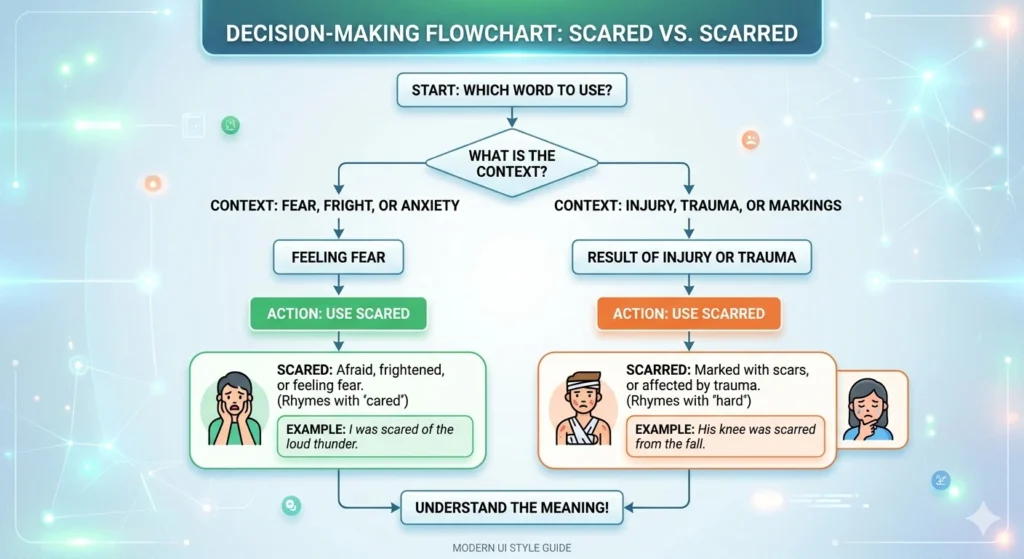
Choosing between scared vs scarred depends on your meaning.
Use Scared if:
- You talk about fear
- You describe emotions
Example:
- I feel scared before exams.
Use Scarred if:
- You talk about marks or trauma
- You describe lasting effects
Example:
- The war left him emotionally scarred.
Audience-Based Advice:
- USA & UK: Same usage rules
- Global audience: Use simple context to avoid confusion
- Professional writing: Double-check spelling carefully
👉 Tip: If fear → scared
If damage → scarred
Common Mistakes with Scared vs Scarred
Many people make these errors:
❌ I am scarred of dogs
✔️ I am scared of dogs
❌ She was scared by the accident (if meaning trauma)
✔️ She was scarred by the accident
❌ He is scaring for life
✔️ He is scarred for life
👉 What is the difference between scar and scare?
- Scar = mark
- Scare = frighten
👉 How do you spell “scared” as in a cut?
You don’t! The correct word is scarred.
Scared vs Scarred in Everyday Examples

1. Emails
- I was scared to speak in the meeting.
- The experience scarred me emotionally.
2. News Writing
- Residents were scared after the earthquake.
- Survivors were scarred by the disaster.
3. Social Media
- I’m scared of horror movies 😱
- That memory left me scarred forever 💔
4. Formal Writing
- The child appeared scared.
- The patient had a scarred tissue area.
👉 Scarred and scared meaning in context matters a lot.
Scared vs Scarred – Google Trends & Usage Data
Search data shows interesting patterns:
- “Scared” is used much more often
- Common in daily conversations and social media
- High usage in the US, UK, and globally
- “Scarred” is less common
- Used more in medical, emotional, or storytelling contexts
Popular Search Queries:
- What is the difference between scarred and scared?
- Scared vs scarred quiz
- Scarred meaning
- Sacred vs scared vs scarred
👉 Scared vs scarred quiz idea:
Fill in the blank:
“I was ___ after the horror movie.”
Answer: scared
Comparison Table: Scared vs Scarred
| Feature | Scared | Scarred |
|---|---|---|
| Meaning | Feeling fear | Having marks or trauma |
| Word Type | Adjective | Adjective / Verb |
| Root Word | Scare | Scar |
| Usage | Emotional | Physical / Emotional damage |
| Example | I am scared | He is scarred |
Sleeve Vs Sleave 📌 The Confusing Truth Revealed
Scared vs Scarred vs Sacred
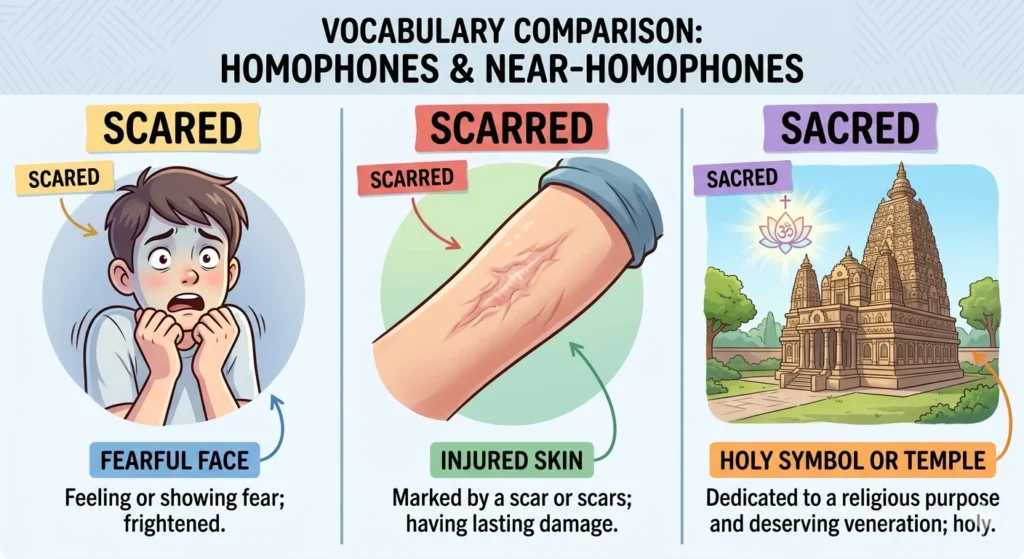
This trio confuses many learners.
| Word | Meaning |
|---|---|
| Scared | Afraid |
| Scarred | Marked |
| Sacred | Holy |
Example:
- I was scared in the dark.
- He is scarred after the accident.
- The place is sacred.
FAQs About Scared vs Scarred
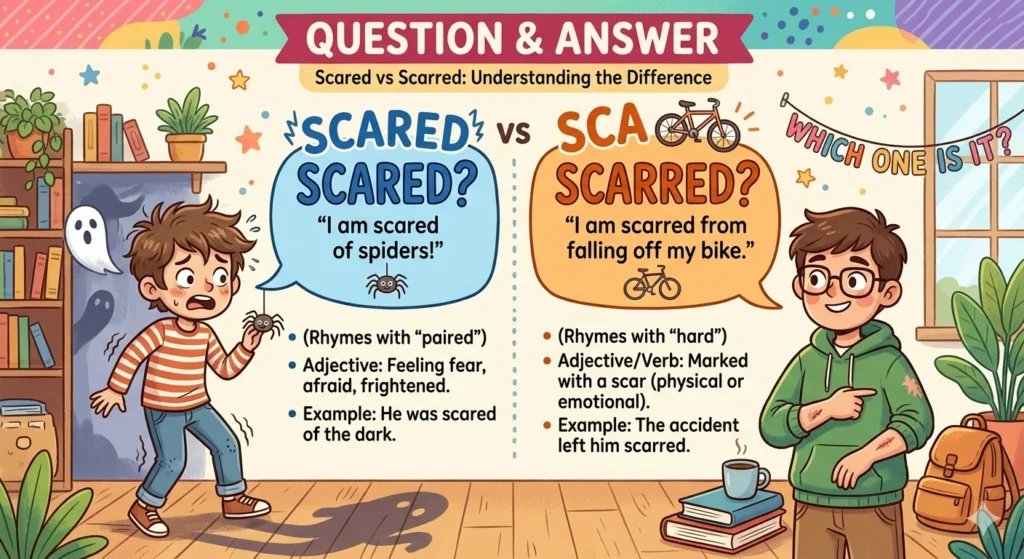
1. What is the difference between scarred and scared?
Scared means afraid. Scarred means marked physically or emotionally.
2. What does scarred mean?
It means having a lasting mark or trauma.
3. Can scarred be emotional?
Yes. You can be emotionally scarred by experiences.
4. How do you remember scared vs scarred?
Fear = scared
Damage = scarred
5. What is scaring vs scarring?
Scaring = causing fear
Scarring = leaving marks
6. Is scarred always physical?
No. It can also mean emotional trauma.
7. What is the past tense of scar?
The past tense is scarred.
Conclusion

The difference between scared vs scarred may seem small, but it has a big impact on meaning. One extra “r” changes everything. “Scared” expresses fear, while “scarred” shows lasting damage—physical or emotional.
This confusion happens because the words look and sound similar. But once you understand their roots and usage, the difference becomes clear. Remember the simple rule: fear equals scared, damage equals scarred. This trick works every time.
Using the correct word improves your writing, builds trust, and avoids embarrassing mistakes. Whether you are writing emails, posts, or professional content, clarity matters. Readers notice these details, and they shape how your message is understood.
Keep practicing with real examples, and even try a scared vs scarred quiz to test yourself. Over time, this confusion will disappear completely. Mastering small differences like this is what makes your English strong, clear, and confident.

Stella Gibbons is a writer at Pray Ocean, sharing clear English word meanings and meaningful prayer articles for daily guidance.