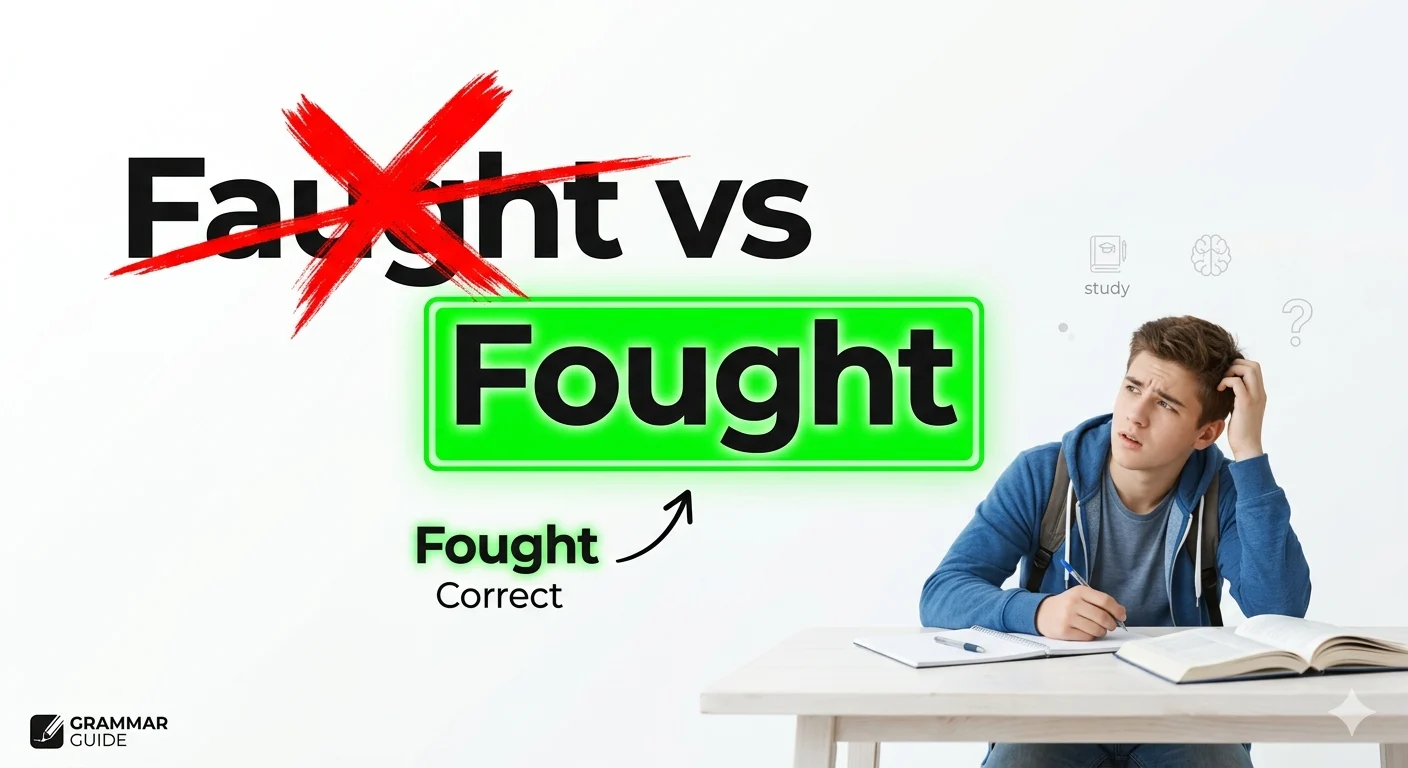
Correct spelling: ✅ Fought
Incorrect spelling: ❌ Faught
The word “fought” is the past tense of fight.
👉 Example:
- He fought bravely in the match.
- They fought over a small issue.
❌ Faught is not a real English word. It’s a common misspelling.
Simple Rule:
- Present: fight
- Past: fought
- Past perfect: had fought
This answers common questions like:
- Is it spelled faught or fought? → Fought is correct
- How do you spell “fought” correctly? → F-O-U-G-H-T
Have you ever typed “faught” and wondered if it looked a little… off? You’re not alone. Thousands of people search “faught vs fought” every day because this tiny spelling mistake causes big confusion. English learners, students, and even native speakers often mix these two up—especially when writing quickly.
Here’s the truth: only one of these words is correct in standard English. The confusion usually comes from pronunciation, past tense rules, and how irregular verbs work. Questions like “Is it spelled faught or fought?”, “What does ‘fought’ mean?”, and “How do you spell ‘fought’ correctly?” are extremely common.
This guide will clear everything up in a simple way. You’ll learn the correct spelling, meaning, pronunciation, and real-life usage. By the end, you’ll never confuse faught vs fought again—and your writing will instantly look more professional.
The Origin of Faught vs Fought

The confusion between faught vs fought comes from the history of English and irregular verbs.
The word “fight” comes from Old English feohtan, which meant to struggle or battle. Over time, its past tense evolved into “fought.”
English does not always follow simple spelling rules. Unlike regular verbs (like walk → walked), fight is irregular:
- fight → fought (not “fighted”)
So where did faught come from?
It’s simply a phonetic mistake. People try to spell the word the way it sounds. Since “fought” sounds like fawt, many assume it should be spelled faught.
This is similar to mistakes like:
- Is it “fight” or “fite”? → Correct: fight
Key Insight:
English spelling is based on history, not just sound. That’s why fought looks unusual but is correct.
British English vs American English Spelling
Good news: there is no difference between British and American English for this word.
Both use:
👉 fought
| Form | British English | American English |
|---|---|---|
| Present | fight | fight |
| Past | fought | fought |
| Past Perfect | had fought | had fought |
Unlike words like colour/color, fought stays the same globally.
Example:
- UK: He fought in the war.
- US: He fought for his rights.
So if you’re wondering:
👉 Faught or fought in global English?
✔ Always fought
Arised Vs Arose 🔥 Which One Is Actually Correct?
Which Spelling Should You Use?
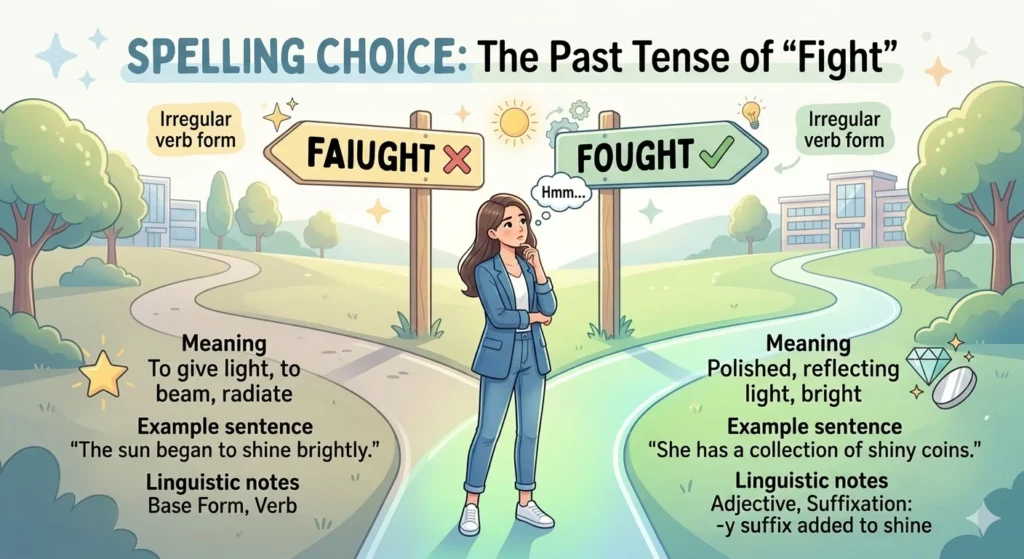
No matter your audience, the answer is simple:
👉 Always use fought
Audience-based advice:
- US audience: Use fought
- UK/Commonwealth audience: Use fought
- Global writing (blogs): Use fought
Using faught can:
- Hurt your credibility
- Make writing look unprofessional
Pro Tip:
If you’re writing content online, always double-check irregular verbs like:
- Fight → fought → fought
Common Mistakes with Faught vs Fought
Here are the most frequent errors people make:
❌ Mistake 1: Using “faught”
- Incorrect: He faught with his friend.
- Correct: He fought with his friend.
❌ Mistake 2: Confusing pronunciation
People hear “fawt” and spell it wrong.
👉 Correct fought pronunciation: /fɔːt/
❌ Mistake 3: Wrong tense usage
- Incorrect: He has fight yesterday.
- Correct: He fought yesterday.
❌ Mistake 4: Mixing with similar words
- Faught meaning → ❌ No meaning
- Fought meaning → ✔ Past of fight
Faught vs Fought in Everyday Examples

Let’s see how fought is used in real life:
📧 Emails:
- I fought hard to complete this project on time.
📰 News:
- The team fought until the final minute.
💬 Social Media:
- She fought for her dreams and won 💪
📚 Formal Writing:
- The soldiers fought bravely in the battle.
Sentence Practice:
- He fought his fears.
- They fought for justice.
- She had fought many challenges before success.
This also answers:
👉 How to use fought? → Use it as past tense of fight
Faught vs Fought – Google Trends & Usage Data
Globally, “fought” is the only correct and widely used spelling.
Trends Insight:
- Fought → High usage worldwide
- Faught → Low usage, mostly search errors
Popular countries searching:
- India
- Pakistan
- United States
- United Kingdom
Most searches include:
- “How do you say faught?”
- “Faught or fought meaning”
- “Fought sound”
👉 This shows people are unsure about pronunciation and spelling.
Key takeaway:
Use fought for all professional and content.
Shiny Vs Shiney ✨ The Truth That Surprises Everyone!
Comparison Table: Faught vs Fought
| Feature | Faught | Fought |
|---|---|---|
| Correct spelling | ❌ No | ✅ Yes |
| Meaning | ❌ None | ✔ Past tense of fight |
| Usage | ❌ Incorrect | ✔ Standard English |
| Grammar | ❌ Invalid | ✔ Correct |
| SEO value | ❌ Poor | ✔ High |
Understanding Verb Forms (Fight, Fought, Fought)
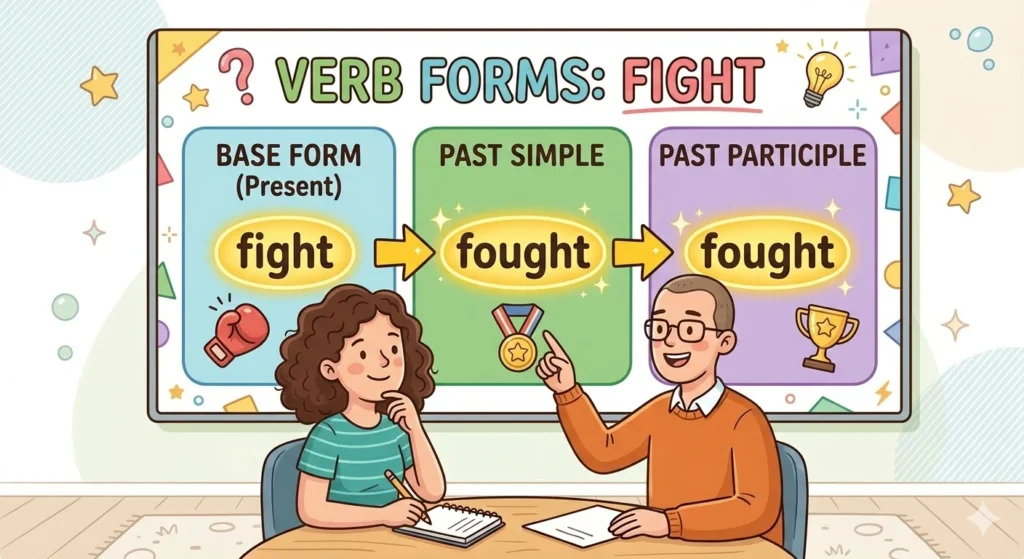
- Present: fight
- Past: fought
- Past participle: fought
👉 Example:
- Present: I fight daily.
- Past: I fought yesterday.
- Past perfect: I had fought before.
Related:
- Fight past perfect tense: had fought
- Future tense of fight: will fight
FAQs About Faught vs Fought

1. Is it spelled faught or fought?
✔ The correct spelling is fought.
2. What does “fought” mean?
It means the past tense of fight—to struggle, battle, or argue.
3. How do you say faught?
You don’t. It’s incorrect. The correct word is fought.
4. How do you spell “fought” correctly?
F-O-U-G-H-T
5. Is it “fight” or “fite”?
✔ Correct: fight
❌ Incorrect: fite
6. What is the fought pronunciation?
It sounds like: “fawt” (/fɔːt/)
7. Can I use “faught” in writing?
No. It’s considered a spelling mistake.
Conclusion
The confusion between faught vs fought is very common—but easy to fix once you know the rule. The correct word is always fought, which is the past tense of fight. The word faught has no meaning and should never be used in proper writing.
This mistake often happens because English pronunciation doesn’t match spelling perfectly. Words like fought sound simple but have complex origins. That’s why learning irregular verbs is so important.
If you want your writing to look clear and professional, always double-check tricky words like this. Whether you’re writing emails, blog posts, or social media content, using the correct form builds trust and credibility.
Remember:
- Fight → Fought → Fought
- Never use faught
Now that you understand the difference, you can write with confidence and avoid one of the most common English mistakes.

Stella Gibbons is a writer at Pray Ocean, sharing clear English word meanings and meaningful prayer articles for daily guidance.