Accept means to receive, agree to, or approve something.
Except means to exclude or leave something out.
Examples:
- I accept your apology.
- Everyone came except John.
People often confuse except vs accept because they sound similar and appear in similar sentences. But their meanings are completely different.
Many people search for except vs accept because these two words look similar, sound alike, and are often used in emotional or formal sentences. A single mistake can change the meaning of your sentence completely. For example, saying “I except your offer” instead of “I accept your offer” can confuse readers or sound unprofessional. This confusion is common in emails, exams, legal writing, and daily conversations. Students struggle with grammar rules, professionals worry about credibility, and non-native speakers often mix them up because they are homophones.
This article solves that confusion once and for all. You will learn the clear difference, correct spelling, real-life examples, grammar tips, and professional usage advice. By the end, you will confidently know when to use accept and when to use except, without second-guessing yourself.
The Origin of Except vs Accept
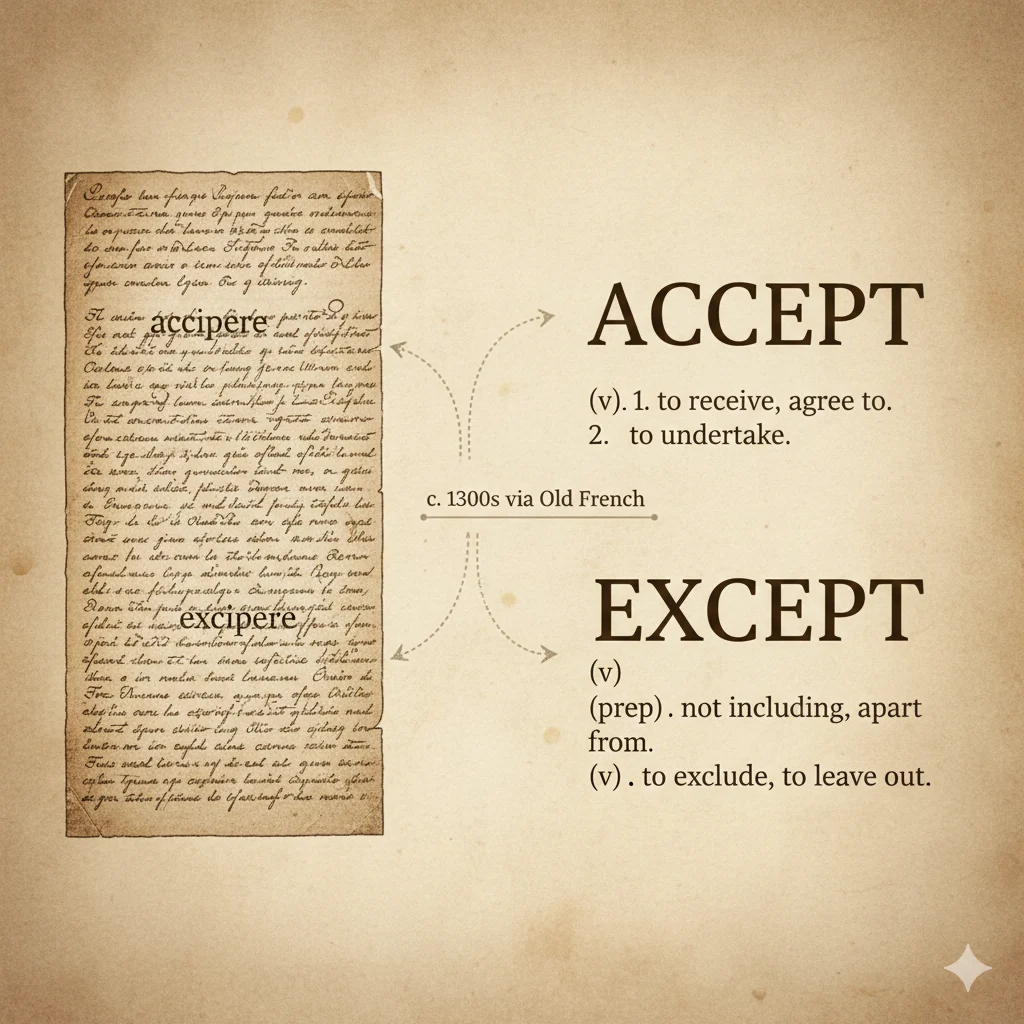
The confusion between except and accept comes from history and sound.
Accept comes from the Latin word acceptare, meaning to receive willingly. Over time, it entered English through French and kept its meaning of approval or agreement.
Except comes from the Latin word excipere, meaning to take out. That meaning stayed the same in English: exclusion.
The spelling difference exists because the words come from different Latin roots. Even though they sound similar, they evolved separately. This is why accept and except are homophones, not related words.
British English vs American English Spelling
There is no spelling difference between British and American English for accept and except. Both regions use the same spelling and meaning.
| Word | American English | British English | Meaning |
|---|---|---|---|
| Accept | Accept | Accept | Receive or agree |
| Except | Except | Except | Exclude |
This makes except vs accept grammar easier compared to other spelling differences like color vs colour.
M’am vs Ma’am: The Hidden Truth Behind This Confusion 👀
Which Spelling Should You Use?
Use accept if your sentence involves:
- Agreement
- Receiving something
- Approval
Use except if your sentence involves:
- Exclusion
- Leaving something out
- Making an exception
Audience advice:
- US audience: Follow standard rules (accept = receive, except = exclude).
- UK/Commonwealth: Same rules apply.
- Global audience: Use clear context and simple sentence structure to avoid confusion.
Common Mistakes with Except vs Accept
Here are frequent errors people make:
❌ I except your apology.
✅ I accept your apology.
❌ Everyone accept Sarah came.
✅ Everyone except Sarah came.
❌ Please except the terms.
✅ Please accept the terms.
A quick memory trick:
- Accept = Agree (both start with A)
- Except = Exclude (both start with E)
Except vs Accept in Everyday Examples
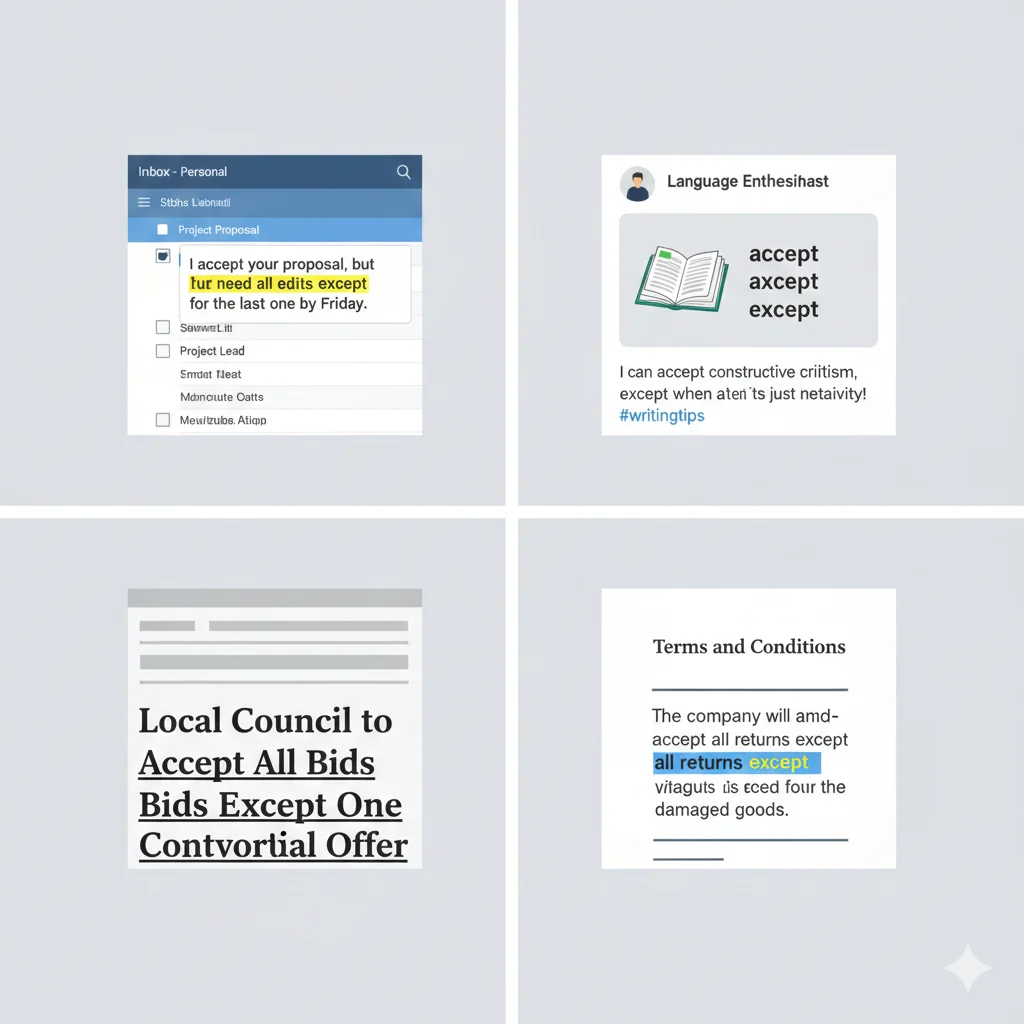
Emails:
- I accept the job offer.
- All files are attached except the invoice.
News:
- The court accepted the appeal.
- All flights were canceled except emergency services.
Social Media:
- I accept the challenge!
- Everyone liked the post except me.
Formal Writing:
- The company accepts responsibility.
- The rule applies to all except minors.
Except vs Accept – Google Trends & Usage Data
Search data shows accept is used more often in:
- Legal writing
- Business communication
- Emotional expressions
Except is more common in:
- Academic writing
- Rules and policies
- News reporting
Countries like the US, UK, India, and Pakistan show high search interest in except vs accept, especially during exam seasons and job application periods.
Complete vs Completed: The Fast Answer Everyone Wants ⚡
Comparison Table: Except vs Accept
| Feature | Accept | Except |
|---|---|---|
| Meaning | Receive or agree | Exclude |
| Part of Speech | Verb | Preposition / Verb |
| Common Use | Offers, apologies | Rules, exclusions |
| Example | Accept help | Except errors |
| Confused With | Except, expect | Accept |
Accept vs Except vs Expect
- Accept = receive
- Except = exclude
- Expect = anticipate
Example:
- I expect results.
- I accept outcomes.
- Everyone passed except one student.
FAQs: Except vs Accept
What is the difference between accept and except?
Accept means to receive or agree. Except means to exclude.
Is it accept or except my apology?
Correct: accept my apology.
Is it “except for” or “except from”?
Correct phrase: except for.
How is “accept” used in law?
In law, accept means to formally agree to terms or responsibility.
Except vs accept pronunciation
They sound similar but have different meanings.
Are accept and except homophones?
Yes, they sound alike but have different meanings.
Can you use accept and except in a sentence together?
Yes: I accept all terms except clause three.
Conclusion
Understanding except vs accept is essential for clear communication. These two words may sound alike, but their meanings are completely different. Accept is about agreement, approval, or receiving something willingly. Except is about exclusion and removing something from a group. Using the wrong word can confuse readers, weaken your writing, and even change the meaning of important sentences in emails, exams, or legal documents. The good news is that the rule is simple and universal across British and American English. Remember the memory trick: accept equals agree, and except equals exclude. Practice using them in short sentences and real-life examples. Once you master this difference, your writing will sound more confident, professional, and accurate. Grammar clarity builds trust, and knowing when to use accept or except is a small skill with a big impact.

Ann Quin is a content writer at Pray Ocean, sharing clear English word meanings and heartfelt prayers to guide and inspire readers worldwide.