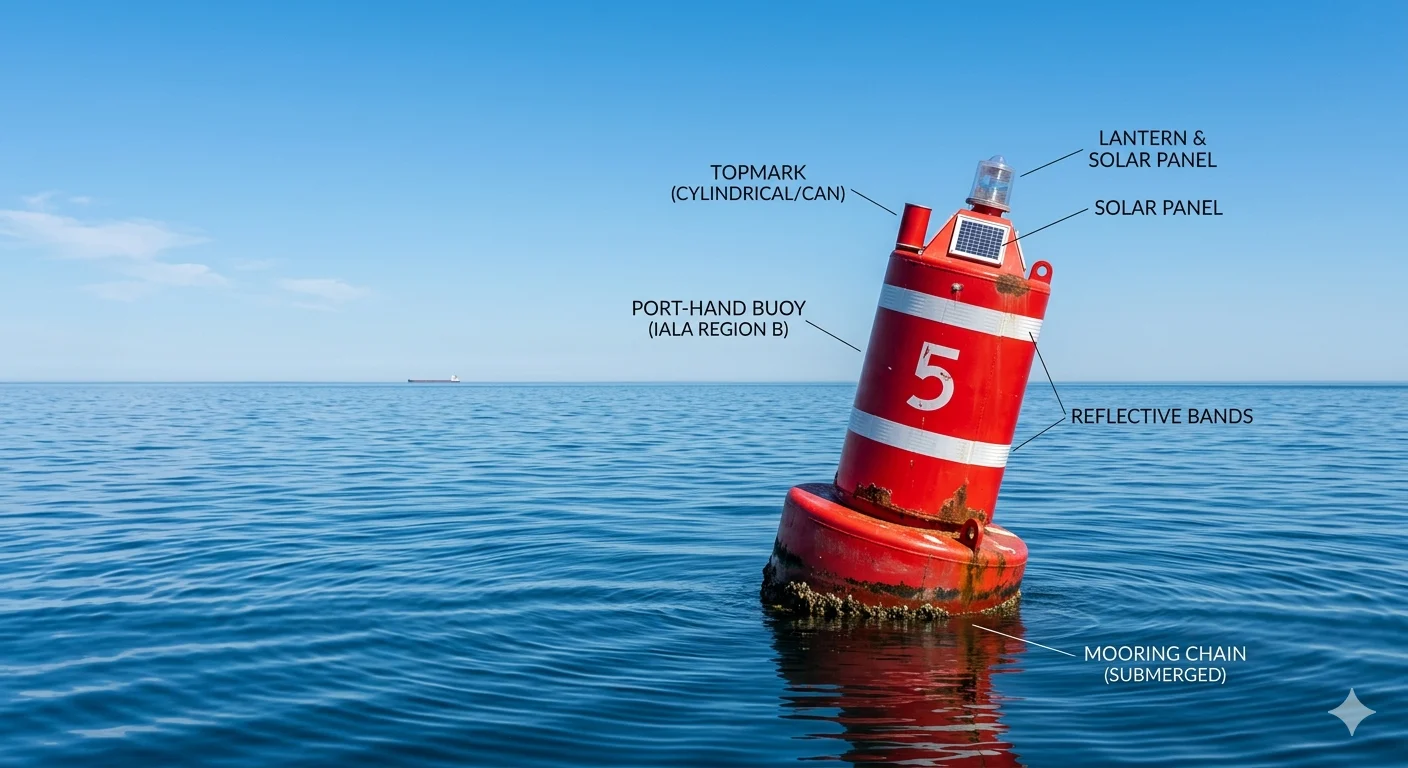
Buoy is the correct spelling. Bouy is incorrect and not a real English word.
A buoy is a floating object used in water to mark locations or help navigation. For example, “The red buoy shows safe water.” Many people mistakenly write bouy, but it is always wrong.
Have you ever typed bouy and wondered if it was correct? You’re not alone. Many people search for buoy vs bouy because the words look similar, sound confusing, and are often misspelled online. The truth is simple—but easy to forget. One is the correct spelling, while the other is just a common mistake.
This confusion often happens because of pronunciation. Some people say it like “boy,” while others say “boo-ee.” That makes spelling tricky, especially for learners and even native speakers. In this guide, you’ll clearly understand the difference, learn the correct usage, explore pronunciation like buoy pronunciation and buoyancy pronunciation, and avoid mistakes in writing. By the end, you’ll never mix them up again.
The Origin of Buoy vs Bouy
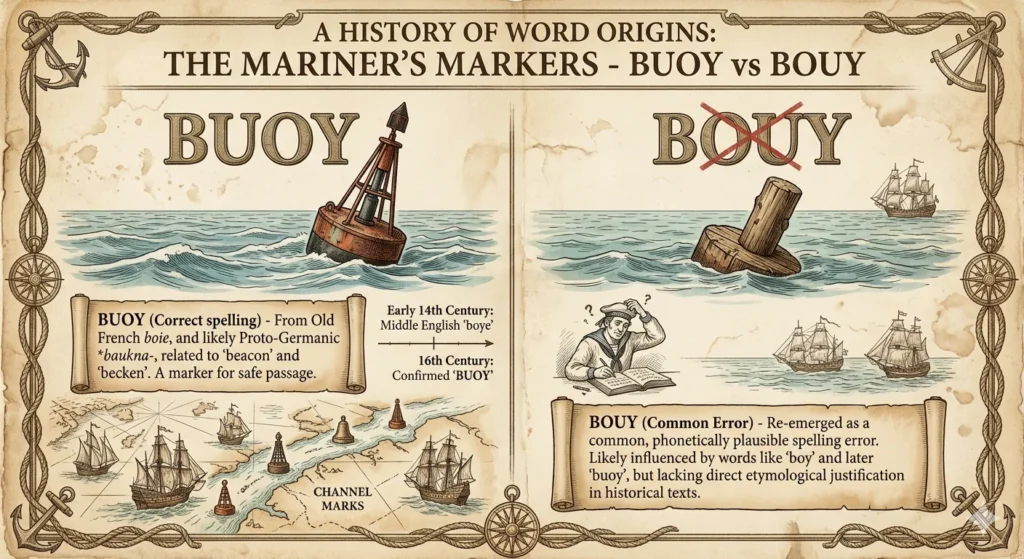
The word buoy comes from Old French boie, which means a floating marker. Over time, English adopted the spelling buoy, but pronunciation changed in different regions.
This is why we now hear different forms like:
- “boy” (common in British speech)
- “boo-ee” (common in American speech)
The spelling stayed the same, but pronunciation evolved. This mismatch causes confusion and leads to the incorrect spelling bouy.
Important point:
- Buoy = real word with history
- Bouy = spelling mistake with no origin
British English vs American English Spelling
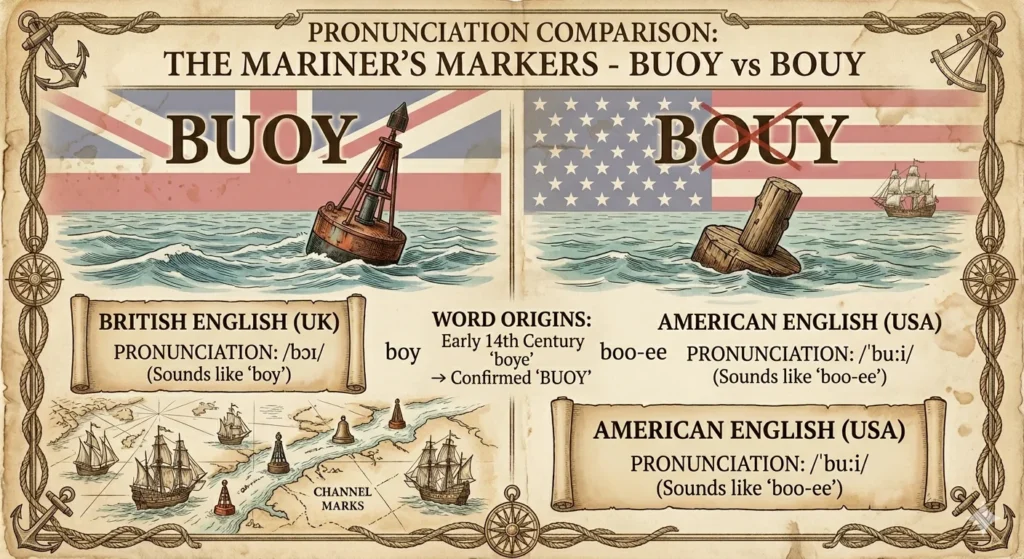
Unlike many words, buoy vs bouy is not a British vs American spelling difference. Both regions use the same spelling: buoy.
However, pronunciation differs, which causes confusion.
Pronunciation Difference
- British English: sounds like “boy”
- American English: sounds like “boo-ee”
Comparison Table
| Feature | British English | American English |
|---|---|---|
| Correct spelling | Buoy | Buoy |
| Common pronunciation | Boy | Boo-ee |
| Incorrect spelling | Bouy ❌ | Bouy ❌ |
| Usage | Maritime, daily use | Maritime, daily use |
So, no matter where you are, always write buoy.
Embedded Vs Imbedded 🤯 The Hidden Truth You Missed
Which Spelling Should You Use?

The answer is simple: always use buoy.
Here’s how to decide based on your audience:
- US audience → use buoy, pronounce “boo-ee”
- UK audience → use buoy, pronounce “boy”
- Global audience → use buoy (safe everywhere)
Avoid bouy in all situations. It looks unprofessional and may confuse readers.
Common Mistakes with Buoy vs Bouy
Here are the most common errors people make:
1. Writing bouy instead of buoy
❌ The boat passed the bouy
✅ The boat passed the buoy
2. Confusing pronunciation with spelling
People hear “boy” and try to spell it like that.
3. Mixing it with unrelated words
Some confuse it with boy or think it relates to gender terms.
4. Misusing lifebuoy
Correct term: lifebuoy
Not: lifebouy
5. Ignoring context
A buoy is used in water, not on land.
Buoy vs Bouy in Everyday Examples

Emails
- “Please stay near the buoy for safety.”
News
- “Rescue teams found the missing boat near a buoy.”
Social Media
- “Saw a bright yellow buoy at the beach today!”
Formal Writing
- “The buoy marks the boundary of the safe zone.”
Casual Speech
- “Swim near the buoy so we can see you.”
Buoy vs Bouy – Google Trends & Usage Data
Search data shows that many users type bouy by mistake. However, buoy is the only correct and widely used term.
Usage Insights
- High usage in coastal countries
- Common in marine, travel, and safety topics
- Frequently searched with pronunciation questions
Popular related searches include:
- buoy meaning
- buoy pronunciation
- how to pronounce buoy British
- is buoy pronounced boy
- buoyancy pronunciation
This shows that pronunciation confusion is the main reason behind spelling errors.
Broth Vs Stock 🚫 Stop Confusing These Two Today
Comparison Table: Buoy vs Bouy
| Word | Correct? | Meaning | Usage Example |
|---|---|---|---|
| Buoy | ✅ Yes | Floating marker in water | The buoy guides ships safely |
| Bouy | ❌ No | No meaning | Incorrect spelling |
FAQs About Buoy vs Bouy
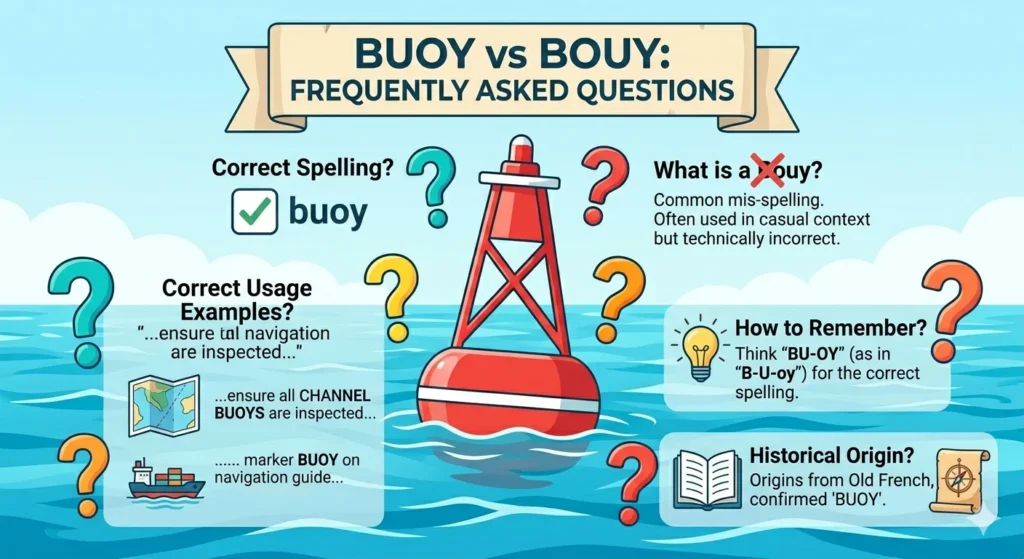
1. Is it buoy or bouy?
The correct spelling is buoy. Bouy is always incorrect.
2. What is the meaning of buoy?
A buoy is a floating object used in water to guide boats or mark locations.
3. How can I say boy?
“Boy” is pronounced as /bɔɪ/. In British English, buoy sounds similar to this.
4. Is buoy pronounced boy?
Yes, in British English. In American English, it is pronounced “boo-ee.”
5. What is a homophone for boy?
Words like “buoy” (in British pronunciation) sound similar to boy.
6. What is lifebuoy?
A lifebuoy is a floating safety ring used to save people from drowning.
7. What is buoyancy pronunciation?
Buoyancy is pronounced “boy-uhn-see” in British English and “boo-yuhn-see” in American English.
Conclusion

Understanding buoy vs bouy is easier than it seems. The key takeaway is simple: buoy is the only correct spelling, and bouy is always wrong. The confusion mainly comes from pronunciation differences. In British English, it sounds like “boy,” while in American English, it sounds like “boo-ee.” This mismatch between spelling and sound leads many people to make mistakes.
To avoid errors, focus on remembering the correct spelling and practice using it in real sentences. Whether you are writing emails, social posts, or formal content, using buoy correctly will make your writing clear and professional. Also, understanding related terms like lifebuoy and buoyancy will help you use the word more naturally.
In short, always trust the spelling, not just the sound. Once you lock that in, you’ll never confuse buoy vs bouy again. Keep it simple, stay consistent, and your writing will improve instantly.

Fred Hoyle writes informative content focused on clear explanations, helping readers understand deep concepts with ease and confidence.