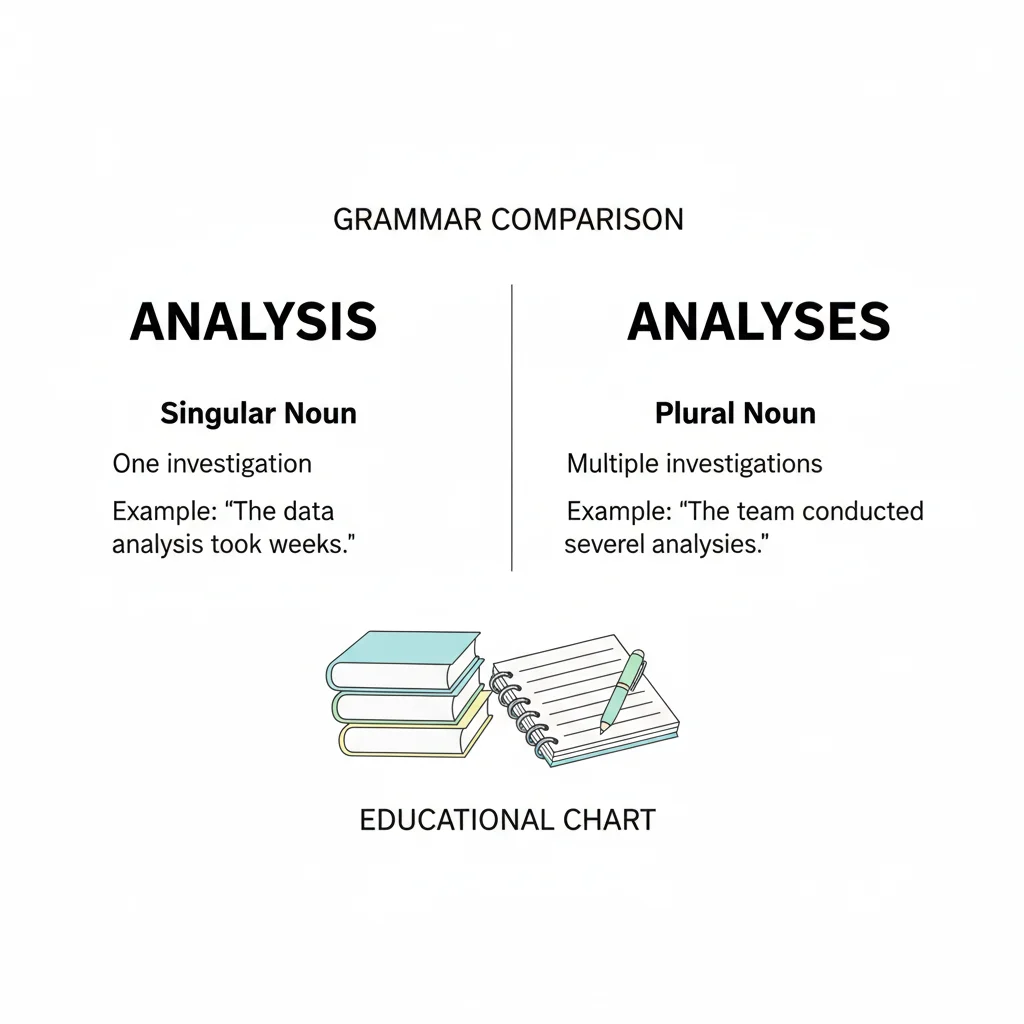
Analysis is singular. It means one detailed study or examination.
Analyses is plural. It means more than one study or examination.
✔ Example (singular): The report includes a deep analysis of the data.
✔ Example (plural): The scientists published several analyses of the results.
Many people search analysis vs analyses grammar, analysis meaning, or how do you use analyses in a sentence because the words look similar but work differently. The main difference is number: one = analysis, many = analyses.
Many writers pause when choosing between analysis vs analyses. The words look almost the same, but one small spelling change completely changes meaning. This confusion happens in emails, academic writing, news articles, and even social media posts. People often ask questions like Is there a plural for analysis? or Analyses or analysis verb? because English grammar can feel tricky.
This article solves that problem in clear and simple English. You will learn the quick rule, the history behind the spellings, and the grammar differences. You will also see real-life examples, common mistakes, and usage tips for global audiences. Whether you are a student, writer, or professional working with data analysis or analyses, this guide helps you choose the right word with confidence.
The Origin of Analysis vs Analyses
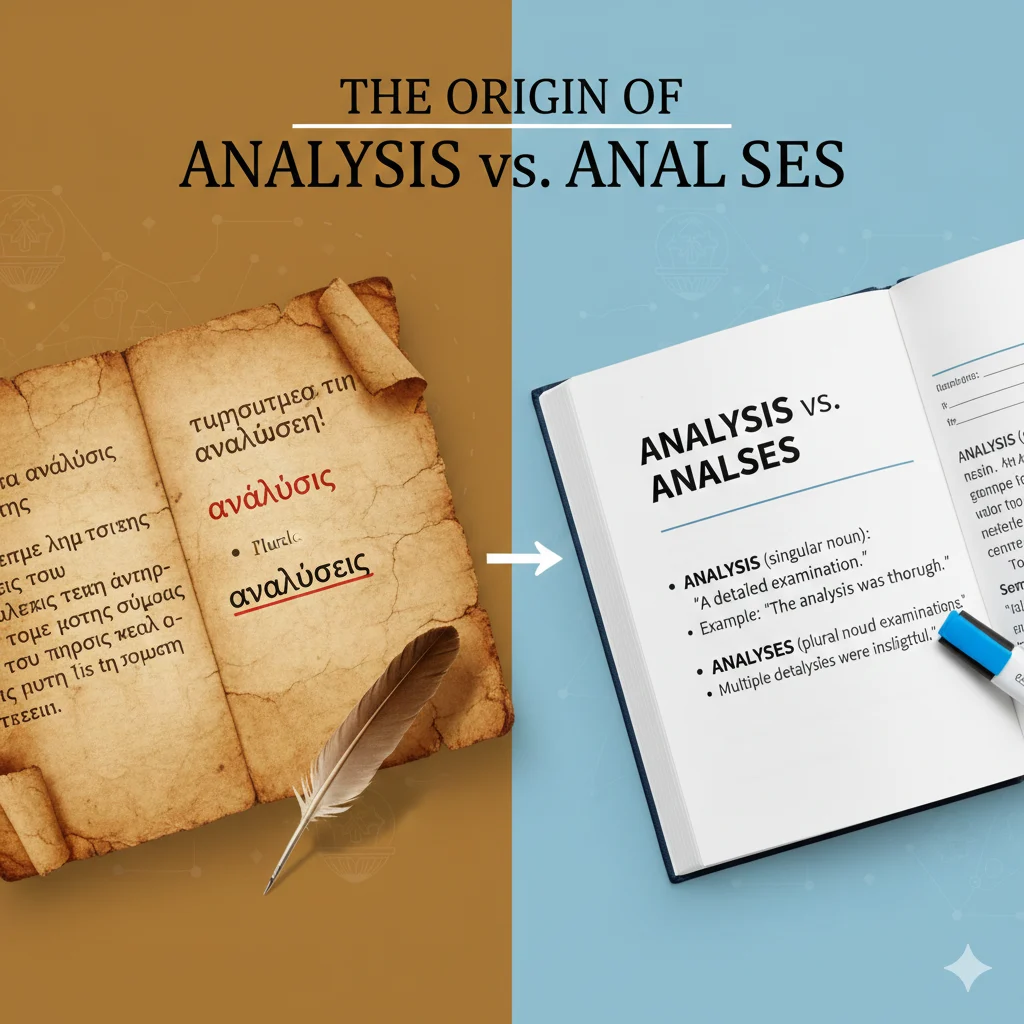
The words come from ancient Greek. The root word is analusis, which means “to break apart” or “to examine closely.” Over time, English adopted the word through Latin and kept its classical plural form.
That is why the spelling changes strangely:
- Analysis → Analyses
- Basis → Bases
- Crisis → Crises
Unlike regular nouns that simply add -s, these words change the ending from -is to -es. This historical rule explains why learners struggle with spelling differences.
The change is not about region or accent. It is a grammar rule based on word history. Understanding the origin helps you remember the correct plural easily.
British English vs American English Spelling
Many users search analyse or analyze UK and wonder if spelling affects analysis vs analyses. Here is the simple truth:
- Analysis and Analyses are spelled the same in both British and American English.
- The difference appears only in the verb form.
Verb Comparison
| Meaning | British English | American English |
|---|---|---|
| Verb | analyse | analyze |
| Noun singular | analysis | analysis |
| Noun plural | analyses | analyses |
Examples
- UK: We need to analyse the results.
- US: We need to analyze the results.
- Both: The analysis was clear.
- Both: Several analyses were published.
So if you ask, Is it analyses or analysis in the UK? — both exist, but they represent singular vs plural, not regional spelling.
Dutchess vs Duchess: Stop Using the Wrong Royal Title 👑
Which Spelling Should You Use?

Choosing the correct form depends on your audience and meaning.
For US Audience
Use standard American spelling for verbs:
- analyze
- analysis
- analyses
For UK and Commonwealth Audience
Use British spelling for verbs:
- analyse
- analysis
- analyses
For Global or International Writing
- Choose one style and stay consistent.
- Business and academic writing often prefers clarity over regional style.
- When writing about data analysis or analyses, ensure number agreement is correct.
Rule: If you mean one study, choose analysis. If you mean several, choose analyses.
Common Mistakes with Analysis vs Analyses
Many grammar errors happen because the words look similar. Here are frequent mistakes and corrections.
❌ Mistake 1: Using analyses as singular
Wrong: This analyses is correct.
Right: This analysis is correct.
❌ Mistake 2: Adding “s” to analysis
Wrong: analysises
Right: analyses
❌ Mistake 3: Confusing verb and noun
Wrong: I analysis the data.
Right: I analyze/analyse the data.
❌ Mistake 4: Subject-verb disagreement
Wrong: These analysis shows…
Right: These analyses show…
Quick Grammar Tip
- Analysis = noun (singular)
- Analyses = noun (plural)
- Analyze/Analyse = verb
These small fixes improve professional writing instantly.
Analysis vs Analyses in Everyday Examples

Seeing real examples makes grammar easier to remember.
Emails
- I completed an analysis of last month’s sales.
- The team shared three analyses in the report.
News Writing
- Experts released a new analysis of economic trends.
- Multiple analyses suggest slower growth.
Social Media
- Quick analysis of today’s match.
- Fan analyses are all over the internet.
Formal and Academic Writing
- The analysis explains the main cause.
- Comparative analyses highlight key differences.
When writing formal content, always match number and verb correctly.
Analysis vs Analyses – Google Trends & Usage Data
Search behavior shows that analysis is far more common because people usually describe one study or idea. The plural analyses appears more often in academic, scientific, and research contexts.
Usage Patterns by Region
| Country/Region | Common Usage | Context |
|---|---|---|
| United States | analysis | business, news, data reports |
| United Kingdom | analysis | education, media |
| Canada & Australia | analysis | academic writing |
| Global research | analyses | scientific papers |
People also search phrases like:
- Analysis vs analyses quiz
- Analyses pronunciation
- Analysis vs analyses grammar
- Data analysis or analyses
This shows learners mainly want quick grammar clarity and practical examples.
Tweak vs Tweek: Are You Spelling It Wrong? ❌
Comparison Table – Keyword Variations
| Word | Type | Meaning | Example |
|---|---|---|---|
| Analysis | Singular noun | One detailed study | The analysis was helpful. |
| Analyses | Plural noun | Multiple studies | The analyses were published. |
| Analyze | Verb (US) | To study deeply | Analyze the results carefully. |
| Analyse | Verb (UK) | To study deeply | Analyse the data today. |
FAQs

1. What is the difference between analyze and analyse?
Both mean the same thing. “Analyze” is American spelling, while “analyse” is British spelling.
2. Is there a plural for analysis?
Yes. The plural form is analyses.
3. Is it analyses or analysis in the UK?
Both are correct. Analysis = singular, analyses = plural.
4. How do you use analyses in a sentence?
Example: Several analyses confirmed the same result.
5. What is the correct pronunciation of analyses?
It sounds like “uh-NAL-uh-seez.” The ending changes from “sis” to “seez.”
6. Is analyses a verb?
No. Analyses is always a plural noun.
7. Should I write data analysis or analyses?
Use data analysis when talking about one process. Use data analyses when referring to multiple studies.
Analysis vs Analyses Quiz (Quick Practice)
Choose the correct word:
- The scientist wrote one detailed ______.
- The journal published several ______.
- Her market ______ helped the company grow.
Answers:
- analysis
- analyses
- analysis
Practice helps build automatic grammar memory.
Conclusion
Understanding analysis vs analyses is easier than it first appears. The rule is simple: analysis is singular, while analyses is plural. This difference comes from historical Greek word forms, which explains the unusual spelling change. Whether you write in British or American English, the noun spelling stays the same, while only the verb changes between analyse and analyze.
In everyday writing, most people use analysis because it describes a single study or explanation. Analyses appears more often in academic and research contexts where multiple studies exist. Avoid common mistakes like adding a regular “s” or mixing singular and plural verbs. Always check the number you mean before choosing the word. With the examples, grammar tips, and comparison tables in this guide, you now have a clear understanding of analysis meaning and correct usage. Use these rules in emails, reports, and formal writing to sound clear, confident, and professional every time.

Rose Macaulay is a writer at Pray Ocean, creating clear English word explanations and thoughtful prayer content for everyday readers.